How to Turn YouTube Videos Into Business Leads
TL;DR
Start by identifying one ideal viewer’s exact problem, then use YouTube autocomplete to find the questions that person is already asking. Build each video as a mini transformation with a relevant hook, useful guidance, and a clear call to action that moves viewers to an owned email list, allowing searchable content to generate qualified leads over time.
Transcript
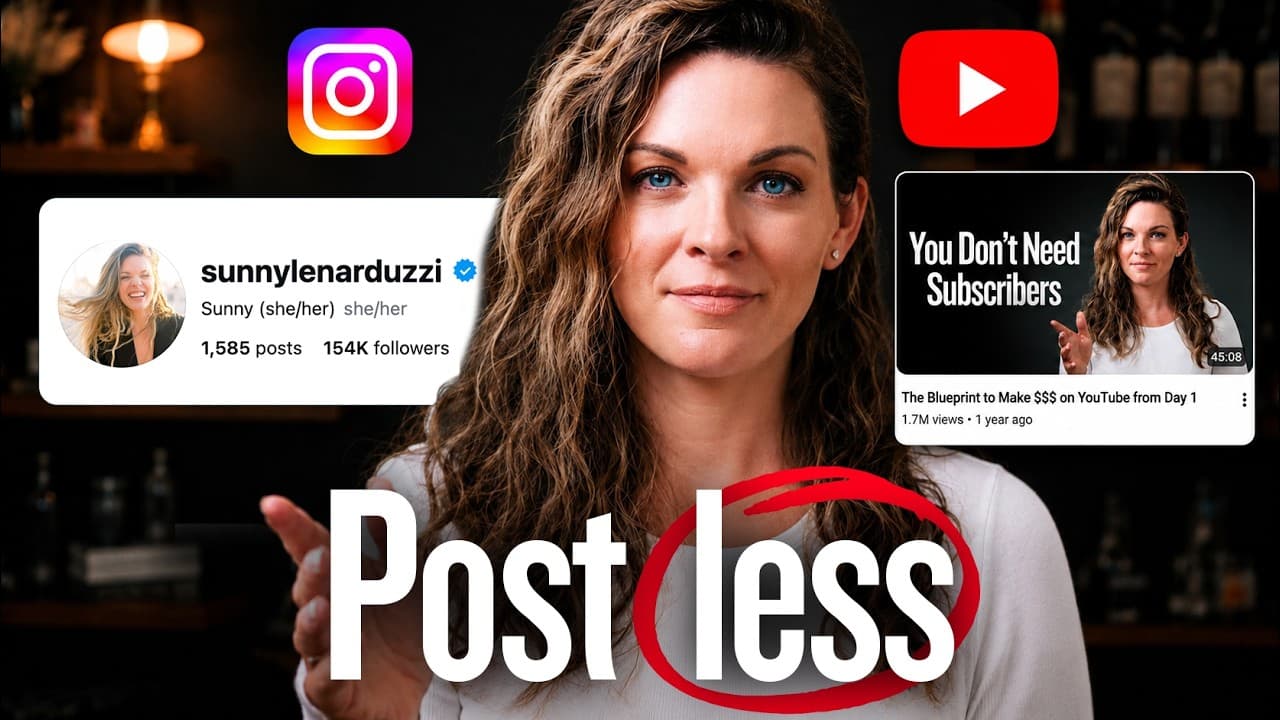
Two years ago, I made my last post and quit Instagram for good. Quit it for my business, quit it personally. And that same year that I quit social media and focus solely on YouTube, something incredible happened. Revenue just kind of exploded, but not for the reason that you think. It's kind of like magic, right? Here's what nobody tells you. When ... Read More
Key Insights
- A searchable YouTube video is a long-term business asset because it can remain indexed, discoverable, and capable of generating traffic and leads for years after publication, rather than depending entirely on a short burst of attention immediately after it is posted.
- The correct starting point for a YouTube topic is the ideal viewer’s current search query, not the creator’s preferred weekly subject. Answering an existing question connects the content with people who are already demonstrating intent by actively searching for help.
- An ideal viewer is one specific person with a specific problem, not merely a broad demographic category. Useful research asks what that person is struggling with, what solutions they have already attempted, and what they wish someone would explain clearly.
- YouTube autocomplete reflects questions that people are actively entering into the platform. Typing an ideal viewer’s problem into the search bar can reveal relevant topic language, helping creators build videos around demonstrated demand rather than relying only on assumptions.
- A high-converting video works as a mini transformation that moves viewers from their immediate problem toward a solution. It should begin with an empathetic hook, promise a clear outcome, deliver useful guidance, and conclude with an actionable next step.
- A clear call to action can move viewers from YouTube to an email list that the business owns. This creates an opportunity to continue nurturing the relationship after viewing, rather than allowing interested prospects to watch once and forget the creator.
- Relevance is more important than production polish when a video precisely answers an urgent search question. The creator’s first successful searchable video was recorded on a basic webcam and reached thousands of views despite an audience consisting largely of friends and family.
- YouTube’s compounding effect is driven by viewer signals such as sustained watching, comments, and clicks to an offer. When those signals indicate that a video satisfies a search need, the platform can expose it to more people through search, suggested content, and browse traffic.
Install to Summarize YouTube Videos and Get Transcripts
Explore YouTube Video Summarizer or Get YouTube Transcript Extractor
Questions & Answers
Q: How do you create a YouTube video that generates business leads?
Define one ideal viewer and identify the specific problem that person is trying to solve. Use YouTube autocomplete to find the language people use when searching for that problem. Structure the video as a mini transformation with a relevant hook, a clearly promised result, practical guidance, and a call to action that directs interested viewers to an owned email list.
Q: How can YouTube autocomplete help identify video topics?
Enter the ideal viewer’s problem into YouTube’s search bar and examine the phrases that automatically appear. According to the transcript, these suggestions represent questions real people are typing into the platform. Building videos around those questions helps align content with existing search demand and gives each video a potential audience before recording begins.
Q: What is a mini transformation in a YouTube video?
A mini transformation moves a viewer from point A, the problem, to point B, one meaningful step closer to the solution. The video should acknowledge the viewer’s situation, explain exactly what the viewer will gain, deliver the promised value, and finish with a clear next action that extends the relationship beyond the viewing session.
Q: Why can YouTube attract more qualified leads than Instagram?
YouTube viewers often enter a search query because they are actively seeking help, which gives their viewing behavior clear intent. Instagram users are described as being in scroll mode and looking for brief entertainment. That difference means a targeted YouTube answer can meet a potential client at the precise moment the person is trying to solve a relevant problem.
Q: Why do YouTube videos have a longer business lifespan than Instagram posts?
YouTube videos remain indexed, searchable, and discoverable through search, suggested videos, and browse traffic. The transcript says an Instagram post has roughly a 48-hour window before it becomes buried, while a YouTube video may still be found next month, next year, or in three years. That longevity allows one publication to keep generating leads.
Q: Does a business need a large YouTube audience to generate revenue?
A large subscriber count is not presented as necessary when videos reach the right people. The example of Jeffrey describes a channel that started with no subscribers, audience, or social media presence and consistently reached the 10K-a-month mark within its first year with fewer than 700 subscribers by publishing highly specific videos for men seeking help saving their marriages.
Q: What matters more than production quality on YouTube?
Relevance to the ideal viewer’s exact problem matters more than polished production. The creator’s early searchable video was filmed with a basic webcam and reached thousands of views despite having almost no established audience. It succeeded because people were already searching for the specific question the video answered, allowing the useful response to meet existing intent.
Q: How does a YouTube video build momentum over time?
YouTube evaluates whether a video matches what people are searching for and observes signals such as how much viewers watch, whether they comment, and whether they click through to an offer. Positive signals can lead the platform to show the video to more people, producing additional engagement and allowing the asset to continue growing and generating leads for years.
Summary & Key Takeaways
-
A productive YouTube strategy begins with one clearly defined ideal viewer and a specific problem that person wants solved. Instead of choosing topics from a content calendar, creators should examine YouTube autocomplete, identify genuine search questions, and publish focused answers that already have an audience actively looking for relevant help.
-
Each video should create a mini transformation by moving viewers from a defined problem toward a useful solution. An effective structure opens with a hook demonstrating understanding, states the promised outcome, delivers practical value, and ends with a clear call to action directing viewers toward an owned channel such as an email list.
-
YouTube videos can remain searchable, indexed, and discoverable long after publication, while Instagram posts are described as having roughly a 48-hour visibility window. Relevant videos can accumulate viewing and engagement signals, gain recommendations, and continue producing traffic, leads, and clients without requiring a massive audience or viral reach.
Read in Other Languages (beta)
Share This Summary 📚
Summarize YouTube Videos and Get Video Transcripts with 1-Click
Try YouTube Summary with ChatGPT & Claude or YouTube Transcript Generator
Explore More Summaries from Sunny Lenarduzzi 📚
Summarize YouTube Videos and Get Video Transcripts with 1-Click
Try YouTube Summary with ChatGPT & Claude or YouTube Transcript Generator