How OpenAI Trained SORA & What CTO is NOT Saying...
TL;DR
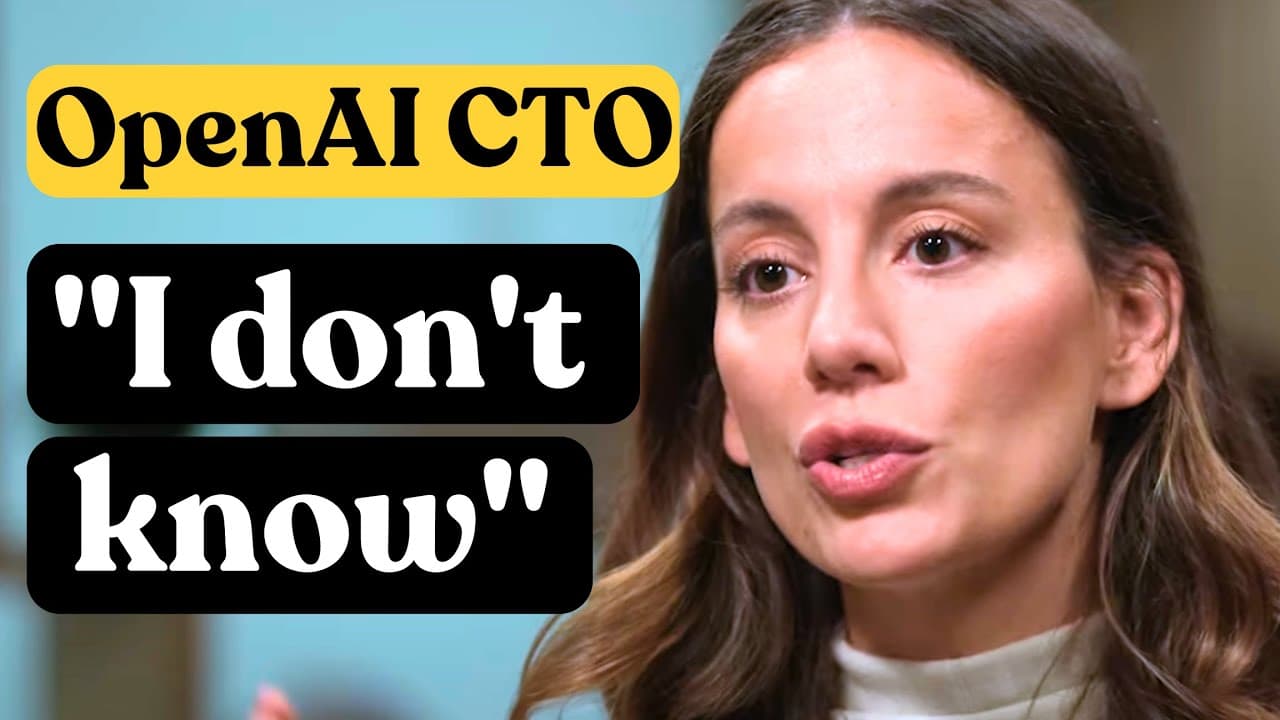
AI is creating hyper-realistic videos with Apple Vision Pro, revolutionizing spatial computing and simulator capabilities.
Transcript
forget what you know about videos AI is creating visual so hyper realistic so perfectly tailored to your imagination that you might question what's real and what's generated on the Fly combine that with apple Vision Pro and you can start putting the dots together while open a technical report and stories called video generation models as World simu... Read More
Key Insights
- 🎮 AI technology is advancing video realism through spatial computing and simulation capabilities.
- 🎮 Training data from various sources like Microsoft, Google, and Unreal Engine contribute to creating hyper-realistic videos.
- 😒 Open AI's Sora model uses space-time patches and image latent codes to understand physics without biases.
- 🌍 The increasing scale of video models promises highly capable simulators of physical and digital worlds.
- 🎮 Microsoft's partnership with Shutterstock and data sources like game recordings supports AI training for hyper-realistic videos.
- 🎮 Google's research on patch sizes and photorealistic video generation complements advancements in AI video generation.
- 🎮 AI-generated videos have the potential to revolutionize digital environments, offering interactive and customizable experiences.
Install to Summarize YouTube Videos and Get Transcripts
Explore YouTube Video Summarizer or Get YouTube Transcript Extractor
Questions & Answers
Q: How does Sora learn about physics and 3D space?
Sora uses space-time patches and image latent codes, resembling text tokens, to understand physics and 3D space without explicit biases.
Q: What is the significance of Google's research papers in the context of AI-generated videos?
Google's research on patch sizes and photorealistic video generation with diffusion models complements Open AI's efforts in creating lifelike videos at scale.
Q: How does Microsoft contribute to AI training data for hyper-realistic videos?
Microsoft's partnerships with Shutterstock, cloud services, and data sources like game recordings and search engine indexes provide valuable data for training AI models.
Q: What implications do AI-generated videos have for the future of digital environments?
AI-generated videos have the potential to revolutionize digital environments, enabling users to interact with and modify realistic environments in real-time.
Summary & Key Takeaways
-
AI technology is creating hyper-realistic videos using spatial computing and simulation capabilities.
-
Open AI's Sora model learns about physics and 3D space without explicit biases.
-
Data from sources like Google, Microsoft, and Unreal Engine could be used to train these advanced AI models.
Read in Other Languages (beta)
Share This Summary 📚
Summarize YouTube Videos and Get Video Transcripts with 1-Click
Try YouTube Summary with ChatGPT & Claude or YouTube Transcript Generator
Explore More Summaries from Goda Go 📚




Summarize YouTube Videos and Get Video Transcripts with 1-Click
Try YouTube Summary with ChatGPT & Claude or YouTube Transcript Generator