How to Make Bakelite Plastic: Step-by-Step Guide
TL;DR
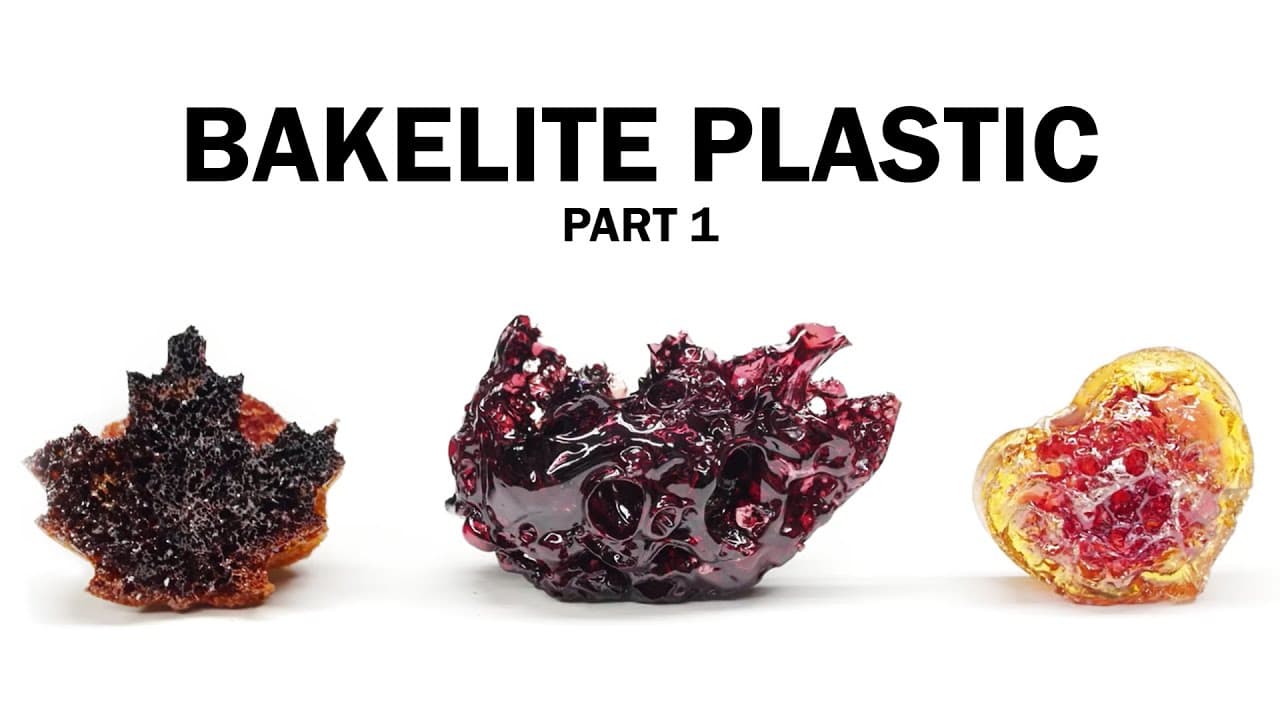
Bakelite, one of the first synthetic plastics, can be made by reacting phenol with formaldehyde. The key to the process is controlling the reaction stages, which lead to different resin types known as resoles and novolacs. Each type has distinct curing processes that affect the final product's properties.
Transcript
today I'll be making some bakelite which is a very interesting and useful polymer in the past it was used to make a lot of things like telephone casings knobs kitchenware toys and jewelry however as new plastics were discovered it was slowly phased out bakelite was developed by a Belgian American named leo baekeland in the very early 1900s and it's... Read More
Key Insights
- 🍝 Bakelite is one of the first synthetic plastics ever made and was widely used in the past for various applications.
- ♌ Leo Baekeland's discovery of the three main stages of the phenol-formaldehyde reaction revolutionized the production of bakelite.
- 💅 The curing process for bakelite differs depending on whether it is a resole or a novolac resin.
- 🎮 Proper temperature control is crucial in preventing the excess bubbling and porosity of bakelite.
- ❓ Different curing processes result in different physical properties of the final bakelite product.
- ✋ Bakelite can be resistant to breakage and have high tensile strength when cured properly.
- 😒 The use of a bake eliezer helps suppress bubbling and results in a denser bakelite product.
Install to Summarize YouTube Videos and Get Transcripts
Explore YouTube Video Summarizer or Get YouTube Transcript Extractor
Questions & Answers
Q: What is bakelite and what was it used for?
Bakelite is a thermosetting polymer that was commonly used in the past for telephone casings, kitchenware, toys, and jewelry due to its durability and versatility.
Q: How was the reaction between formaldehyde and phenol controlled by Leo Baekeland?
Baekeland discovered the three main stages of the reaction: A, B, and C. By carefully controlling the temperature, he was able to isolate the A and B stage resins, which could then be heated again to form the fully cured bakelite.
Q: What are the differences between resoles and novolacs?
Resoles are one-step resins that require no additives and can be directly heated to form the final bakelite. Novolacs, on the other hand, require a curing agent and a two-step process to fully polymerize.
Q: What are the main characteristics of bakelite?
Bakelite is a durable and heat-resistant plastic that is insoluble in solvents once fully cured. It can be brittle or puffed up depending on the curing process.
Summary & Key Takeaways
-
Bakelite is a thermosetting polymer that was widely used in the past for various applications.
-
The key discovery by Leo Baekeland was how to control the reaction between formaldehyde and phenol to create bakelite.
-
There are two main types of phenol-formaldehyde resins: resoles and novolacs, each with different curing processes.
Read in Other Languages (beta)
Share This Summary 📚
Summarize YouTube Videos and Get Video Transcripts with 1-Click
Try YouTube Summary with ChatGPT & Claude or YouTube Transcript Generator
Explore More Summaries from NileRed 📚
Summarize YouTube Videos and Get Video Transcripts with 1-Click
Try YouTube Summary with ChatGPT & Claude or YouTube Transcript Generator