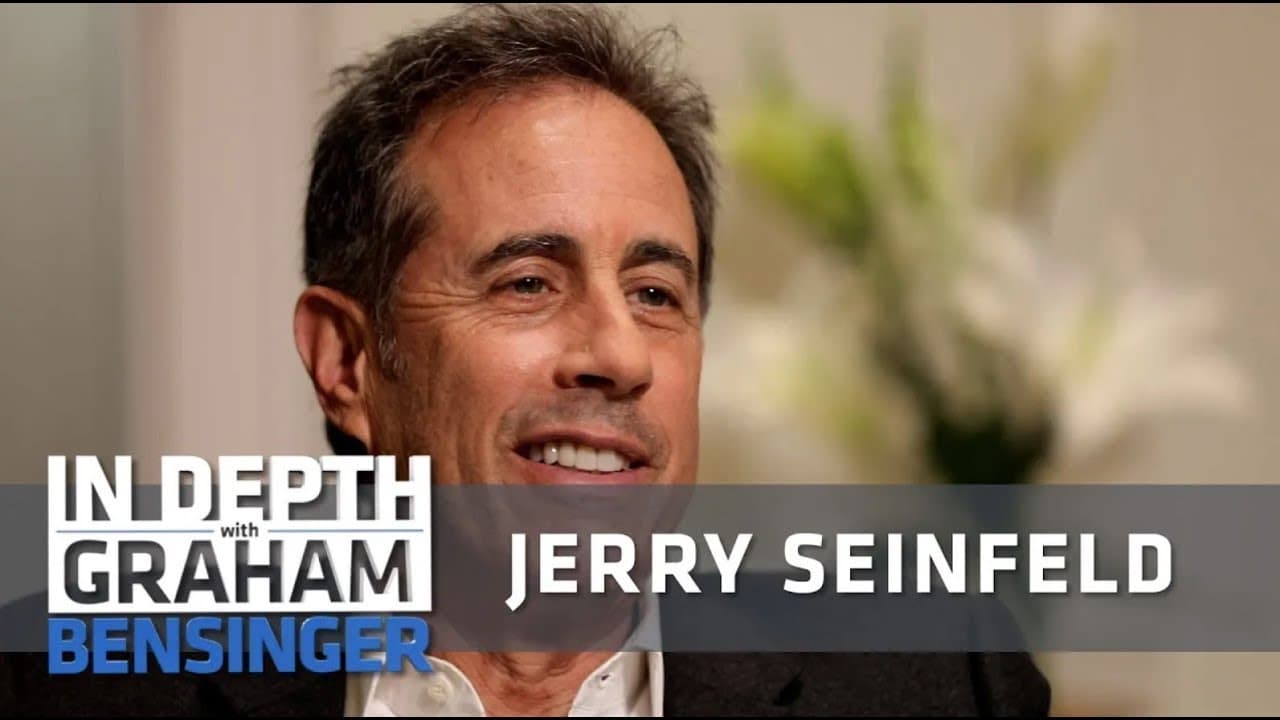
Jerry Seinfeld on Work, Energy, and Criticism
TL;DR
Focus on improving your craft instead of spending energy on criticism, because reputations, critics, and personal worries are temporary. Jerry Seinfeld credits sustained performance to constant work, daily physical training, Transcendental Meditation at least twice a day, and espresso, while acknowledging that rebuilding confidence after two years away from stand-up required starting almost from scratch.
Transcript
oh my god well I'm 70 okay which is shocking well there you go yeah so but that's not just because of meditation yes it is if I if you ask me my three keys to a successful life you want you want my three keys tell about the little mule inside of you named Artemis oh my friend Mario uh calls me he said there's a mule inside of me that he named Artem... Read More
Key Insights
- Persistent work is central to Seinfeld's identity, and he feels unsettled when he stops performing for even a short period. His friend Mario describes this drive as an inner mule named Artemis that continually pulls the cart, capturing Seinfeld's preference for productive effort over simply hanging out.
- A two-year interruption can weaken even deeply established professional confidence. After Covid kept Seinfeld away from stand-up for two years, he watched other comedians and wondered how they found the courage to perform, despite his extensive experience, because returning to the stage felt like starting from scratch.
- Stand-up ability is maintained through routine, much like physical conditioning. Seinfeld compares returning after two inactive years to entering a gym after avoiding exercise for the same period, while emphasizing that the stand-up stage feels even more intimidating and requires time to become familiar again.
- Exercise is a tool for supporting both physical and mental performance in Seinfeld's routine. He does something active every day, including three days of cardio and three days of weights, because he views the body and mind as one system and prioritizes activities that benefit brain function.
- Difficult conditions are attractive to Seinfeld because he believes pressure on a system is generally beneficial. A short but painful interval-training program appealed to him because it required little time while providing intense effort, matching his preference for demanding environments that may improve his performance.
- Stoicism is useful to Seinfeld because it reframes criticism and worry as temporary. Drawing from Marcus Aurelius's Meditations, he notes that critics, criticized people, and their concerns will all disappear, so anxiety about how others view someone consumes time and energy without improving the work.
- Improvement in the task at hand is Seinfeld's preferred response to outside judgment. He says the proper focus is getting better at what one is doing, while concern about bad comments or reviews is wasted energy. Reaching his current enjoyment of negative reviews nevertheless took him many years.
- Transcendental Meditation is Seinfeld's primary tool for effortless rest and additional energy. He practices at least twice daily, sometimes more, and contrasts it with strenuous exercise. His concise formula for a successful life combines Transcendental Meditation, lifting weights, and espresso.
Install to Summarize YouTube Videos and Get Transcripts
Explore YouTube Video Summarizer or Get YouTube Transcript Extractor
Questions & Answers
Q: How does Jerry Seinfeld stay motivated to keep working?
Jerry Seinfeld connects motivation with a persistent inner drive rather than with occasional inspiration. His friend Mario characterizes that drive as a mule named Artemis that keeps pulling the cart. Seinfeld says he likes pulling the cart, does not want to hang out, and feels slightly out of balance when he has a few weeks away from performing or productive work.
Q: Why was returning to stand-up difficult after Covid?
Returning was difficult because Seinfeld had not performed for two years, and the stand-up special he completed before Covid meant his previous act was no longer available for regular use. He needed to create a new act while rebuilding his stage routine. Watching performers in clubs, he even wondered where they found the courage to go onstage, which made the experience feel like starting over.
Q: How does Jerry Seinfeld compare stand-up practice with exercise?
Seinfeld compares losing stand-up conditioning with avoiding a gym for two years. In either case, returning can look daunting because the routine and sense of familiarity have disappeared. He considers the stand-up stage more intimidating than a gym, so rebuilding performance confidence takes time. His experience suggests that long-established skill still depends on regular practice and repeated exposure.
Q: What exercise routine does Jerry Seinfeld follow?
Seinfeld says he does something physical every day, with three days devoted to cardio and three days devoted to weights. He became interested in a program called Body for Life after finding it in a Milwaukee bookstore in 2004. Its interval training was painful but brief, which appealed to him because he wanted intensity without spending a great deal of time exercising.
Q: Why does Jerry Seinfeld believe physical exercise helps the mind?
Seinfeld regards the body and mind as one thing, so exercising the body also exercises the mind in his view. He chooses activities according to whether they support brain function because he considers his brain essential to his work. He also believes pressure on the system is generally beneficial, which helps explain his attraction to difficult and physically intense training environments.
Q: What did Jerry Seinfeld take from Marcus Aurelius and stoicism?
Seinfeld took from Marcus Aurelius the idea that personal worries, public criticism, critics, and the people being criticized are all temporary. Therefore, spending time worrying about how others view you or reacting intensely to negative comments wastes energy. The practical alternative is to focus on the activity in front of you and keep improving your ability to do it.
Q: How does Jerry Seinfeld handle bad reviews and criticism?
Seinfeld treats bad reviews as meaningless compared with the continuing work of improving his craft. He says he is excited to read the worst reviews of his forthcoming movie because stoic thinking has helped him see criticism as temporary. However, this attitude was not immediate or effortless. He acknowledges that reaching a point where he could enjoy negative reviews took many years.
Q: What are Jerry Seinfeld's three keys to a successful life?
Seinfeld names Transcendental Meditation, lifting weights, and espresso as his three keys to a successful life. He practices meditation at least twice daily and sometimes more, exercises every day, and keeps espresso machines wherever he spends time. His explanation emphasizes energy: meditation provides effortless rest, physical training demands effort while supporting energy, and espresso completes his personal three-part formula.
Summary & Key Takeaways
-
Jerry Seinfeld describes himself as a persistent worker who feels uncomfortable during extended time off. After performing no stand-up for two years during Covid, he found the stage intimidating again and had to develop an entirely new act because his previous material had already been used in a special.
-
Physical and mental fitness are inseparable in Seinfeld's approach. He exercises every day, alternating three days of cardio with three days of weights, and values short, painful interval training. He believes pressure can strengthen the system and chooses activities primarily for their benefits to brain function and professional performance.
-
Seinfeld applies Marcus Aurelius's observations by treating criticism, reputation, and anxiety about other people's opinions as temporary distractions. He advocates concentrating on the work and improving it. He also presents Transcendental Meditation as an effortless source of rest and energy, naming meditation, weightlifting, and espresso as his three keys to success.
Read in Other Languages (beta)
Share This Summary 📚
Summarize YouTube Videos and Get Video Transcripts with 1-Click
Try YouTube Summary with ChatGPT & Claude or YouTube Transcript Generator
Explore More Summaries from Graham Bensinger 📚



![5 Months with Logan Paul [Full Episode] thumbnail](/_next/image?url=https%3A%2F%2Fi.ytimg.com%2Fvi%2FWUrQrwgiZ_Y%2Fhqdefault.jpg&w=750&q=75)
Summarize YouTube Videos and Get Video Transcripts with 1-Click
Try YouTube Summary with ChatGPT & Claude or YouTube Transcript Generator