What Is the Objective Theory of Mutual Assent in Contracts?
TL;DR
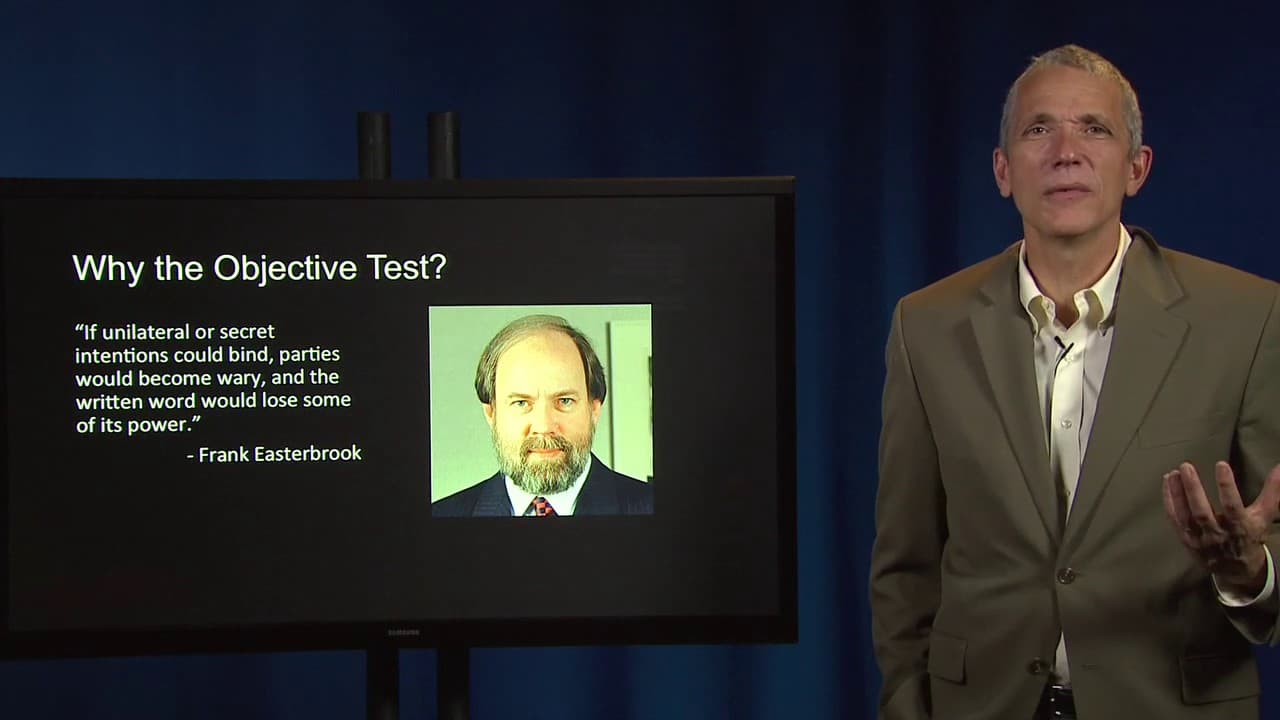
The objective theory of mutual assent states that a contract is binding based on the outward expressions and actions of the parties involved, regardless of any hidden intentions. In the case of Lucy v. Zehmer, the court enforced a contract for the sale of a farm, emphasizing that Emmer's claim of joking did not prevent the established agreement from being valid.
Transcript
in this lecture we continue our discussion of the manifestation of mutual assent by considering Luci versus Emmer a 1954 Virginia case in which the promised air appeared to assent to a contract but later claimed this offer that his offer was merely a joke in Lucy versus Emmer the defendant memmer drafted and executed a short written agreement on th... Read More
Key Insights
- 🥳 Luci vs. Emmer exemplifies the objective theory of mutual assent, where the internal intention of a party is immaterial if their outward actions suggest an intent to form a contract.
- 🥳 The court focused on the objective actions and words of the parties, upholding the contract despite Emmer's claim of it being a joke.
- 👻 Enforcing contracts based on objective manifestations of intent promotes efficiency and avoids disputes, as it allows contracts to be decided on the papers rather than through subjective interpretations.
- 🧑🏭 Judge Learned Hand's extreme statement of the objective theory emphasized that a contract is based on the known intent represented by certain acts or words, irrespective of individual intentions or meanings attached.
- 🥳 The objective theory of mutual assent protects the freedom of contract by requiring parties to abide by outward manifestations of intent and discourages opportunistic behavior.
- 🥺 Applying a reliance requirement in addition to the objective theory may lead to more disputes and require jury adjudication, reducing the efficiency and reliability of contract law.
Install to Summarize YouTube Videos and Get Transcripts
Explore YouTube Video Summarizer or Get YouTube Transcript Extractor
Questions & Answers
Q: Did Emmer's claim that the offer was a joke bind him contractually?
The court held that Emmer was contractually bound, regardless of his subjective intent, because the objective actions and words of the parties implied an intent to form a contract.
Q: Why did the court apply the objective theory of mutual assent in this case?
By using the objective listener standard, the court could avoid subjective interpretations and disputes about intent, making contract law more efficient and reliable.
Q: How did Judge Learned Hand describe the nature of a contract?
Hand stated that a contract is an obligation attached by law to certain acts or words, representing a known intent, regardless of individual intent or idiosyncratic meanings attached to the words.
Q: What are some reasons for enforcing contracts based on objective manifestations of intent?
Enforcing contracts based on objective manifestations avoids disputes, promotes efficiency, maintains the power of written contracts, and discourages opportunistic behavior of parties seeking to change or escape agreements after the fact.
Summary & Key Takeaways
-
Luci and Emmer entered into a written agreement for the sale of a farm, but Emmer later claimed it was a joke.
-
The court held that the agreement constituted a binding contract, focusing on the objective actions and words of the parties.
-
The case exemplifies the objective theory of mutual assent and highlights the importance of outward manifestations of intent in contract law.
Read in Other Languages (beta)
Share This Summary 📚
Summarize YouTube Videos and Get Video Transcripts with 1-Click
Try YouTube Summary with ChatGPT & Claude or YouTube Transcript Generator
Explore More Summaries from YaleCourses 📚




Summarize YouTube Videos and Get Video Transcripts with 1-Click
Try YouTube Summary with ChatGPT & Claude or YouTube Transcript Generator