Are Farts Funny? Exploring Their Comedic Value
TL;DR
Farts are indeed funny, rooted in their relatability and surprise factor. From ancient jokes in Sumeria to modern media, flatulence has long been a topic of humor, with cultural perceptions shaping how we respond. While some comedians reject fart jokes, significant milestones like Mel Brooks' 'Blazing Saddles' have helped integrate this humor into mainstream entertainment.
Transcript
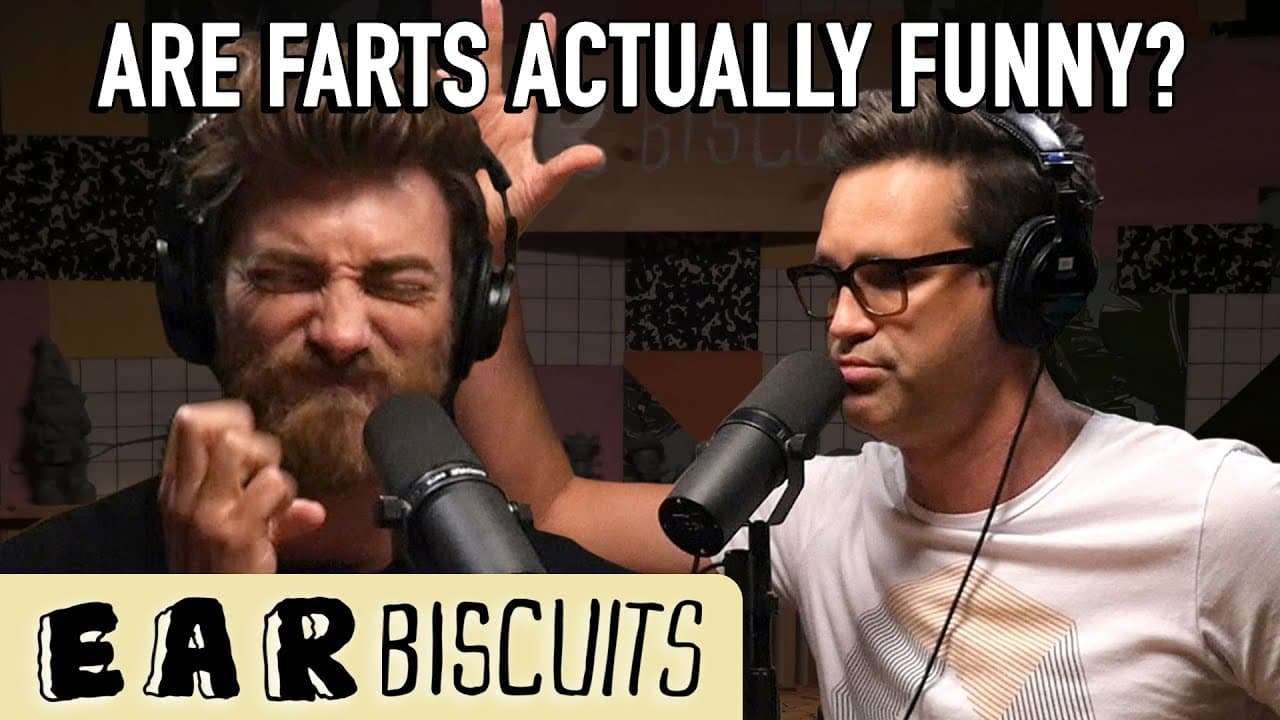
welcome to ear biscuits i'm rhett and i'm link this week at the round table of dem lighting man we are going to tackle a deep dark issue we're gonna seek to answer the question or at least explore it in detail with a scope like device of conversation that question is are farts actually funny are they actually funny um i and you know i i want this i... Read More
Key Insights
- 😄 Ancient laughs: The first recorded joke about flatulence dates back to 1900 BC, demonstrating its long-standing role in human humor.
- 🥳 Fart frequency: The average person farts approximately 14 times a day, though many might deny the statistic, revealing a shared human experience.
- 🍻 Comedy vs. embarrassment: Experiences of humor linked to farts often differ between genders, creating cultural double standards in how humor is perceived and enacted.
- 🃏 Contentious opinions: Some comedians, like Jimmy Pardo, openly reject fart jokes, indicating a division in comedic preferences.
- 🔉 Farting as a taboo: For much of the 20th century, flatulence was largely absent from media, reflecting societal discomfort with bodily functions.
- 🤗 Breaking barriers: Mel Brooks' "Blazing Saddles" in 1974 marked a turning point, introducing farts in film and paving the way for more open humor.
- ✊ The power of context: The same fart can be funny or offensive depending on the setting, emphasizing the importance of context in comedy.
Install to Summarize YouTube Videos and Get Transcripts
Explore YouTube Video Summarizer or Get YouTube Transcript Extractor
Questions & Answers
Q: What does the history of humor reveal about fart jokes?
The history of humor, including recorded jokes dating back to ancient Sumer, shows that fart jokes have been a part of comedic expression for millennia, highlighting their universal relatability and ability to disrupt social norms, making them inherently funny.
Q: How do personal experiences shape societal views on fart humor?
Personal experiences, such as family dynamics and upbringing, heavily influence how individuals perceive and react to fart humor, with some families embracing it and others promoting embarrassment, thus shaping societal acceptance of flatulence as a source of comedy.
Q: Why has the acceptance of bathroom humor changed over time?
The acceptance of bathroom humor has evolved due to cultural shifts that have made such topics more mainstream, largely influenced by comedy innovations in film and television, breaking taboos that previously restricted discussions around subjects like farting.
Q: What role does surprise play in the humor of farts?
Surprise is a key element in humor, as the unexpected nature of a fart disrupts normal social interactions, creating a reaction that often leads to laughter, especially in contexts where such occurrences are deemed inappropriate.
Summary & Key Takeaways
-
Rhett and Link delve into the comedic value of farts, discussing their historical significance in humor, starting with an ancient Sumerian joke.
-
They analyze personal experiences with flatulence and how societal perceptions impact whether farts are viewed as humorous or embarrassing.
-
The conversation touches on the evolution of fart jokes in media, including the first explicit use in films, and how cultural acceptance of bathroom humor has changed over time.
Read in Other Languages (beta)
Share This Summary 📚
Summarize YouTube Videos and Get Video Transcripts with 1-Click
Try YouTube Summary with ChatGPT & Claude or YouTube Transcript Generator
Explore More Summaries from Ear Biscuits 📚
Summarize YouTube Videos and Get Video Transcripts with 1-Click
Try YouTube Summary with ChatGPT & Claude or YouTube Transcript Generator