Why Does Legacy Media Cover Iran the Way It Does?
TL;DR
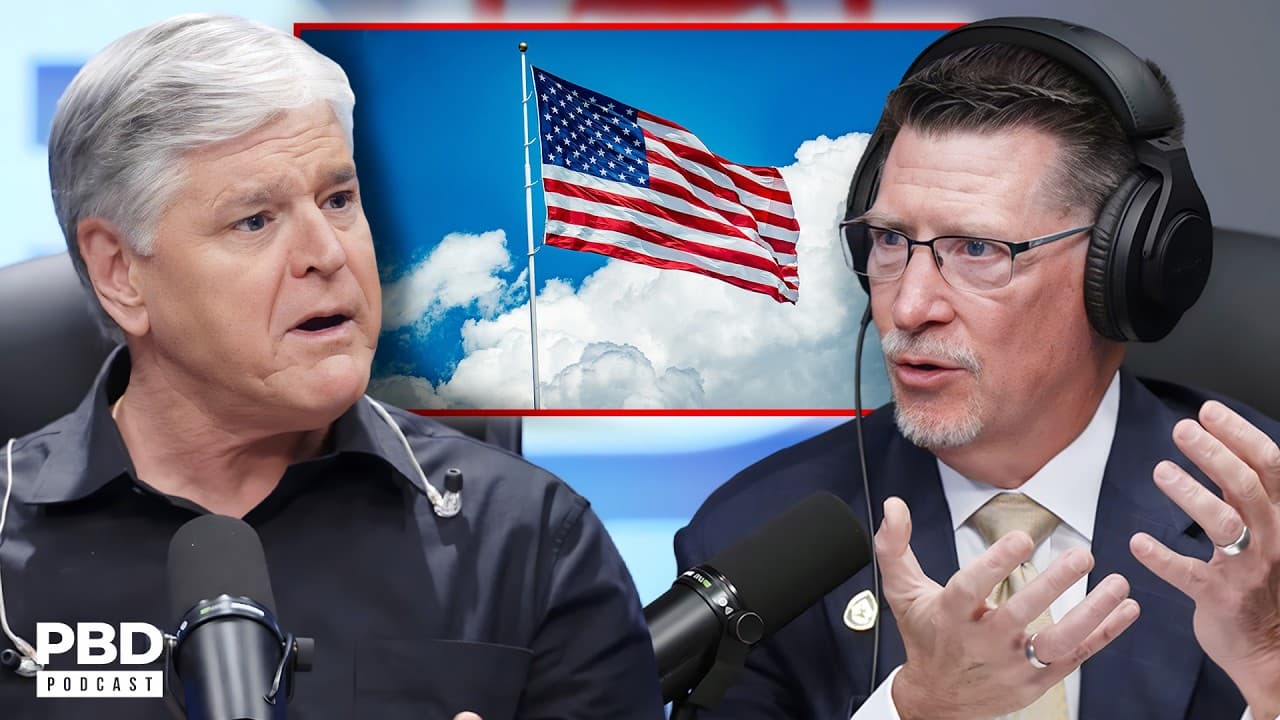
Trust in legacy media is collapsing because outlets frame Iran favorably while criticizing U.S. actions, according to the panel. They cite magazine covers reading 'Advantage Iran' and headlines calling a U.S. victory bad for the world, arguing detachment, low patriotism, and Trump derangement syndrome drive coverage that roots against America.
Transcript
straight up. I'm running as a socialist. Get behind me. It used to be a thing. Hey, don't tell anybody. I'm actually a communist socialist. Let's keep it on the down low. Now they're running on that platform. Was that going on 50 years ago, 40 years ago? You go through cycles. It's kind of like they got to learn their lesson. You you go through Wal... Read More
Key Insights
- Legacy media's decline is attributed to bias, with the panel citing an Economist cover reading 'Advantage Iran,' a Foreign Policy piece saying a U.S. victory in Iran would be bad, and Politico calling Iran worse than Iraq.
- The core complaint is that media outlets root against America, with the panel arguing you should hope a military operation works even if you disagreed with launching it, since American service members are in harm's way.
- Media detachment is one proposed cause: journalists in New York, Boston, LA, and San Francisco are described as living in ivory towers without family or friends serving in the military, so they pontificate from a distance.
- Patriotism and shared values like family, community, and country are described as being at an all-time low, which the panel connects to the trend of criticizing America becoming culturally fashionable.
- Talk radio and podcasts are thriving despite claims the format is dead, with Hannity noting he broadcasts on 760 stations daily plus Sirius XM and Fox, alongside his new podcast.
- The panel argues Hitler comparisons should be avoided because using his name as a name-call waters down history; his atrocities deserve a preserved sense of horror rather than casual political insult.
- On Iran policy, the argument is framed as a generational choice: risking a nuclear-armed Iran, described as the number one state sponsor of terror, versus preventing a potential future holocaust for children and grandchildren.
- The panel invokes the Neville Chamberlain appeasement lesson, claiming Barack Obama followed that playbook by sending pallets of money to Iran, and argues appeasement of an evil regime does not work.
Install to Summarize YouTube Videos and Get Transcripts
Explore YouTube Video Summarizer or Get YouTube Transcript Extractor
Questions & Answers
Q: Why does the panel say legacy media roots against America?
The panel offers three reasons. First, many journalists are detached, living in ivory towers in New York, Boston, LA, and San Francisco without family or friends serving in the military, so they pontificate from a distance. Second, patriotism and shared values like family and community are described as being at an all-time low. Third, Trump derangement syndrome makes people reject anything Trump supports, even to their own detriment.
Q: What media examples are cited as proof of bias against America?
Hannity brings three publications as examples. The Economist ran a cover reading 'Advantage Iran.' Foreign Policy published a piece arguing why a U.S. victory in Iran would be bad for Washington and bad for the world. Politico, which had called Iraq a blunder, framed Iran as far worse. The panel uses these to argue outlets frame Iran favorably while criticizing American actions and rooting against the country.
Q: Why are podcasts and talk radio thriving despite claims the format is dead?
The panel argues people are turning off legacy media because they see it as corrupt and biased, driving audiences toward independent platforms. Hannity points to his own reach as evidence the format is far from dead, saying he broadcasts on 760 stations every day plus Sirius XM and appears on Fox, which he says is crushing it, and now hosts his own podcast. PBD's success is cited similarly.
Q: What is the panel's view on comparing political figures to Hitler?
The panel dislikes Hitler comparisons, arguing that using his name as a name-call waters down history and creates a boogeyman effect to push votes and slaughter reputations. Thomas argues Hitler's atrocities deserve their own tragic, horrible place and a preserved sense of horror, so the comparison should almost be treated as a word you can never use, because no real comparison exists.
Q: How does the panel justify military action against Iran?
The argument is framed as a generational weighing of risks. While the panel says it does not want young people to die, it argues this must be balanced against leaving children and grandchildren a country facing a nuclear-armed Iran, described as the number one state sponsor of terror, and risking a potential holocaust down the line. They compare it to taking out Hitler before the Holocaust could occur.
Q: What is the Neville Chamberlain comparison the panel makes about Iran?
Hannity argues that if the Iranian regime is genuinely evil and could risk a nuclear holocaust for future generations, then negotiating with it resembles Neville Chamberlain's appeasement of Hitler rather than Churchill's resistance. The panel says appeasement did not work and claims Barack Obama followed the Chamberlain playbook by sending pallets of money to Iran, which they characterize as appeasement dollars.
Q: Why does the panel say Americans complain despite having it so good?
The panel argues that when life is comfortable, people invent things to complain about. Hannity recounts a story about an Indian young person who did not understand the word depression, asking why American kids have so much anxiety and depression. The takeaway offered is that Americans have such a good life they have the luxury of being depressed, unlike people who must simply figure things out to survive.
Q: How does the immigrant story shape the panel's view of America?
Hannity shares that his four grandparents all came from Ireland, and an ancestry test returned him 100% Irish. He calls it the quintessential American story: they arrived broke and poor, faced discrimination when Irish Catholics need not apply, but sacrificed for future generations. He argues each generation stood on the previous one's shoulders, and that families owe it to their kids to teach the blessings and high cost of freedom.
Summary & Key Takeaways
-
The panel argues legacy media is corrupt and rooting against America, citing an Economist cover reading 'Advantage Iran,' a Foreign Policy headline saying a U.S. victory would be bad for the world, and Politico calling Iran worse than the Iraq blunder.
-
Three causes are offered for anti-American media coverage: journalists are detached in coastal ivory towers with no military ties, patriotism and shared values are at an all-time low, and Trump derangement syndrome makes people reject anything associated with him.
-
The discussion turns to Iran policy and immigrant gratitude, arguing Americans have it so good they invent things to complain about, warning against watered-down Hitler comparisons, and framing stopping a nuclear Iran as protecting future generations, likening appeasement to Chamberlain.
Read in Other Languages (beta)
Share This Summary 📚
Summarize YouTube Videos and Get Video Transcripts with 1-Click
Try YouTube Summary with ChatGPT & Claude or YouTube Transcript Generator
Explore More Summaries from Valuetainment 📚

Summarize YouTube Videos and Get Video Transcripts with 1-Click
Try YouTube Summary with ChatGPT & Claude or YouTube Transcript Generator