AC vs DC
TL;DR
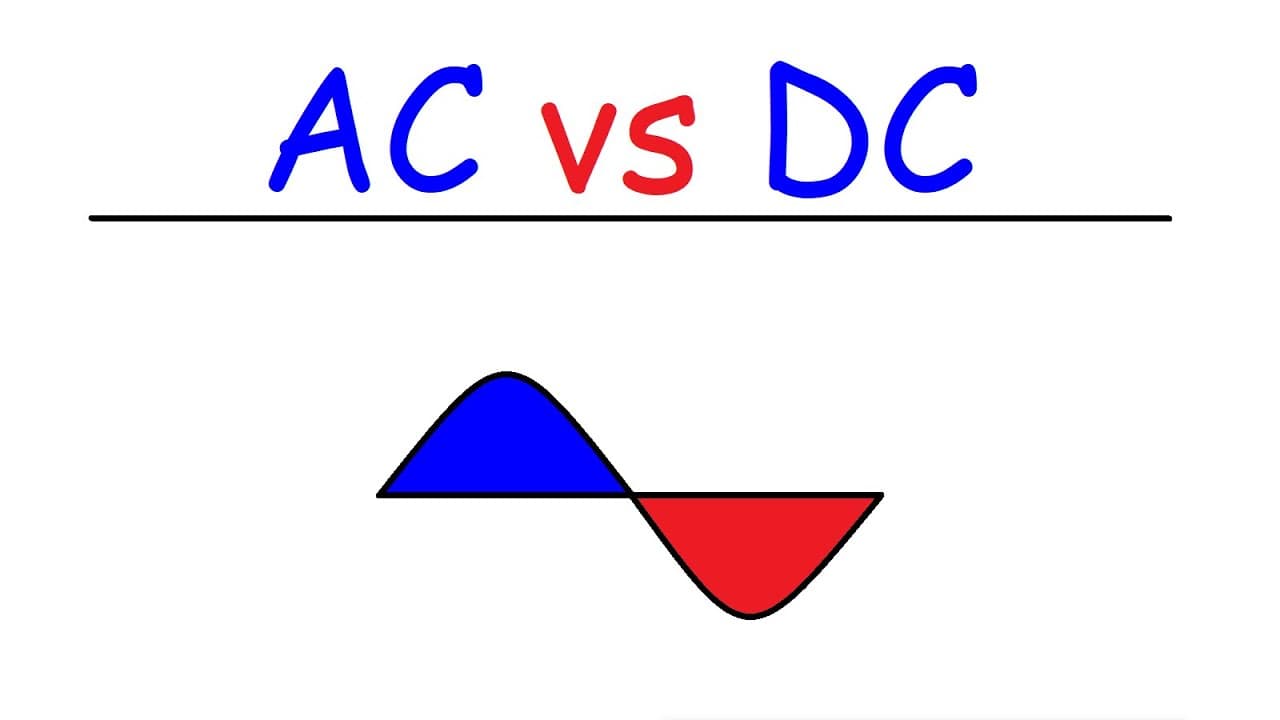
DC current flows in one direction, while AC current alternates in both directions based on frequency.
Transcript
in this video we're gonna talk about the difference between a DC and AC DC stands for direct current AC stands for alternating current when dealing with DC what you need to know is that the current it flows in only one direction when Dilla with alternating current the current alternates it can flow in both directions in one instant of time it could... Read More
Key Insights
- 💐 DC current flows in one direction, while AC current alternates its flow direction based on frequency.
- ✊ AC power outlets in the US have a frequency of 60 Hertz, meaning the current changes direction 60 times per second.
- ⚡ Transformers can increase or decrease the voltage of an AC power source, allowing for easy voltage conversion.
- ⚡ AC power outlets in the US have a peak voltage of 170 volts and an RMS voltage of 120 volts.
- ⌛ DC voltage remains relatively constant, but decreases over time for batteries.
- 🔋 Connecting two batteries in series can increase the voltage of a DC power source.
- ✊ Boost converters can step up the voltage of a DC power source by using an inductor, switch, diode, capacitor, and load resistor.
Install to Summarize YouTube Videos and Get Transcripts
Explore YouTube Video Summarizer or Get YouTube Transcript Extractor
Questions & Answers
Q: What is the difference between DC and AC current?
The main difference is that DC current flows in one direction, while AC current alternates and can flow in both directions based on frequency.
Q: How does the frequency of AC current affect its behavior?
The frequency determines how many times the current changes direction per second. In the US, outlets have a frequency of 60 Hertz, meaning the current changes direction 60 times per second.
Q: How is voltage calculated for AC power outlets?
The peak voltage for AC power outlets in the US is 170 volts. To calculate the RMS voltage, which is the effective voltage, it is divided by the square root of two, resulting in 120 volts.
Q: How does a transformer work in relation to AC power?
A transformer can either step up or step down the voltage of an AC power source. A step-up transformer increases voltage while decreasing current, and a step-down transformer reduces voltage while increasing current.
Summary & Key Takeaways
-
DC stands for direct current, where the current flows in only one direction. AC stands for alternating current, where the current alternates and can flow in both directions.
-
The frequency of AC current determines how many times the current changes direction per second. In the US, most outlets have a frequency of 60 Hertz.
-
AC power outlets in the US have a peak voltage of 170 volts, but the RMS voltage (root mean square) is 120 volts. DC voltage remains relatively constant, but decreases over time for batteries.
Read in Other Languages (beta)
Share This Summary 📚
Summarize YouTube Videos and Get Video Transcripts with 1-Click
Try YouTube Summary with ChatGPT & Claude or YouTube Transcript Generator
Explore More Summaries from The Organic Chemistry Tutor 📚



Summarize YouTube Videos and Get Video Transcripts with 1-Click
Try YouTube Summary with ChatGPT & Claude or YouTube Transcript Generator