How Does Iran's Strength Impact Global Politics?
TL;DR
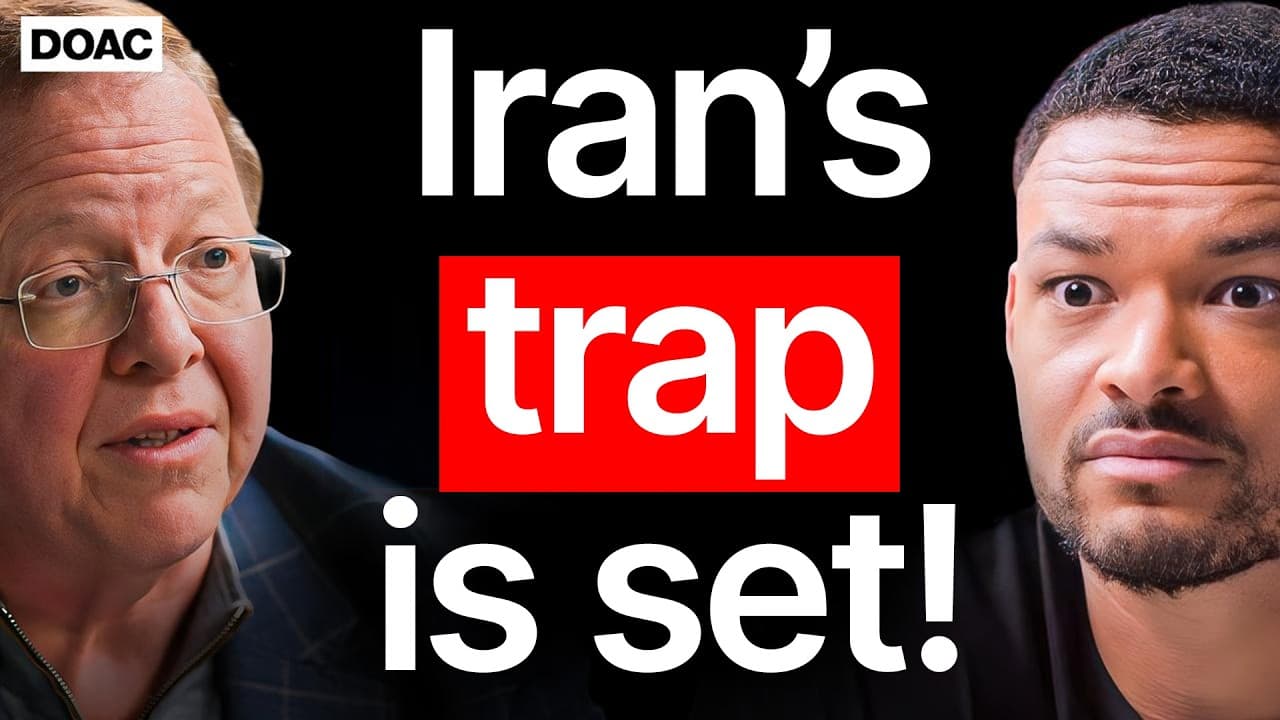
Iran's geopolitical influence is rising, challenging America's dominance. Despite military efforts, the U.S. struggles to weaken Iran, which has fortified its military assets. The situation is complex, with political and economic ramifications affecting global alliances and power dynamics.
Transcript
Iran has figured out that we can't beat them. We're not weakening Iran. We have strengthened Iran and we can't stop their drone attacks. And what you're seeing is far more chaotic decision-making is happening in the White House than is happening in the government of Iran and it's evidence Trump is losing power. So when I look through the response t... Read More
Key Insights
- Iran has strengthened its geopolitical position, challenging U.S. influence.
- Bombing campaigns fail to destroy Iran's enriched uranium, merely delaying its nuclear capabilities.
- Iran's control over the Strait of Hormuz gives it significant leverage in global oil markets.
- The U.S. faces a dilemma between ground war and accepting Iran as a regional power.
- Political reactions in Iran often counteract the effects of military actions.
- NATO's unity is questioned as European allies hesitate to support U.S. military actions.
- Iran's alliances with Russia and China could shift global power balances.
- A potential deal with Iran requires significant concessions, including military containment of Israel.
Install to Summarize YouTube Videos and Get Transcripts
Explore YouTube Video Summarizer or Get YouTube Transcript Extractor
Questions & Answers
Q: How has Iran strengthened its geopolitical position?
Iran has fortified its military assets, particularly its drone and missile arsenals, making it difficult for the U.S. to weaken its capabilities. Additionally, Iran's control over the Strait of Hormuz provides significant leverage in global oil markets, enhancing its regional influence and challenging U.S. dominance.
Q: Why do U.S. bombing campaigns fail to weaken Iran?
U.S. bombing campaigns target Iran's nuclear sites but fail to destroy the enriched uranium itself, which is often hidden or protected. This means that while infrastructure can be damaged, Iran's nuclear capabilities remain intact, allowing them to continue their nuclear development over time.
Q: What is the significance of the Strait of Hormuz?
The Strait of Hormuz is a crucial chokepoint for global oil transportation, with a significant portion of the world's oil passing through it. Iran's control over the strait allows it to influence global oil prices and exert political pressure on other countries, enhancing its geopolitical power.
Q: What are the challenges facing NATO in the current geopolitical climate?
NATO faces internal divisions as European allies are hesitant to support U.S. military actions against Iran. The alliance's unity is tested by differing national interests and the reluctance to engage in conflicts that could escalate tensions with Iran, complicating collective defense strategies.
Q: How might Iran's alliances with Russia and China affect global power dynamics?
Iran's growing ties with Russia and China could shift the global balance of power, creating a bloc that challenges Western dominance. This alliance could lead to coordinated efforts to counter U.S. influence, particularly in energy markets, and reshape international political and economic systems.
Q: What are the potential outcomes of the U.S. dilemma regarding Iran?
The U.S. faces a choice between initiating a ground war to curb Iran's influence or accepting Iran's rise as a regional power. Each option carries significant risks, including prolonged conflict or diminished U.S. influence in the Middle East, necessitating careful consideration of diplomatic and military strategies.
Q: What concessions might be required for a deal with Iran?
A potential deal with Iran would likely require the U.S. to lift sanctions and accept Iran's right to enrich uranium. Additionally, it may involve military containment of Israel to prevent further regional conflicts, representing a significant shift in traditional U.S. foreign policy positions.
Q: How does Iran's situation impact the average Iranian citizen?
The geopolitical tensions and military actions have severe implications for Iranian civilians, including threats to their safety, economic hardships, and potential loss of life. The ongoing conflict exacerbates existing challenges, making daily life increasingly difficult for the population, who are caught in the crossfire of international politics.
Summary & Key Takeaways
-
Iran has become a formidable geopolitical force, complicating U.S. efforts to maintain dominance in the region. Despite extensive bombing campaigns, the U.S. cannot eliminate Iran's nuclear capabilities, which are deeply entrenched and dispersed. This reality forces a reevaluation of military strategies and international alliances.
-
Iran's control over the Strait of Hormuz is a critical factor in global oil markets, granting it substantial economic and political leverage. As the U.S. grapples with these challenges, its traditional alliances, particularly with NATO, are strained, revealing fractures in transatlantic relations.
-
The U.S. is at a crossroads, facing the prospect of a prolonged ground war or accepting Iran as a rising regional power. This situation underscores the complexity of modern geopolitics, where military might alone cannot dictate outcomes. Diplomatic solutions may require unprecedented compromises, including addressing Israel's military actions.
Read in Other Languages (beta)
Share This Summary 📚
Summarize YouTube Videos and Get Video Transcripts with 1-Click
Try YouTube Summary with ChatGPT & Claude or YouTube Transcript Generator
Explore More Summaries from The Diary Of A CEO 📚





Summarize YouTube Videos and Get Video Transcripts with 1-Click
Try YouTube Summary with ChatGPT & Claude or YouTube Transcript Generator