What Are Allylic and Benzylic Halides: SN1 vs SN2?
TL;DR
Allylic and benzylic halides can undergo both SN1 and SN2 reactions, with the choice of nucleophile determining the mechanism. Primary allylic halides favor SN2 with strong nucleophiles like hydroxide, while water leads to SN1 reactions. Similarly, secondary benzylic halides tend towards SN1 when reacted with weak nucleophiles and SN2 with strong ones, while tertiary benzylic halides primarily undergo SN1.
Transcript
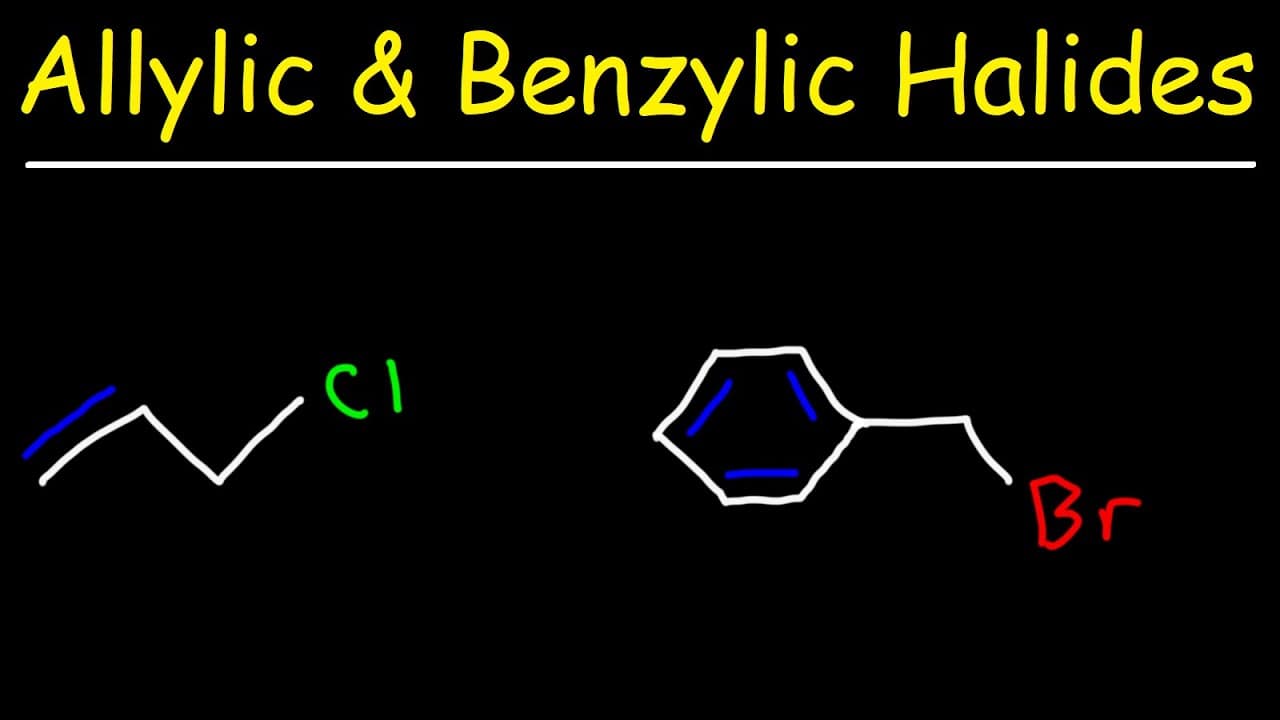
consider the reaction between three chloropropane and hydroxide what's going to be the major product of that reaction and also what mechanism will it proceed by would you say sn1 or sn2 now what we have here is a special type of halide this is known as an allylic halide allylic halides can work well with both sn1 and sn2 reactions now this is a pri... Read More
Key Insights
- ❓ Allylic halides can undergo both SN1 and SN2 reactions, depending on the nucleophile used.
- 🥺 Primary allylic halides favor SN2 reactions with hydroxide, while water leads to SN1 reactions.
- ❓ Benzylic halides can also undergo both SN1 and SN2 reactions, with primary and secondary benzylic halides favoring SN2 and SN1 reactions, respectively.
- 🥺 The presence of an available proton and the formation of conjugated alkenes can lead to E1 and E2 reactions in allylic and benzylic halides.
- 💦 Strong nucleophiles like hydroxide favor SN2 reactions, while weak nucleophiles like water favor SN1 reactions.
- ❓ Tertiary benzyl halides predominantly undergo SN1 reactions, while primary and secondary benzyl halides can undergo both SN1 and SN2 reactions.
- ❓ The stability of allylic and benzylic carbocations due to resonance increases the likelihood of SN1 reactions.
Install to Summarize YouTube Videos and Get Transcripts
Explore YouTube Video Summarizer or Get YouTube Transcript Extractor
Questions & Answers
Q: What is the major product when a primary allylic halide reacts with hydroxide? What mechanism does it proceed by?
The major product is formed through an SN2 mechanism, where hydroxide attacks the carbon, expelling the leaving group.
Q: How does the reaction between water and propyl chloride differ from the reaction between hydroxide and propyl chloride?
The reaction between water and propyl chloride is an SN2 reaction, while the reaction between hydroxide and propyl chloride is an SN1 reaction due to the primary carbocation formed.
Q: Can allylic halides undergo SN1 reactions?
Yes, allylic halides can undergo SN1 reactions, especially when a weaker nucleophile like water is used. The resonance stabilization of the primary allylic carbocation allows water to attack from different positions, resulting in the same product.
Q: Do benzylic halides favor SN2 or SN1 reactions?
Benzylic halides can undergo both SN2 and SN1 reactions. Primary benzylic halides favor SN2 reactions, while secondary benzylic halides favor SN1 reactions.
Summary & Key Takeaways
-
Allylic halides can undergo both SN1 and SN2 reactions.
-
Primary allylic halides react with hydroxide in an SN2 mechanism, while reaction with water proceeds through an SN1 mechanism.
-
Benzylic halides can also undergo both SN1 and SN2 reactions, with primary and secondary benzylic halides favoring SN2 and SN1 reactions, respectively.
Read in Other Languages (beta)
Share This Summary 📚
Summarize YouTube Videos and Get Video Transcripts with 1-Click
Try YouTube Summary with ChatGPT & Claude or YouTube Transcript Generator
Explore More Summaries from The Organic Chemistry Tutor 📚





Summarize YouTube Videos and Get Video Transcripts with 1-Click
Try YouTube Summary with ChatGPT & Claude or YouTube Transcript Generator