Why Is Bitcoin Defying Market Trends?
TL;DR
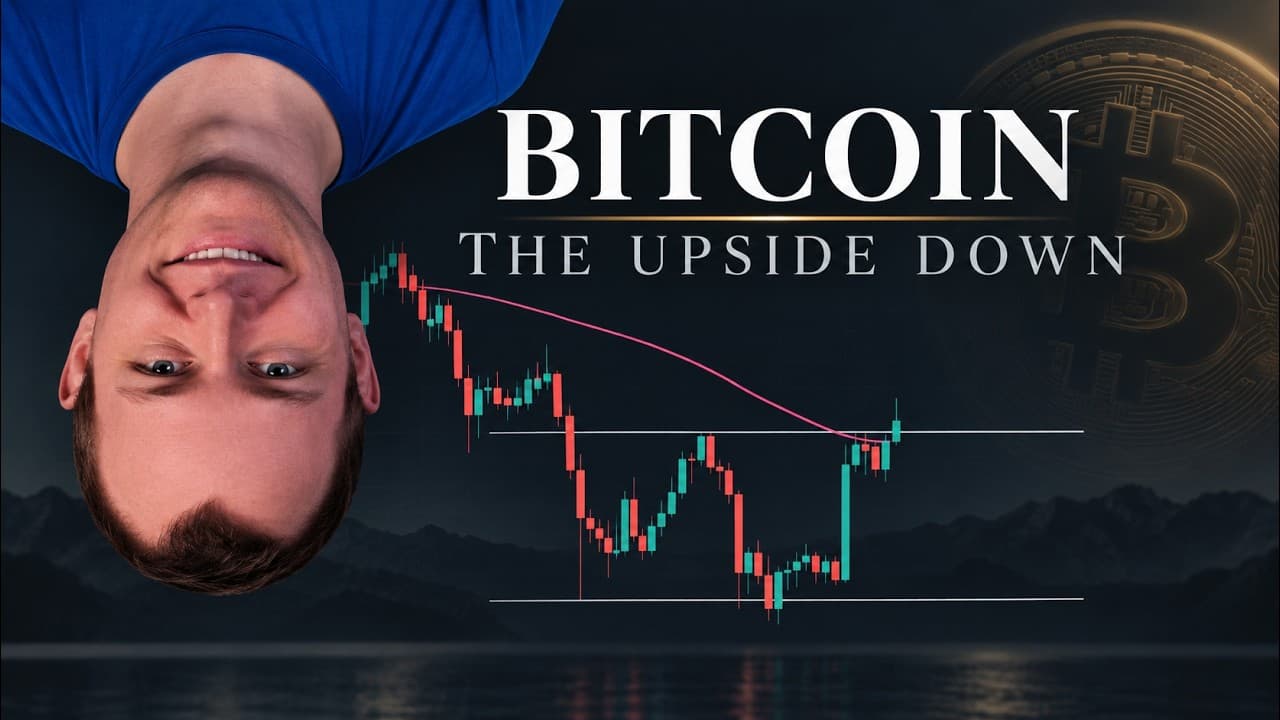
Bitcoin's unexpected rise contrasts with other market trends, challenging typical assumptions about its behavior. Despite macroeconomic factors like rising yields and energy prices, Bitcoin has defied expectations by not following the downward trajectory of other risk assets. This unpredictability highlights the unique nature of cryptocurrency markets.
Transcript
Hey everyone and thanks for jumping back into the cryptoverse. Today we're going to talk about Bitcoin the upside down. If you guys like the content, make sure you subscribe to the channel, give the video a thumbs up, and also check out the sale on into the cryptoverse premium at into the cryptoverse.com. And as a reminder, we are hosting the first... Read More
Key Insights
- Bitcoin is behaving contrary to traditional market expectations, rising when other assets fall.
- Rising energy prices and yields typically pressure risk assets, yet Bitcoin remains resilient.
- The Federal Reserve's slow rate hikes are not keeping pace with rising yields, affecting market dynamics.
- The S&P 500 has stalled due to macroeconomic pressures, unlike Bitcoin's recent performance.
- Historically, Bitcoin's breakouts in bear markets are rare, making current trends unusual.
- Market participants are divided on whether Bitcoin's recent high signals a long-term low.
- Macro forces like energy prices and dollar strength are affecting traditional markets more than Bitcoin.
- The unpredictability of Bitcoin challenges conventional market analysis and expectations.
Install to Summarize YouTube Videos and Get Transcripts
Explore YouTube Video Summarizer or Get YouTube Transcript Extractor
Questions & Answers
Q: Why is Bitcoin rising despite macroeconomic pressures?
Bitcoin's rise amid macroeconomic pressures like increasing energy prices and yields is surprising and defies traditional market logic. Typically, such pressures would depress risk assets, but Bitcoin's unique market dynamics and investor sentiment may be driving its resilience. This divergence highlights the distinct nature of cryptocurrency markets, which can operate independently of conventional economic indicators.
Q: How do rising energy prices affect financial markets?
Rising energy prices generally increase costs for businesses and consumers, leading to inflationary pressures. This often results in higher yields as investors demand more return for perceived risk, impacting risk assets negatively. However, Bitcoin's recent performance suggests it may not be as sensitive to these pressures, possibly due to its decentralized nature and unique investor base.
Q: What role does the Federal Reserve play in current market dynamics?
The Federal Reserve influences market dynamics through its interest rate policies. Currently, its slow response to rising yields is affecting traditional markets, as the long end of the yield curve rises faster than the Fed's rate hikes. This discrepancy can lead to increased volatility and uncertainty, impacting investor sentiment and asset valuations across markets.
Q: Why is the S&P 500 stalling while Bitcoin rises?
The S&P 500 is stalling due to macroeconomic pressures like rising yields, energy prices, and a strengthening dollar, which typically depress risk assets. In contrast, Bitcoin's rise suggests it operates under different dynamics, possibly due to its decentralized nature and speculative investor behavior, allowing it to diverge from traditional market trends.
Q: What is the significance of Bitcoin breaking out in a bear market?
Bitcoin breaking out in a bear market is significant as it challenges typical market behavior, where risk assets usually decline. This breakout suggests that Bitcoin may be driven by unique factors, such as investor sentiment and speculative trading, that are not as prevalent in traditional markets, highlighting its distinct market dynamics.
Q: How do macro forces like the dollar strength affect markets?
Macro forces like dollar strength typically impact markets by making US-denominated assets more expensive, reducing foreign investment in risk assets. This can lead to market corrections. However, Bitcoin's recent rise suggests it may be less affected by these forces, possibly due to its global appeal and decentralized nature, allowing it to operate independently.
Q: What are the risks of being a breakout trader in current markets?
Breakout traders face risks in current markets due to high volatility and unpredictable movements, especially in assets like Bitcoin. While breakouts can signal upward trends, false breakouts can lead to significant losses if markets reverse. Traders must be cautious and consider macroeconomic factors and historical patterns when making decisions.
Q: Why do markets sometimes not make sense?
Markets may not make sense due to complex interactions between macroeconomic factors, investor sentiment, and speculative behavior. Unpredictable events and unique asset characteristics, like Bitcoin's decentralized nature, can lead to unexpected market movements. This complexity challenges traditional analysis and requires a nuanced understanding of various influences on market behavior.
Summary & Key Takeaways
-
Bitcoin's recent behavior defies typical market trends, rising even as energy prices and yields increase. This unexpected performance highlights the unique dynamics of cryptocurrency markets, contrasting with traditional assets like the S&P 500, which have stalled. The Federal Reserve's slow response to rising yields adds complexity to the market landscape.
-
Despite macroeconomic pressures that typically depress risk assets, Bitcoin has shown resilience, breaking out above previous highs. This behavior is unusual for a bear market, suggesting that Bitcoin operates under different rules compared to traditional financial markets. The unpredictability of Bitcoin's movements challenges investors' expectations.
-
The current market environment, characterized by rising energy prices and a strengthening dollar, has stalled traditional assets like the S&P 500. However, Bitcoin's surprising rise suggests that it may not be as affected by these macroeconomic factors, highlighting the distinct nature of cryptocurrency markets and their divergence from traditional market behavior.
Read in Other Languages (beta)
Share This Summary 📚
Summarize YouTube Videos and Get Video Transcripts with 1-Click
Try YouTube Summary with ChatGPT & Claude or YouTube Transcript Generator
Explore More Summaries from Benjamin Cowen 📚






Summarize YouTube Videos and Get Video Transcripts with 1-Click
Try YouTube Summary with ChatGPT & Claude or YouTube Transcript Generator