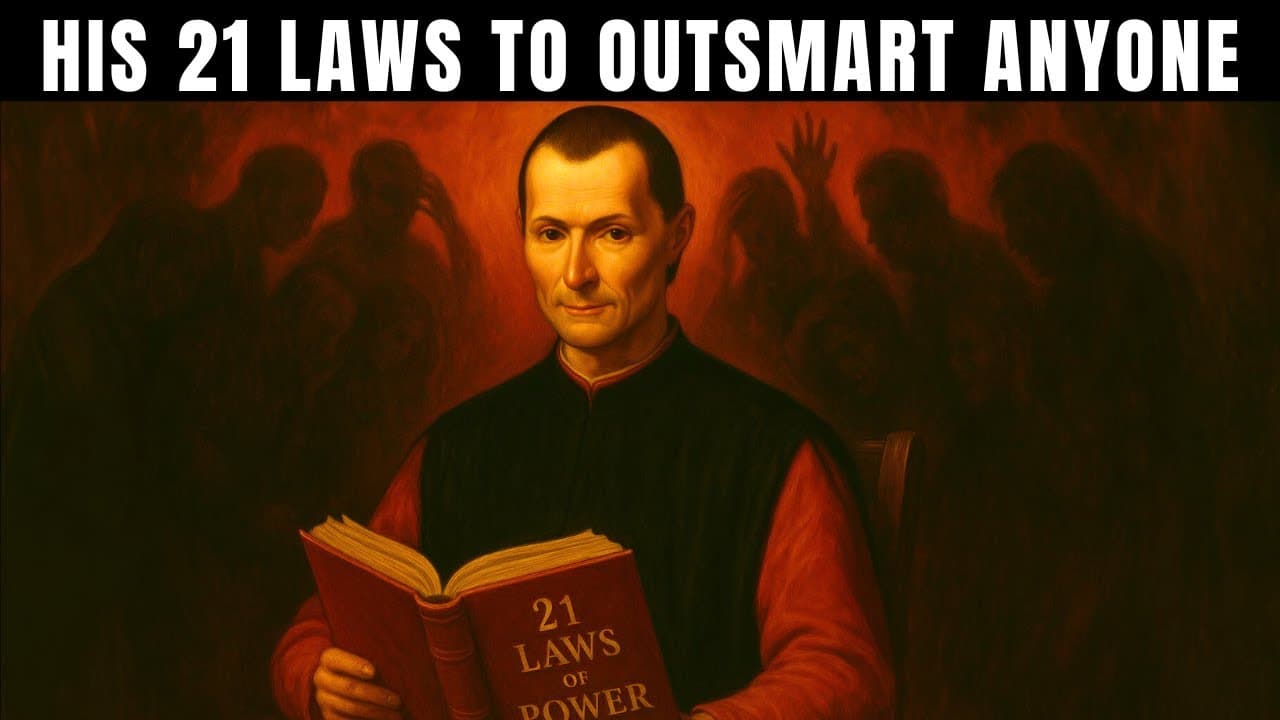
Machiavelli's 21 Laws of Power: How to Outsmart Anyone
TL;DR
Power comes from being needed, not liked, and from staying unreadable. Machiavelli's rules for the modern world stress controlling your emotions, hiding your plans, making others depend on you, and guarding your reputation. Stay calm, stay mysterious, and move your pieces silently while others react.
Transcript
Look around you. Life isn't fair. It never was. Good people get walked on. Loyal people get betrayed. Honest people get left behind. And the quiet truth is the world doesn't care about your kindness, your effort, or your heart. What it cares about is power. Every day, someone is outsmarting you. Your coworker who smiles in your face but steals your... Read More
Key Insights
- Never showing all your cards is the first step to power, because once people know your strengths, plans, and weaknesses, they can copy, attack, or trap you without lifting a finger. Mystery generates fear and respect.
- Controlling your emotions is essential, since the moment you lose your temper you lose the game. A calm man watches insults and betrayal but stays untouched, forcing the world to dance around him.
- Power comes from being needed rather than being liked. People who can replace you never truly respect you, while those who cannot function without you will never betray you, making dependency invisible chains.
- Mastering disguise means wearing the right mask at the right time, acting harmless to hide ambition or playing weak so enemies never see your strength until it is too late. This is survival, not hypocrisy.
- Striking first creates the rules of the game. Opportunities are stolen in silence, so the one who moves first at the right time writes the story, while the one who hesitates becomes the story.
- Reputation is armor and a weapon because perception is everything and your reputation walks into the room before you do. A single rumor can ruin opportunities, and most people won't ask if it's true.
- Keeping plans invisible protects power, since announcing your next move lets others block the road, sabotage you out of jealousy, or steal your idea. Successful people rarely explain what they're doing until it's done.
- Using absence to gain respect works because familiarity breeds contempt and scarcity increases value. Stepping back strategically turns curiosity into respect and reveals who truly values you versus who only notices when you're gone.
Install to Summarize YouTube Videos and Get Transcripts
Explore YouTube Video Summarizer or Get YouTube Transcript Extractor
Questions & Answers
Q: What are Machiavelli's laws of power about?
They are 21 rules adapted for the modern world based on Niccolo Machiavelli's observations of how some men controlled the world while others were crushed. The rules teach you to move like a shadow, outsmart everyone in the room, and make people think they are winning while you hold every card. Core themes include mystery, emotional control, dependency, disguise, and reputation, all aimed at commanding respect without asking for it.
Q: Why should you never show all your cards?
The moment people know everything about you, you are finished. Your strengths they will try to copy, and your weaknesses they will attack. Friends, coworkers, and even family are often calculating your limits rather than plotting your success. When they know your plans, fears, and moves, they can trap you without lifting a finger. Power lives in mystery, so the less people understand about you, the more they fear and respect you. Reveal only what serves you.
Q: How do you control your emotions to gain power?
The moment you lose your temper, you lose the game, because people can smell anger and taste desperation, and once they see you react emotionally they know how to manipulate you. The calm man sees the storm but doesn't let it touch him, moving like a rock in the river while others drown. A coworker might push your buttons or a friend might joke about your weakness to test you. Staying calm with silence, a small smile, and patience destroys enemies faster than shouting.
Q: Why is making people depend on you more powerful than being liked?
Power doesn't come from being liked, it comes from being needed. People who can replace you will never truly respect you, while people who cannot function without you will never betray you. The smartest players build loyalty through dependency by becoming the person with the solution, knowledge, connection, or skill others secretly rely on. Your boss might not like you, but if the system breaks without you, you're untouchable. Dependency acts as invisible chains that move people how you want.
Q: What does mastering the art of disguise mean?
It means wearing the right mask at the right time because the world is a stage. Sometimes you must act harmless to hide your ambition, smile at people you plan to outsmart, or play weak so they never see your strength until it's too late. This is survival, not hypocrisy, since people don't attack what they don't see coming. In your job, friendships, and family, blend in while silently moving your pieces, appearing predictable while you are ten steps ahead.
Q: Why should you strike first instead of waiting?
Power is not patient, and the world does not reward those who wait politely for their turn. If you hesitate, someone else takes the move that should have been yours, because opportunities are stolen in silence. The first strike creates the rules of the game. If you see an opening, take it; if you sense betrayal, act before it lands. This is not reckless aggression but calculated dominance, since the one who moves first writes the story while the one who hesitates becomes the story.
Q: How important is protecting your reputation?
In the game of power, perception is everything and your reputation walks into the room before you do. People decide your worth and place in the world based on the story they believe about you. Once your reputation is damaged, you lose leverage, and a single rumor can ruin opportunities because most people won't ask if it's true, they'll just believe it. The powerful guard their name like a fortress, avoid pointless drama, and make their wins visible so the world treats them as strong.
Q: Why does using absence gain respect?
Familiarity breeds contempt, so the more people see you, the less they value you. When you are always available and present, people take you for granted, but power grows in scarcity. Stepping back strategically makes people wonder, turning curiosity into respect and making absence create importance. Mystery makes the world lean forward and makes your presence feel heavier. Distance also filters loyalty, letting you see who really values you and who only notices when you're gone, faster than words ever could.
Summary & Key Takeaways
-
Machiavelli observed 500 years ago that life is a silent battlefield where the world cares about power, not kindness. Coworkers steal credit, friends envy, and relatives whisper. If you don't know how to play the game, you become the one being played.
-
The rules emphasize being unreadable, controlling emotions, and making yourself indispensable. Reveal only what serves you, stay calm to avoid manipulation, and build loyalty through dependency so others rely on your knowledge, skill, or connections and cannot afford to lose you.
-
Additional rules cover wearing masks to hide ambition, striking first to set the game's rules, guarding your reputation like a fortress, keeping plans secret, using strategic absence to raise your value, turning enemies into fuel, and rewarding loyalty without ever depending on it.
Read in Other Languages (beta)
Share This Summary 📚
Summarize YouTube Videos and Get Video Transcripts with 1-Click
Try YouTube Summary with ChatGPT & Claude or YouTube Transcript Generator
Explore More Summaries from Dark Psychology Coded 📚





Summarize YouTube Videos and Get Video Transcripts with 1-Click
Try YouTube Summary with ChatGPT & Claude or YouTube Transcript Generator