How Did the Kansas-Nebraska Act Change American Politics?
TL;DR
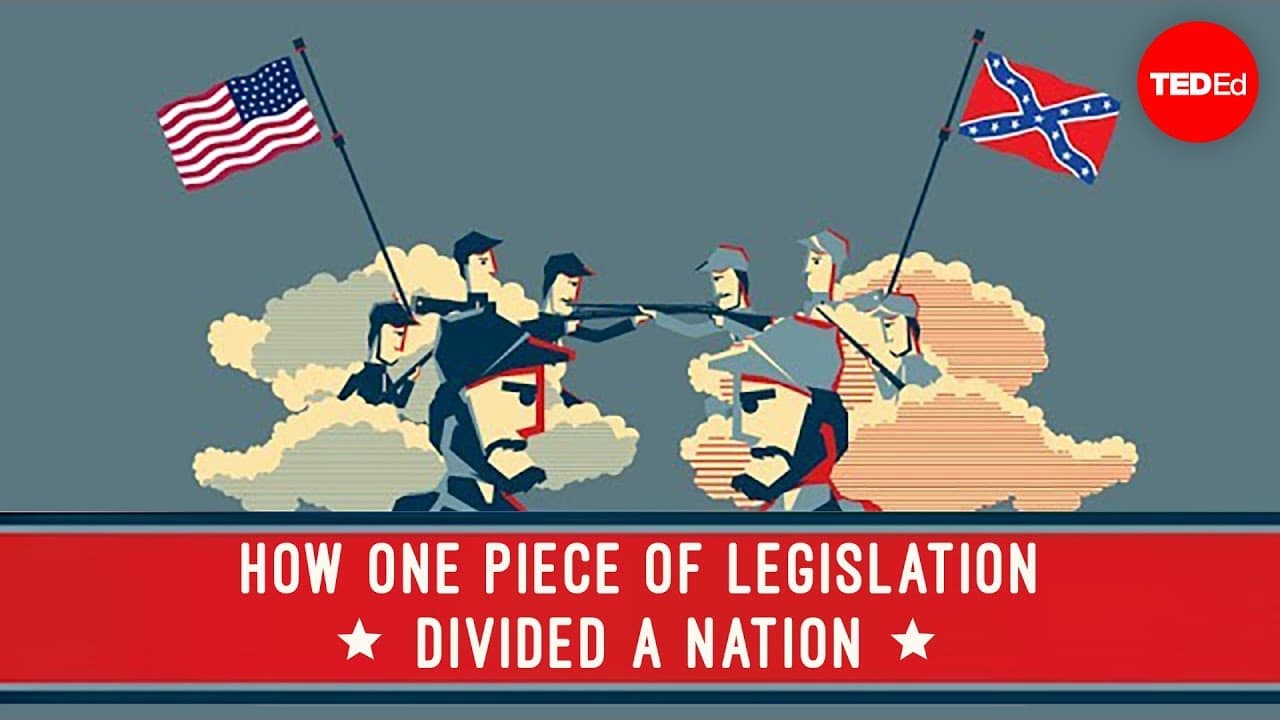
The Kansas-Nebraska Act of 1854 repealed the Missouri Compromise and introduced popular sovereignty, leading to a divided Congress and the rise of the Republican Party. It intensified regional tensions over slavery and set the stage for the Civil War, marking it as one of the most impactful pieces of legislation in U.S. history.
Transcript
Today when people complain about the state of American politics, they often mention the dominance of the Democratic and Republican Parties, or the sharp split between red and blue states. But while it may seem like both of these things have been around forever, the situation looked quite different in 1850, with the Republican Party not yet existing... Read More
Key Insights
- 👻 The Kansas-Nebraska Act of 1854 repealed the Missouri Compromise and allowed popular sovereignty for deciding slavery in new territories.
- 🫥 By dividing Congress along sectional lines, the Act contributed to the collapse of the Second Party System.
- 😮 The Act's passage led to the rise of the Republican Party as a major political force in the North.
- 🇺🇸 The violent clashes in Kansas caused by the Act highlighted the deepening divide over slavery in the United States.
- 😥 Abraham Lincoln's denouncement of the Act and subsequent involvement in the Republican Party marked a turning point in American politics.
- 🥺 The Act's consequences ultimately led to the Civil War and Abraham Lincoln's presidency.
- 🕰️ The Kansas-Nebraska Act is remembered as one of the most consequential pieces of legislation in American history due to its role in escalating tensions over slavery.
Install to Summarize YouTube Videos and Get Transcripts
Explore YouTube Video Summarizer or Get YouTube Transcript Extractor
Questions & Answers
Q: What was the significance of the Kansas-Nebraska Act in American history?
The Kansas-Nebraska Act led to the repeal of the Missouri Compromise, increased regional tensions, the rise of the Republican Party, and ultimately, the Civil War.
Q: How did the Kansas-Nebraska Act impact the political landscape of the United States?
The Act shattered the Second Party System, divided Congress along sectional lines, and led to the birth of the Republican Party as a major political force.
Q: What role did Stephen A. Douglas play in the passage of the Kansas-Nebraska Act?
Stephen A. Douglas, a Democratic Senator, championed the Act to promote western expansion and popular sovereignty, inadvertently sparking national division over the issue of slavery.
Q: How did the Kansas-Nebraska Act contribute to the outbreak of violence in Kansas?
The Act incited violent clashes between pro-slavery Border Ruffians and anti-slavery settlers in Kansas, leading to the Pottawatomie Massacre and "Bleeding Kansas."
Summary & Key Takeaways
-
The Kansas-Nebraska Act of 1854 led to the collapse of the Second Party System and increased regional tensions.
-
The Act repealed the Missouri Compromise and allowed popular sovereignty for deciding slavery within new territories.
-
This legislation led to the rise of the Republican Party, the Civil War, and Abraham Lincoln's presidency.
Read in Other Languages (beta)
Share This Summary 📚
Summarize YouTube Videos and Get Video Transcripts with 1-Click
Try YouTube Summary with ChatGPT & Claude or YouTube Transcript Generator
Explore More Summaries from TED-Ed 📚





Summarize YouTube Videos and Get Video Transcripts with 1-Click
Try YouTube Summary with ChatGPT & Claude or YouTube Transcript Generator