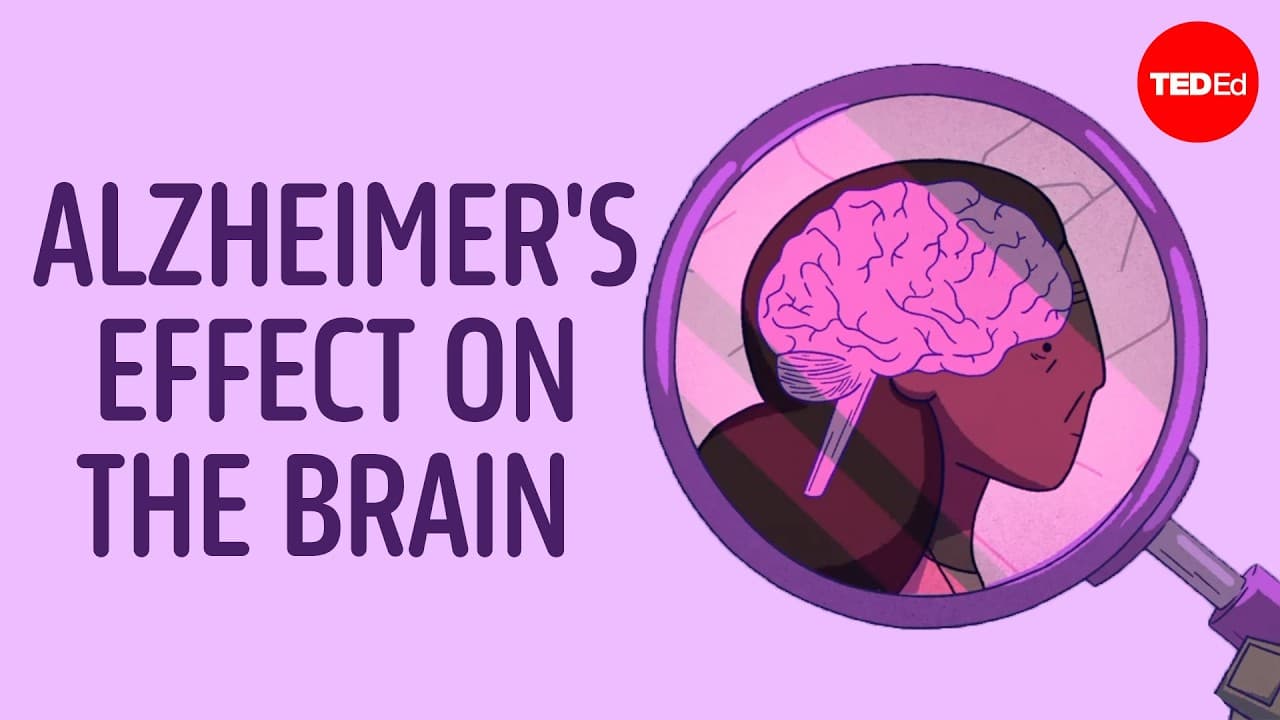
Can you prevent Alzheimer's disease? - Krishna Sudhir
TL;DR
Alzheimer's disease, a devastating brain disorder, remains difficult to treat due to its complex nature, involving abnormal proteins, changes in immune cells and synaptic function, and alterations in energy production in the brain.
Transcript
Around the world, tens of millions of people have Alzheimer's disease, a debilitating brain disorder that gradually destroys a person's memory and other cognitive abilities. It takes a heavy toll on both patients and families, as caring for a loved one with Alzheimer's can be emotionally overwhelming and financially difficult. While doctors have st... Read More
Key Insights
- ❓ Alzheimer's disease is the most common cause of dementia, affecting a majority of dementia patients worldwide.
- ❓ The disease typically manifests in individuals in their 60s, initially causing mild memory problems and gradually progressing over many years.
- 🧑🏭 Multiple factors, including genetic predisposition, environmental influences, and lifestyle choices, contribute to the development of Alzheimer's disease.
- 🖐️ Abnormal proteins, such as beta-amyloid plaques and tau protein tangles, play a significant role in the pathology of the disease.
- 🧠 Alzheimer's is a complex condition involving changes in immune cell function, synaptic problems, and energy metabolism in the brain.
- 👨🔬 Research efforts continue to focus on finding effective treatment options, with medications targeting neurotransmitters and beta-amyloid showing promise.
- 🐢 Encouraging patients to stay mentally and physically active may help slow disease progression and manage symptoms.
Install to Summarize YouTube Videos and Get Transcripts
Explore YouTube Video Summarizer or Get YouTube Transcript Extractor
Questions & Answers
Q: What causes Alzheimer's disease?
Alzheimer's disease is caused by a complex interaction of multiple genes, lifestyle factors, and environmental influences. While some rare forms are linked to a single inherited gene variant, most cases involve a combination of genetic and environmental factors.
Q: What role do beta-amyloid plaques and tau protein tangles play in Alzheimer's?
Beta-amyloid plaques, formed from improperly cleaved amyloid-beta precursor protein (APP), accumulate between neurons and disrupt brain signaling. Tau protein, when modified and misfolded, forms toxic tangles within neurons, eventually leading to cell death.
Q: Why do some individuals with plaques not develop dementia?
The presence of plaques is not always directly linked to the development of dementia. Other factors, such as changes in immune cell function (microglia), synaptic problems, and energy production abnormalities in the brain, likely contribute to Alzheimer's symptoms.
Q: Are there any effective treatments for Alzheimer's?
While there is currently no cure for Alzheimer's disease, medications targeting neurotransmitters can help slow memory loss and improve cognitive function. Experimental drugs aimed at reducing beta-amyloid plaque accumulation have shown promise in clinical trials.
Summary & Key Takeaways
-
Alzheimer's disease affects tens of millions of people worldwide, causing memory loss and cognitive decline, with significant emotional and financial impact on patients and families.
-
The disease is challenging to treat because of its complex causes, involving a combination of genetic, lifestyle, and environmental factors.
-
Abnormal buildup of beta-amyloid plaques and misfolded tau protein tangles in the brain are key features of Alzheimer's, but their exact relationship and contribution to symptoms remains unclear.
Read in Other Languages (beta)
Share This Summary 📚
Summarize YouTube Videos and Get Video Transcripts with 1-Click
Try YouTube Summary with ChatGPT & Claude or YouTube Transcript Generator
Explore More Summaries from TED-Ed 📚





Summarize YouTube Videos and Get Video Transcripts with 1-Click
Try YouTube Summary with ChatGPT & Claude or YouTube Transcript Generator