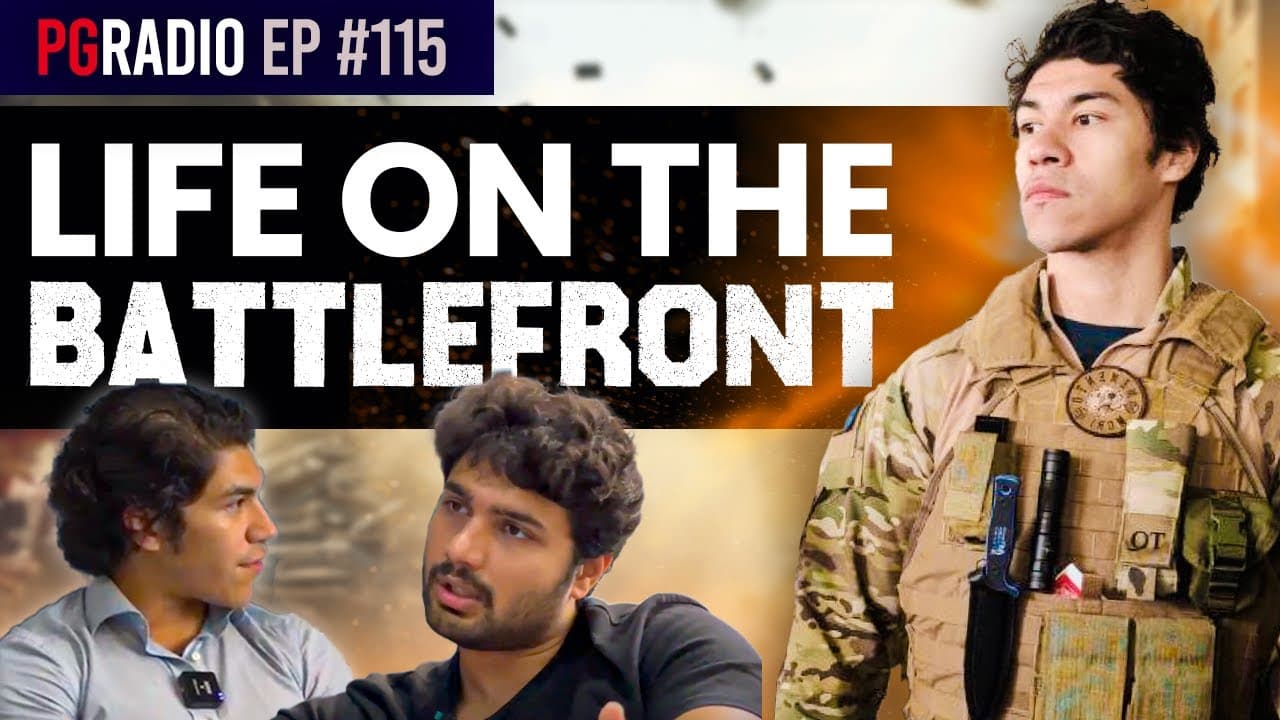
Why I Left the US to Fight in Ukraine's Trenches | PG Radio Ep. 115
TL;DR
Brian flew from New York to Poland and then Odessa to fight alongside Ukrainian forces, not out of hatred for Russians but out of love for what Ukraine represents. He recounts getting hit by close artillery while digging a trench, hunting a sniper who crossed from Russian territory, and riding night trains that run only after dark to avoid daytime bombing. Raised in Nicaragua under a semi-communist environment, he explains how that shaped his choice. Read on for how combat reframed his view of duty, love, and sacrifice.
Transcript
there was a time I'm digging this trench we got hit by artillery it was extremely close what you do in the situations is that you have to run into the trenches and just pretty much hope for the best and just hope for the best now there was a sniper that had come across from the Russian territory into the Ukrainian lines loaded up with the 8K and it... Read More
Key Insights
- 😚 Battle experiences in Ukraine involved navigating artillery attacks and close encounters with snipers.
- 🎖️ Brian's military background and training in the Navy prepared him for the challenges of combat.
- 🇺🇦 Warfare in Ukraine has strategic implications for both the political and economic landscape of the region.
- 🇺🇦 Combat experiences highlighted the emotional and physical toll of conflict on individuals in Ukraine.
- ❓ The concept of hermesis and the benefits of fasting and stress on the body during combat situations.
- 🥺 Insights gained from combat experiences can lead to personal growth and transformation.
- 🛟 The impact of combat on daily life and the sense of duty and sacrifice involved in fighting in Ukraine.
Install to Summarize YouTube Videos and Get Transcripts
Explore YouTube Video Summarizer or Get YouTube Transcript Extractor
Questions & Answers
Q: Why did Brian go to fight in Ukraine?
Brian says he went to fight with Ukraine, not against the Russians, drawing a clear distinction between the two. His motivation was love for what the Ukrainian concept and people represent rather than hatred for Russia. He identifies strongly with the values and systems he saw there, saying the people might as well be his brothers and sisters.
Q: How did Brian's background in Nicaragua influence his decision?
Brian was born in California but raised in Nicaragua, where he grew up in a semi-communist environment tied closely to Russia and Cuba. He witnessed and lived through how oppressive communism could become, and his uncle was killed during the war in Nicaragua between communist and imperial forces. He believes this dislike of the communist sentiment played at least a subconscious role in his choice to go to Ukraine.
Q: What was Brian's military experience before Ukraine?
Brian trained militarily in the Marine Corps, which he describes as essentially part of the Navy. However, he was never a fighting soldier during that time. Ukraine was his first actual combat experience to the extent of being on the front lines.
Q: What happened during the artillery attack Brian describes?
While digging a trench, Brian's position was hit by artillery that landed extremely close. He explains that in those situations you have to run into the trenches and pretty much just hope for the best. The constant threat meant relying on quick reactions and instincts to survive.
Q: How did Brian travel into Ukraine during the war?
You cannot fly directly into Ukraine right now, so Brian flew from New York into Warsaw, Poland, then continued on to Odessa. The train system inside Ukraine is mostly operating but runs primarily at night, since traveling in the day makes you a more liable target for bombing.
Q: Why is Odessa strategically important in the conflict?
Odessa is one of the most contested cities because Russia ultimately wants to reach it. Brian explains that if Russia can move from Kherson all the way to Odessa, Ukraine would become a landlocked nation with no water ports whatsoever. That would leave the country completely surrounded and cut off from sea access.
Q: What was daily life like for people living under the bombing?
Brian was struck by how people continued to sleep in places where bombing was happening everywhere at night. He describes watching people simply grab their blankets and go to sleep amid the danger. It shaped his reflection on how war weighs on the daily lives of ordinary people in Ukraine.
Q: What did Brian learn about war and human motivation?
Brian reflects that men wage war for profit and principles, but fight it for the land, the women, and the children. His combat experiences deepened his understanding of the interconnection between love, sacrifice, and warfare. He frames the fight as an act rooted in duty rather than animosity.
Summary & Key Takeaways
-
Brian shares his experiences fighting in combat zones and being in the trenches in Ukraine.
-
He describes the intense moments of artillery attacks and going after a sniper from Russian territory.
-
Brian discusses the impact of warfare on the daily lives of people in Ukraine and the strategic implications of the conflict.
Read in Other Languages (beta)
Share This Summary 📚
Summarize YouTube Videos and Get Video Transcripts with 1-Click
Try YouTube Summary with ChatGPT & Claude or YouTube Transcript Generator
Explore More Summaries from Prakhar ke Pravachan 📚

Summarize YouTube Videos and Get Video Transcripts with 1-Click
Try YouTube Summary with ChatGPT & Claude or YouTube Transcript Generator