How Does Nietzsche Explain Political Disputes?
TL;DR
Nietzsche's philosophy illustrates how conflicting moral views on voting reveal deeper societal issues. By highlighting the subjective nature of morality, the video examines how hierarchical relationships influence political opinions and shape individual beliefs, ultimately connecting personal narratives to broader societal challenges.
Transcript
I have a friend who I'm pretty sure voted for Donald Trump and right before Christmas he was upset because his daughter supported Harris and she didn't want her Republican relatives around for the holidays my friend couldn't understand this perspective he said that politics is personal and you should never shun someone least of all a family member ... Read More
Key Insights
- ❓ Familial conflicts over politics often reveal deeper philosophical disagreements about morality and individual agency.
- 🫵 Nietzsche’s concept of morality is subjective, influencing contemporary debates on political choices and views on social justice.
- 💠 The hierarchy within relationships can complicate discussions about politics, as authority and responsibility shape expectations.
- 🫥 Climate change acts as a universal concern that crosses political lines, illustrating interconnectedness regardless of individual beliefs.
- 🧑🏭 Personal narratives significantly impact one's moral framework, shaping how individuals perceive facts and reality.
- 🥺 The tension between capitalism and individual values often creates a systematic conflict that can lead to feelings of nihilism.
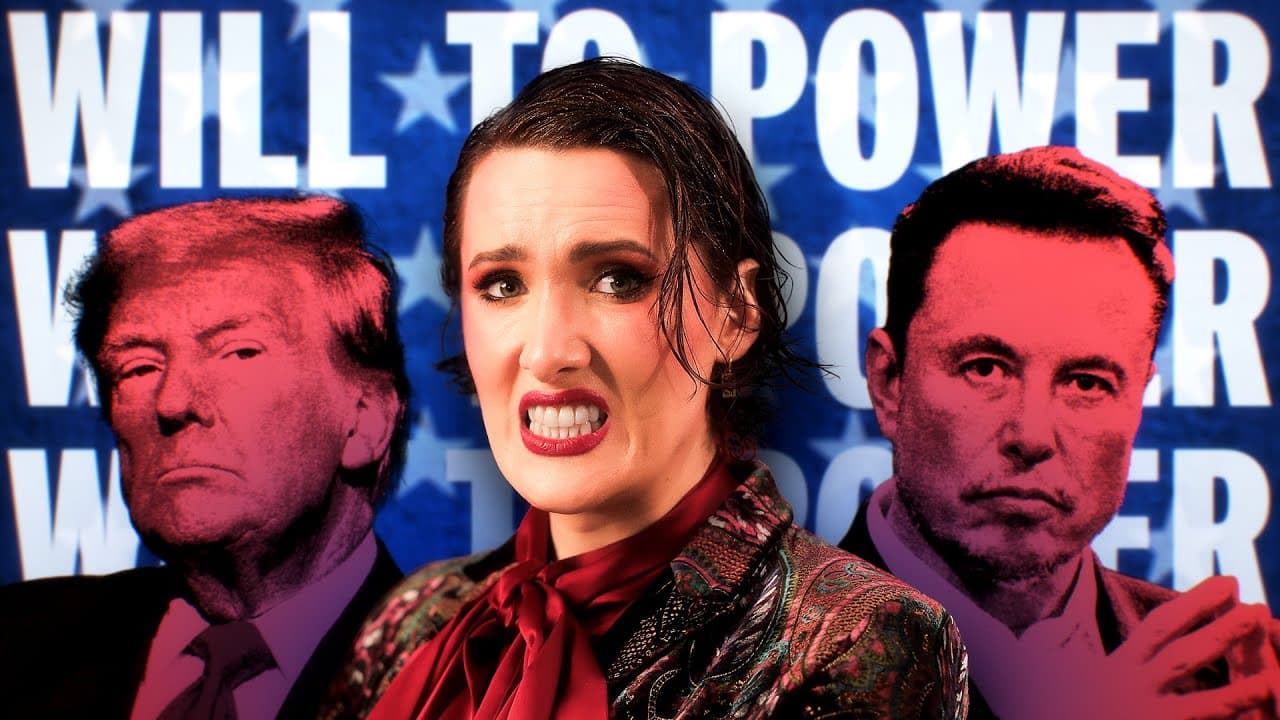
- ✊ Political ideologies can be analyzed through the lens of 'Will to Power,' revealing underlying motivations behind actions and beliefs.
Install to Summarize YouTube Videos and Get Transcripts
Explore YouTube Video Summarizer or Get YouTube Transcript Extractor
Questions & Answers
Q: How does the disagreement between the father and daughter reflect broader societal divides?
The father's belief that politics is personal highlights the subjective nature of morality, which contrasts with the daughter's view of a universal moral standard. This disagreement encapsulates wider societal divides, where individuals interpret political choices through personal experiences and social values, leading to fractious relationships even within families.
Q: What does Nietzsche's philosophy contribute to understanding modern political discourse?
Nietzsche's work emphasizes that morality is not universal but varies per individual perspective, a concept that applies to current political discourse. This understanding helps to explain why individuals feel justified in their political choices, revealing that moral values can differ significantly based on personal or cultural backgrounds.
Q: How does the speaker illustrate the relationship between capitalism and personal values?
The speaker posits that capitalism often prioritizes profit over individual values, creating a conflict where people must compromise their beliefs to survive financially. This capitalist impetus can conflict with the democratic notion of valuing individual freedom and pluralism, leading to discontent and feelings of nihilism in society.
Q: What role does the concept of 'Will to Power' play in the discussion?
'Will to Power,' as introduced by Nietzsche, represents individuals' inherent drive to assert themselves and shape their destinies. The speaker argues that this concept demonstrates how actions and motivations, whether altruistic or self-serving, ultimately relate to how people navigate their societal positions and assert their values in conflicts.
Q: How does the anecdote about the vaccine conversation illustrate personal perspectives in moral discussions?
The woman’s vaccine hesitance emphasizes how personal experiences shape opinions; her history influenced her distrust in medical science. This underscores the philosophical idea that personal narratives play critical roles in shaping individuals' moral beliefs and political stances, reinforcing the perspective-based interpretation of truth.
Q: What implications does this discussion have for understanding anti-modernism?
The content suggests that anti-modernism emerges from the discomfort with changing values and the questioning of established norms. It warns against viewing societal shifts as nihilism, highlighting the tension between maintaining individual freedoms and accommodating evolving definitions of morality and identity.
Q: How does the notion of hierarchy within familial relationships relate to political beliefs?
The father’s perception of authority over his daughter reflects a belief in hierarchy, with differing moral frameworks based on familial roles. This dynamic illustrates how personal and political beliefs can intertwine, as hierarchical views may shape individuals' expectations regarding moral behavior and political engagement within families.
Q: In what way does the speaker advocate for pluralism and individual freedom?
The speaker expresses support for pluralism, suggesting that a diversity of opinions is vital for healthy societal growth. They argue that individual freedom allows people to explore and adjust their values, which enriches personal development and fosters a more inclusive society, even amidst conflicting perspectives.
Summary & Key Takeaways
-
The content discusses a familial dispute rooted in differing moral perspectives on voting, with one party viewing political choices as personal and the other seeing them as a universal moral issue.
-
The philosophical underpinnings from Friedrich Nietzsche are explored, particularly regarding morality's subjective nature and the implication of hierarchy in familial relationships.
-
The discussion extends to contemporary societal issues such as climate change and the perception of facts, illustrating how individual perspectives can shape moral judgments and societal beliefs.
Read in Other Languages (beta)
Share This Summary 📚
Summarize YouTube Videos and Get Video Transcripts with 1-Click
Try YouTube Summary with ChatGPT & Claude or YouTube Transcript Generator
Explore More Summaries from Philosophy Tube 📚
Summarize YouTube Videos and Get Video Transcripts with 1-Click
Try YouTube Summary with ChatGPT & Claude or YouTube Transcript Generator