How to Learn Any Skill in Just Two Weeks
TL;DR
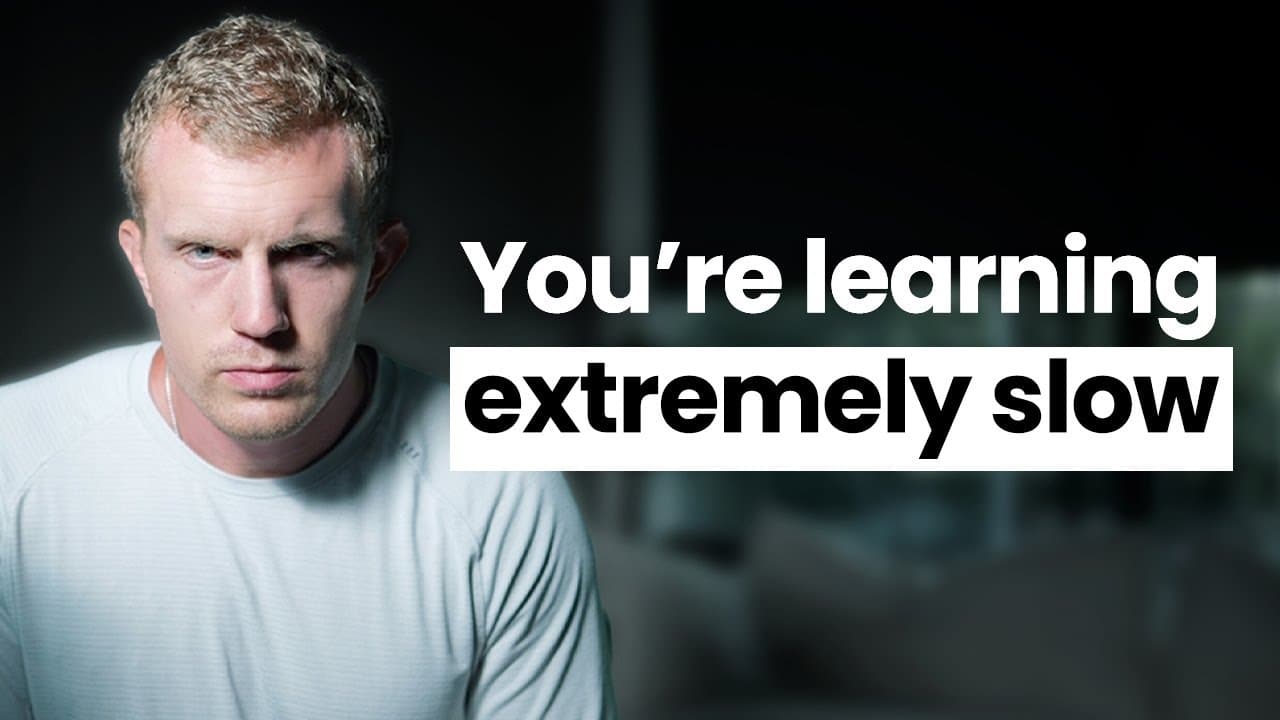
You can effectively learn any skill in two weeks by focusing on technique stacking, which involves breaking down skills into smaller, manageable techniques. Prioritize purposeful practice over traditional education methods, eliminate distractions to enhance focus, and use tactical stress to create high-pressure situations that accelerate your learning process.
Transcript
You can learn anything in two weeks. And I know that sounds insane to most people, but I'm not talking about mastering a skill in its entirety. Obviously, that takes like ten years. I'm not talking about mastering any specific topic. I'm talking about making substantial progress toward a goal in your life. In two weeks, you can learn enough in that... Read More
Key Insights
- Skill acquisition is about technique stacking, where each skill is broken down into smaller techniques that can be mastered individually.
- Traditional education often fails to equip individuals with practical skills, leading to underutilization of learned knowledge in real-world scenarios.
- Progressive overload of the mind involves gradually increasing the complexity of tasks to build neural pathways and enhance skill mastery.
- Pure focus is essential for rapid learning, requiring elimination of distractions to fully engage with the learning material.
- Tactical stress can be used as a tool to push oneself into a high-pressure situation that demands quick skill acquisition and application.
- Learning should have a clear purpose, focusing on skills that provide utility and align with personal or professional goals.
- Short-term hobbies or entertainment-driven learning can detract from achieving meaningful progress in areas that impact one's life significantly.
- The importance of controlling one's reaction to external factors is emphasized, as it can influence the speed and effectiveness of learning new skills.
Install to Summarize YouTube Videos and Get Transcripts
Explore YouTube Video Summarizer or Get YouTube Transcript Extractor
Questions & Answers
Q: What is the main concept of technique stacking?
Technique stacking involves breaking down a skill into smaller, manageable techniques that can be learned and mastered individually. This approach allows for focused learning on specific aspects of a skill, leading to quicker overall mastery. By concentrating on one technique at a time, learners can build a solid foundation and progressively stack these techniques to achieve proficiency in the skill.
Q: How does traditional education fall short according to the video?
The video argues that traditional education often emphasizes theoretical knowledge that is not directly applicable to real-world scenarios. Students spend years studying subjects that may not align with their career goals, leading to underutilization of learned knowledge. The focus on exams and grades can result in superficial learning, where students quickly forget information that is not practically applied.
Q: What is meant by progressive overload of the mind?
Progressive overload of the mind refers to the gradual increase in task complexity to build neural pathways and enhance skill mastery. Similar to physical training, where weights are progressively increased to build strength, learning should involve incrementally challenging tasks to stimulate cognitive growth. This approach ensures continuous improvement and prevents stagnation in skill development.
Q: Why is pure focus important for learning?
Pure focus is crucial for learning because it allows individuals to fully engage with the material, eliminating distractions that can hinder comprehension and retention. When learners are deeply focused, they can process information more efficiently, recognize patterns, and apply knowledge more effectively. Achieving a state of pure focus facilitates rapid learning and enhances the ability to master new skills.
Q: What role does tactical stress play in skill acquisition?
Tactical stress involves placing oneself in a high-pressure situation that demands quick skill acquisition and application. This method leverages the urgency and necessity of the situation to accelerate learning. By creating an environment where failure has immediate consequences, individuals are motivated to focus intensely and learn rapidly to meet the demands of the situation.
Q: How should one approach learning with a purpose?
Learning with a purpose involves focusing on skills that provide utility and align with personal or professional goals. It requires setting clear objectives and understanding how the acquired skills will contribute to achieving those goals. Purpose-driven learning ensures that time and effort are invested in areas that have a meaningful impact on one's life, leading to greater motivation and satisfaction.
Q: What is the video’s stance on short-term hobbies?
The video suggests that short-term hobbies or learning for entertainment can detract from achieving meaningful progress in areas that significantly impact one's life. While hobbies can be enjoyable, they may not contribute to long-term goals or personal development. The video emphasizes the importance of prioritizing skills that align with one's objectives and provide real-world utility.
Q: How can controlling reactions influence learning?
Controlling reactions to external factors is vital for effective learning, as it influences the speed and effectiveness of skill acquisition. By managing one's response to distractions, stress, or negative emotions, individuals can maintain focus and stay committed to their learning goals. This control allows learners to remain adaptable and resilient, enhancing their ability to overcome challenges and succeed.
Summary & Key Takeaways
-
The video emphasizes the importance of technique stacking for rapid skill acquisition, suggesting that breaking down skills into smaller techniques allows for faster mastery. It challenges traditional education methods, advocating for practical application of knowledge.
-
Progressive overload of the mind is discussed, highlighting the need to gradually increase task complexity to build neural pathways. The video also underscores the necessity of pure focus, eliminating distractions to enhance learning efficiency.
-
Tactical stress is introduced as a method to accelerate learning by creating high-pressure situations. The video stresses the importance of learning with a purpose, focusing on skills that align with personal goals and provide real-world utility.
Read in Other Languages (beta)
Share This Summary 📚
Summarize YouTube Videos and Get Video Transcripts with 1-Click
Try YouTube Summary with ChatGPT & Claude or YouTube Transcript Generator
Explore More Summaries from Dan Koe 📚


Summarize YouTube Videos and Get Video Transcripts with 1-Click
Try YouTube Summary with ChatGPT & Claude or YouTube Transcript Generator