How to Build an AI Operating System for Business
TL;DR
An AI operating system helps run a business by combining persistent company context, live operational data, intelligence, and workflow automation in one AI layer. Liam Ottley describes a five-layer model, context, data, intelligence, automation, and build, and says he applies it across four businesses. The system can generate briefings, find opportunities, and reduce recurring work, so read on to understand each layer and how founders can identify useful automations.
Transcript
I'm living in an entirely different world to most business owners right now because over the past few weeks I've built an AI system that runs across my entire company's four companies in fact and this stuff [music] is just quietly starting to take off among the people who are really in the know about how AI is helping business right now and today I... Read More
Key Insights
- An AI operating system is an AI layer that wraps around an entire business, understands its operations, connects to real company data, supports decision-making, and automates selected workflows instead of functioning as an isolated chatbot or single software product.
- The context layer is a persistent source of company knowledge containing team roles, current strategies, products, processes, priorities, revenue models, content plans, and business history. It eliminates the need to explain the same organizational background during every AI interaction.
- The data layer is a centralized view of information from systems such as revenue platforms, analytics, marketing tools, and customer relationship management platforms. It can display business health in one dashboard and answer conversational requests for more detailed reports.
- The intelligence layer is responsible for synthesizing information rather than merely storing it. It can combine operational data, meeting summaries, team updates, content results, and organizational context to produce daily briefings, flag anomalies, identify opportunities, and perform SWOT analyses.
- The automation layer begins with a complete inventory of recurring founder tasks, including reporting, check-ins, manual data entry, content preparation, and follow-up emails. The AI can classify each activity according to whether it can handle it fully, partially, or not at all.
- Proposal creation can be automated by pulling transcripts from client calls, applying the agency's existing scoping and proposal methodology, and producing completed presentation decks. This example shows how business-specific processes can become reusable systems rather than repeated manual projects.
- Automation gains compound because each recurring task incorporated into the system permanently reduces future workload. The speaker reports that only 20 to 30% of his work remains mandatory, leaving the rest of his capacity available for new initiatives and discretionary projects.
- The build layer is the payoff created by combining context, data, intelligence, and automation. Once those foundations reduce routine operational demands, founders regain meaningful scheduling capacity similar to the bandwidth they experienced during the early stages of building their businesses.
Install to Summarize YouTube Videos and Get Transcripts
Explore YouTube Video Summarizer or Get YouTube Transcript Extractor
Questions & Answers
Q: What is an AI operating system for a business?
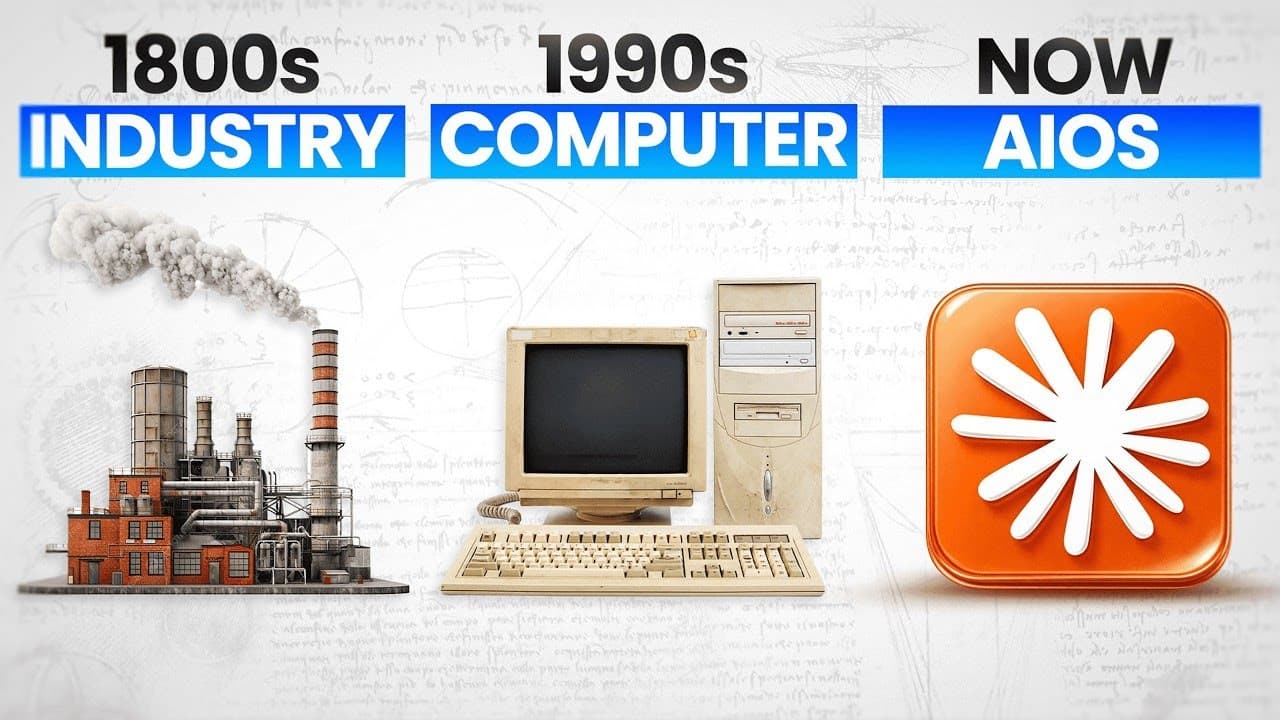
An AI operating system, or AIOS, is an AI layer that wraps around an entire business. It understands the company, connects to real operational data, supports decision-making, and automates parts of the operation so the founder can spend more time working on the business.
Q: What are the five layers of an AI operating system?
The five layers are context, data, intelligence, automation, and build. Each layer is useful independently, but the speaker says stacking them creates a system that changes how a founder operates.
Q: How does the context layer help a business owner?
The context layer gives the AI persistent knowledge about the company, including its teams, roles, strategies, products, processes, history, and priorities. This prevents the owner from having to explain the business again during every interaction and lets each conversation begin with current organizational context.
Q: How does an AI operating system consolidate business data?
The data layer centralizes information from operational systems such as revenue platforms, analytics, marketing tools, and customer relationship management platforms. It can present business health in one dashboard and let the founder request more detailed reports conversationally.
Q: What can an AI daily briefing include?
A daily briefing can combine revenue changes, team updates, meeting summaries, content results, anomalies, opportunities, and a SWOT analysis. This gives the founder an informed overview without requiring them to attend every meeting or inspect multiple platforms.
Q: How should founders identify work to automate with AI?
Founders should document every recurring activity they perform, such as reporting, check-ins, manual data entry, content planning, writing, and follow-up emails. The AI can then classify each task as fully automatable, partially supported, or unsuitable for AI, allowing suitable workflows to be systematized one at a time.
Q: How can an AI operating system automate client proposals?
The speaker describes a system that retrieves transcripts from client calls and applies the agency's established approach to scoping and proposal development. It then produces completed presentation decks, turning a repeated manual process into a reusable business-specific workflow.
Q: What business results does Liam Ottley attribute to his AI operating system?
Ottley says he used the system to take a live-webinar idea to more than a million dollars in revenue within seven days. He says it helped develop the concept and offer, plan and film five YouTube videos, build the webinar deck and infrastructure, prepare emails and follow-ups, and set up payment systems without hiring an agency or many additional people.
Summary & Key Takeaways
-
An AI operating system is presented as an AI layer surrounding the entire business rather than a separate chatbot or single software tool. It understands the company, connects to operational data, synthesizes information, automates work, and helps founders spend more time improving the business instead of handling routine operations.
-
The system uses five layers: context, data, intelligence, automation, and build. Context teaches the AI about teams, strategies, products, processes, history, and priorities. Data consolidates operational metrics, while intelligence converts combined information into useful briefings, reports, anomaly alerts, opportunities, and daily SWOT analyses.
-
Automation begins by documenting recurring work, including reporting, check-ins, data entry, content planning, writing, and follow-up emails. The AI categorizes tasks according to whether it can complete them fully, assist partially, or cannot help. Founders can then build systems that permanently reduce repetitive work and restore bandwidth.
Read in Other Languages (beta)
Share This Summary 📚
Summarize YouTube Videos and Get Video Transcripts with 1-Click
Try YouTube Summary with ChatGPT & Claude or YouTube Transcript Generator
Explore More Summaries from Liam Ottley 📚






Summarize YouTube Videos and Get Video Transcripts with 1-Click
Try YouTube Summary with ChatGPT & Claude or YouTube Transcript Generator