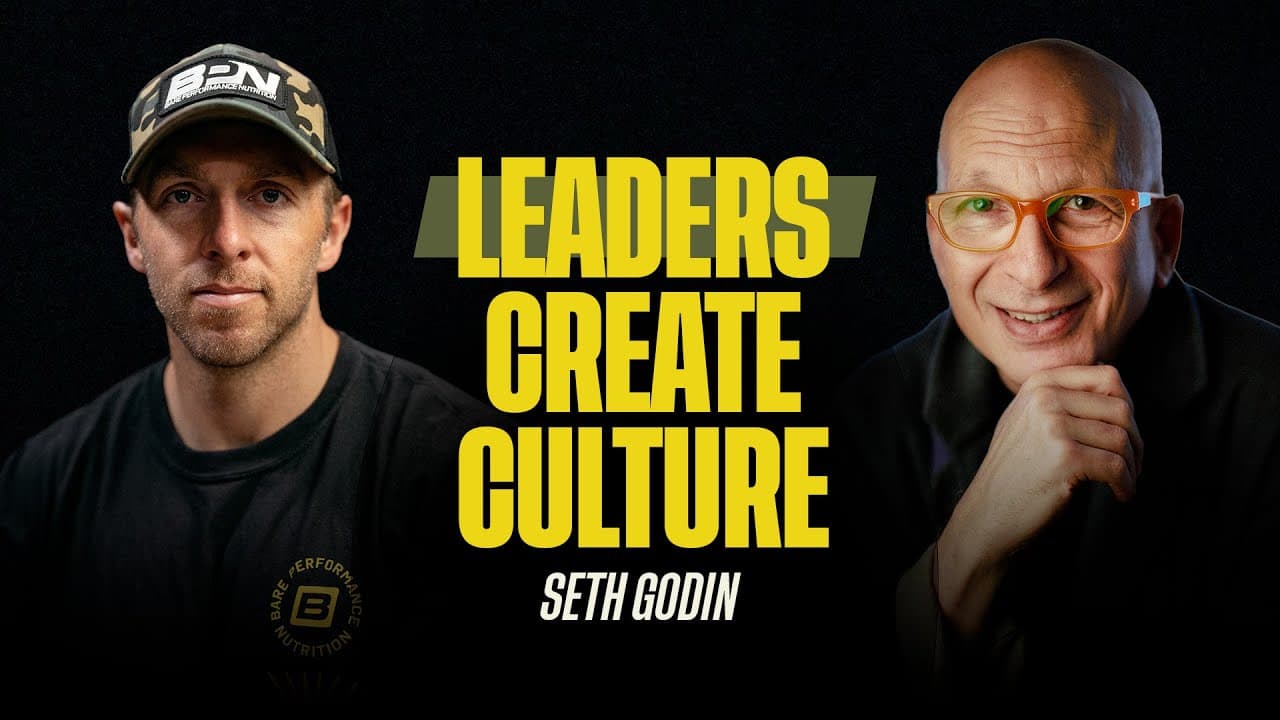
How Can Leaders Build a Culture of Significance?
TL;DR
Leaders create meaningful cultures by treating people with dignity, rewarding behavior that supports the shared journey, and giving enrolled employees confidence and support. Sustainable impact comes from serving a community and respecting its attention, while hustle culture, coercion, surveillance, and tolerance for destructive behavior weaken trust and produce a fragile race to the bottom.
Transcript
hustle culture as I understand it is a selfish trap and it's a trap because it doesn't scale that people say well you're Seth Godin yeah but I was in Seth Godin for a really long time but I showed up and I always created some opportunity for value and respected people's attention write a blog post for 100 people or in your case make a podcast for 1... Read More
Key Insights
- Significance is the opportunity to do more than expected, achieve something meaningful, receive respect and dignity, and belong to a team. These conditions can make work deeply rewarding while also helping people earn a living through contributions they genuinely care about.
- Hustle culture is a selfish trap because attention extraction, spam, and relentless sales pressure do not create a scalable or resilient foundation. People pursuing durable work should consistently create value and respect the attention of those they hope to serve.
- Community-based growth works when people voluntarily recommend useful work to others. A creator can begin by serving a small audience well, then expand through trust and advocacy instead of relying on intrusive outreach or continuous pressure for another transaction.
- Enrollment is an emotional commitment to an organization’s journey. Because workers have options, their participation is voluntary at some level, and strong organizations are populated by people who actively want to help create the change the group is pursuing.
- Culture is the practical answer to what things are like around an organization. It is shaped less by stated ideals than by everyday decisions about which people and behaviors leaders reward, elevate, applaud, support, or permit to continue.
- Tolerance communicates organizational values as clearly as praise does. Keeping a successful salesperson who behaves like a bully tells everyone that hitting performance targets excuses harmful conduct, making that decision part of the organization’s real culture.
- Leaders strengthen enrollment by identifying people who are committed to the journey, giving them confidence and support, and publicly recognizing their contributions. Visible reinforcement shows others which conduct belongs in the culture and creates examples they can follow.
- Distributed culture can be powerful and resilient when it is designed for distributed participation. Treating remote collaboration as a simple copy of in-person work misses the opportunity to build different practices suited to voluntary contribution, coordination, trust, and shared purpose.
Install to Summarize YouTube Videos and Get Transcripts
Explore YouTube Video Summarizer or Get YouTube Transcript Extractor
Questions & Answers
Q: How can leaders create a culture of significance?
Leaders can create a culture of significance by giving people meaningful opportunities to contribute, treating them with respect and dignity, and helping them feel part of a committed team. They should support people who are emotionally enrolled in the shared journey and publicly recognize conduct that advances it. Culture becomes credible when daily rewards, promotions, praise, and decisions consistently reflect those values.
Q: Why does hustle culture fail as a long-term strategy?
Hustle culture fails over the long term because it relies on selfish attention extraction, spam, intrusive outreach, and pressure to secure another sale. Those tactics may appear prominent for a while, but they do not build a resilient foundation. Durable growth comes from repeatedly creating value, respecting people’s attention, and earning voluntary recommendations from a community that trusts the work.
Q: What is enrollment in workplace culture?
Enrollment is the emotional commitment a person makes to an organization’s direction and shared journey. It goes beyond receiving a paycheck or complying with instructions. An enrolled contributor wants to participate and help create change. Leaders encourage that commitment by providing confidence, support, recognition, and a culture where meaningful effort is respected rather than demanded through control or fear.
Q: How do rewards and promotions shape company culture?
Rewards and promotions show employees which behaviors the organization truly values. When leaders elevate, applaud, and support people who advance the shared mission respectfully, others receive a clear example to follow. When leaders reward results while ignoring harmful conduct, they establish a different norm. Culture therefore emerges from repeated organizational choices, not merely from written statements about values.
Q: Why is tolerating a high-performing bully harmful?
Tolerating a high-performing bully tells the entire organization that strong results excuse disrespectful behavior. That message becomes part of the culture because employees judge values by what leaders permit, not only by what they say. Keeping such a person can weaken trust and contradict claims about dignity, teamwork, or respect, even when the person continues meeting performance expectations.
Q: Can a strong culture exist in a remote workplace?
A strong remote culture can be more powerful and resilient than an in-person culture, but it must be intentionally designed for distributed work. Leaders should not assume remote collaboration is simply conventional work performed from different locations. Shared purpose, voluntary contribution, coordination, confidence, and support need practices suited to the distributed environment rather than imitation of physical-office routines.
Q: How can creators grow without using hustle tactics?
Creators can grow by serving a small audience with work that consistently provides value and respects attention. When listeners, readers, or customers find the work useful, they can choose to tell others about it. That voluntary advocacy creates community-based growth. The strategy is slower and more relational than spam, but it is presented as more resilient for someone pursuing lasting work.
Q: What do people want from meaningful work?
People want opportunities to achieve something, contribute beyond what they believed possible, receive respect and dignity, and belong to a team. A paycheck alone does not guarantee loyalty, happiness, or effort. Leaders can respond by building conditions for significance, inviting honest discussion about how work is done, and replacing coercive management habits with support for meaningful participation.
Summary & Key Takeaways
-
Significant work gives people opportunities to contribute beyond what they thought possible, achieve something meaningful, receive dignity, and belong to a committed team. Godin contrasts this human aspiration with a culture of safety, disconnection, and minimum effort, arguing that leaders can initiate honest conversations about how their organizations operate.
-
Hustle culture is described as a selfish strategy that depends on taking attention, spamming prospects, and chasing another sale. A more resilient approach consistently creates value for a small audience, respects its attention, and earns voluntary recommendations. Community-based growth lasts because participants choose to share work they genuinely value.
-
Culture means the accepted answer to what things are like within an organization. Leaders shape it through the people and conduct they reward, elevate, tolerate, and applaud. Enrollment grows when emotionally committed contributors receive confidence and support, while keeping a high-performing bully signals that results matter more than respectful behavior.
Read in Other Languages (beta)
Share This Summary 📚
Summarize YouTube Videos and Get Video Transcripts with 1-Click
Try YouTube Summary with ChatGPT & Claude or YouTube Transcript Generator
Explore More Summaries from The Nick Bare Podcast 📚

Summarize YouTube Videos and Get Video Transcripts with 1-Click
Try YouTube Summary with ChatGPT & Claude or YouTube Transcript Generator