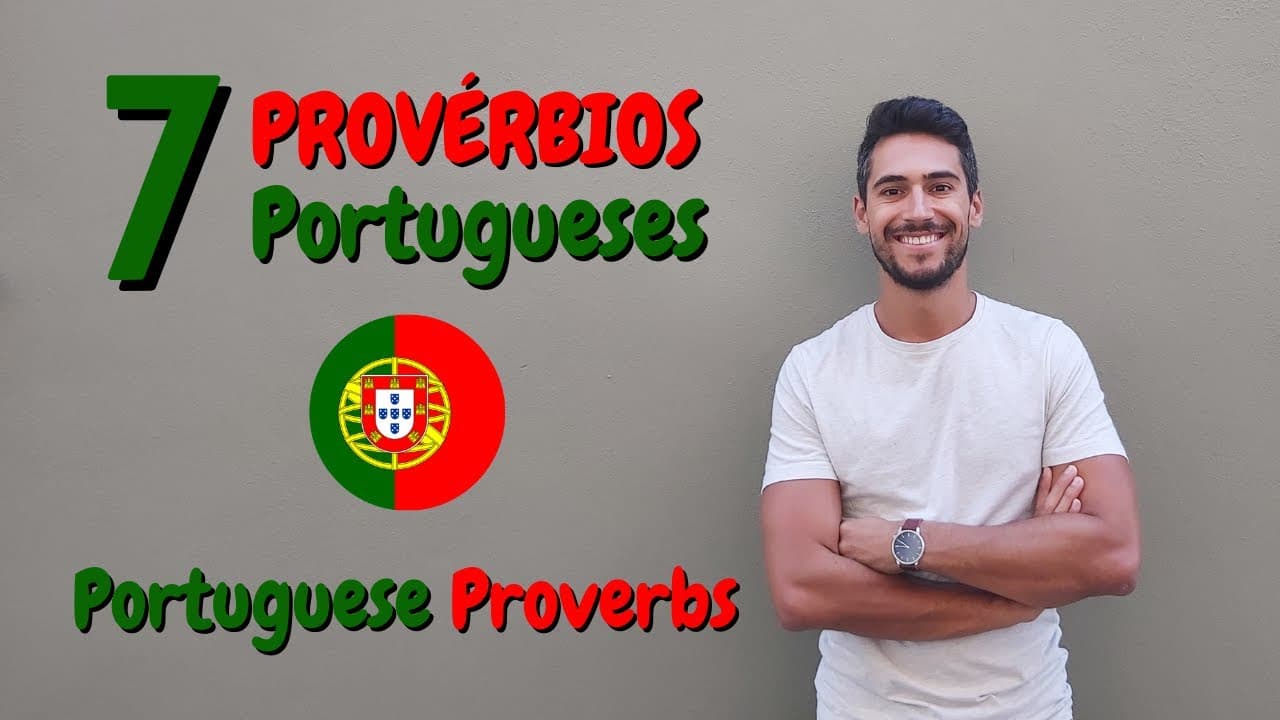
What Are Common Portuguese Proverbs?
TL;DR
Portuguese proverbs often carry moral lessons and are used in specific contexts. They are not to be translated literally as they have cultural and contextual meanings. Understanding these proverbs can enhance your grasp of Portuguese culture and impress native speakers. Use them sparingly in conversation to avoid sounding unnatural.
Transcript
Hello and welcome to another episode of Portuguese With Leo! The last episode was loaded with lots of information and we talked a lot about grammar. It's a very important episode to guide your study of Portuguese and that I recommend you watch and listen through more than once. Today we're talking about a lighter and more fun subject: we're talking... Read More
Key Insights
- Portuguese proverbs convey cultural wisdom and moral lessons.
- Idioms differ from proverbs; idioms have non-literal meanings for everyday situations.
- Proverbs like 'Devagar se vai ao longe' emphasize persistence over speed.
- 'Grão a grão enche a galinha o papo' highlights saving little by little.
- 'A galinha da vizinha é sempre melhor do que a minha' warns against envy.
- 'Mais vale um pássaro na mão do que dois a voar' advises choosing certainty over risk.
- 'Quem não arrisca, não petisca' encourages taking calculated risks for potential gains.
- 'A cavalo dado não se olha o dente' teaches gratitude for gifts without judgment.
Install to Summarize YouTube Videos and Get Transcripts
Explore YouTube Video Summarizer or Get YouTube Transcript Extractor
Questions & Answers
Q: What is the difference between idioms and proverbs?
Idioms are phrases with meanings different from their literal interpretations, used in everyday language to describe situations. Proverbs, on the other hand, are traditional sayings that convey moral lessons or cultural wisdom. While idioms are often unique to a language and don't translate well, proverbs can have equivalents in multiple languages.
Q: How does the proverb 'Devagar se vai ao longe' translate and what does it mean?
The proverb 'Devagar se vai ao longe' translates to 'Slow and steady wins the race' in English. It emphasizes the value of persistence and determination over speed, teaching that steady progress can lead to achieving one's goals, much like the moral of the fable of the hare and the tortoise.
Q: What lesson does 'Grão a grão enche a galinha o papo' teach?
The proverb 'Grão a grão enche a galinha o papo' translates to 'A penny saved is a penny earned'. It teaches the importance of saving consistently, even in small amounts, to accumulate wealth over time. It emphasizes patience and persistence in achieving financial goals.
Q: What does 'A galinha da vizinha é sempre melhor do que a minha' imply?
The proverb 'A galinha da vizinha é sempre melhor do que a minha' implies that people often believe others have better circumstances or possessions, leading to envy and dissatisfaction. Its English equivalent is 'The grass is always greener on the other side', highlighting the tendency to undervalue what one has.
Q: What is the meaning of 'Mais vale um pássaro na mão do que dois a voar'?
The proverb 'Mais vale um pássaro na mão do que dois a voar' means 'A bird in the hand is worth two in the bush'. It advises valuing what is certain and secure rather than risking it for potentially greater but uncertain rewards. It promotes a conservative approach to decision-making.
Q: How does 'Quem não arrisca, não petisca' encourage risk-taking?
The proverb 'Quem não arrisca, não petisca', equivalent to 'Nothing ventured, nothing gained', encourages taking risks to achieve success. It suggests that without taking chances, one cannot expect to achieve significant rewards or progress, advocating for calculated risk-taking in pursuit of goals.
Q: What is the origin of 'A cavalo dado não se olha o dente'?
The proverb 'A cavalo dado não se olha o dente' translates to 'Don't look a gift horse in the mouth'. It originates from the practice of examining a horse's teeth to assess its age and quality. The proverb teaches that when receiving a gift, one should not scrutinize its value but accept it graciously.
Q: What does 'Quem conta um conto acrescenta um ponto' mean?
The proverb 'Quem conta um conto acrescenta um ponto' translates to 'The tale grew in the telling'. It suggests that stories often become exaggerated or altered as they are retold, with each storyteller adding their embellishments. This highlights the tendency for narratives to evolve and change over time.
Summary & Key Takeaways
-
Portuguese proverbs are cultural expressions that carry deeper meanings and moral lessons, often not directly translatable. They offer insights into the values and wisdom of Portuguese culture, such as persistence, saving, and contentment with what one has. Understanding and using these proverbs can enhance communication with native speakers.
-
The video explains the difference between idioms and proverbs, highlighting that while idioms are everyday expressions with non-literal meanings, proverbs are traditional sayings with moral lessons. Examples include 'Devagar se vai ao longe' and 'Quem não arrisca, não petisca', each with an English equivalent.
-
Using proverbs in conversation can impress native speakers, but they should be used sparingly to avoid sounding unnatural. The video also suggests a comedy sketch for advanced learners to practice understanding the fast-paced use of mixed proverbs in Portuguese, providing a fun challenge.
Read in Other Languages (beta)
Share This Summary 📚
Summarize YouTube Videos and Get Video Transcripts with 1-Click
Try YouTube Summary with ChatGPT & Claude or YouTube Transcript Generator
Explore More Summaries from Portuguese With Leo 📚





Summarize YouTube Videos and Get Video Transcripts with 1-Click
Try YouTube Summary with ChatGPT & Claude or YouTube Transcript Generator