Português Formal vs Informal
TL;DR
Learn when to use formal and informal Portuguese.
Transcript
Hi everyone and welcome back to Portuguese With Leo and another quick Portuguese lesson. If you are new here, my name is Leonardo and in these quick Portuguese lessons I try to help you improve your Portuguese. About 3 months ago I made a video about the use of the pronoun “vós” in Portugal, and how it evolved over time. You can find this video... Read More
Key Insights
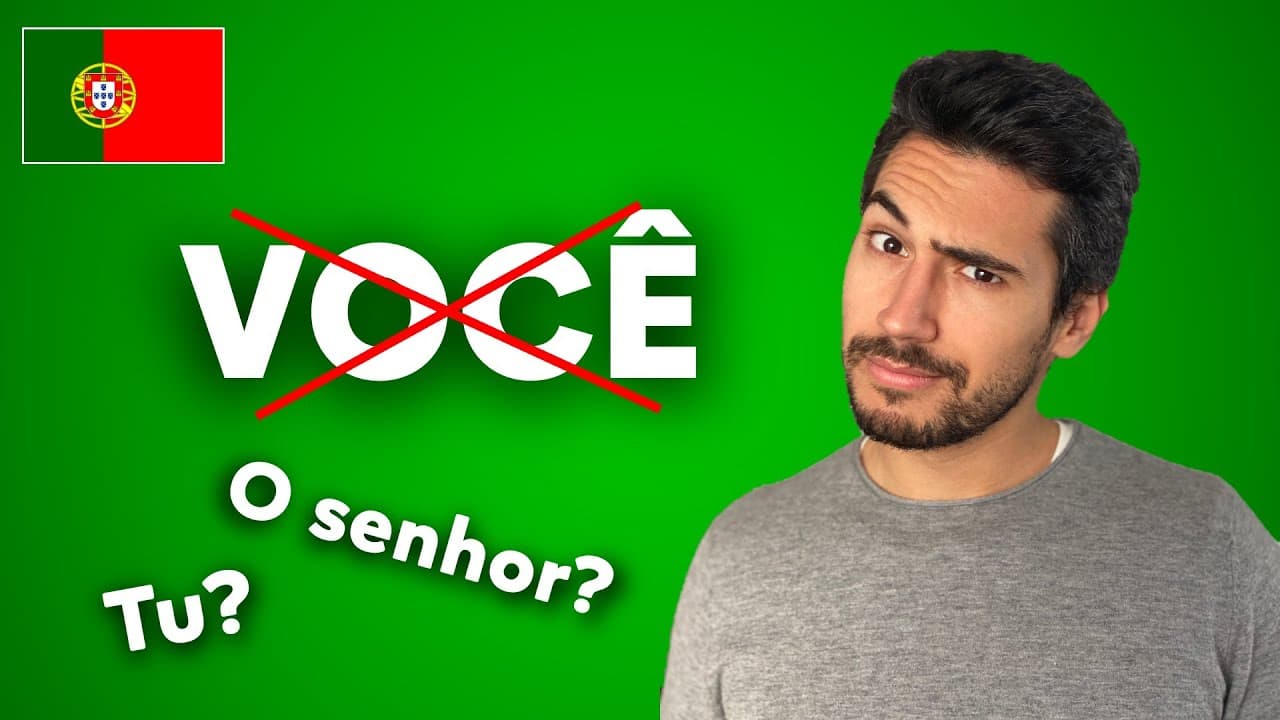
- The video discusses formal and informal forms of address in Portuguese, highlighting three main situations: clearly formal, relatively formal, and informal.
- Clearly formal situations involve addressing individuals in positions of authority, using titles and third-person pronouns like 'sir' or 'madam'.
- Relatively formal situations occur with unfamiliar adults, typically in service settings, using the pronoun 'você' and third-person verb conjugations.
- Informal situations involve using 'tu' and second-person conjugations, common among friends, family, and casual encounters.
- In uncertain situations, it's advisable to start with 'você' and ask if 'tu' can be used, especially with older individuals.
- Apologies differ in formality: 'desculpa' is informal while 'desculpe' is formal.
- The video encourages viewers to join Patreon for exclusive content and to support the channel via PayPal.
- The content is part of a series of quick Portuguese lessons aimed at improving language skills.
Install to Summarize YouTube Videos and Get Transcripts
Explore YouTube Video Summarizer or Get YouTube Transcript Extractor
Questions & Answers
Q: What are the three main situations for forms of address in Portuguese?
The three main situations for forms of address in Portuguese are clearly formal, relatively formal, and informal. Clearly formal situations involve addressing individuals in positions of authority using titles and third-person pronouns. Relatively formal situations occur with unfamiliar adults, typically in service settings, using the pronoun 'você' and third-person verb conjugations. Informal situations involve using 'tu' and second-person conjugations, common among friends, family, and casual encounters.
Q: How should one address individuals in clearly formal situations?
In clearly formal situations, individuals should be addressed with respect and formality, using titles such as 'senhor' or 'senhora' and third-person pronouns. This applies to people in positions of power, like a judge or police officer. Verbs are conjugated in the third person, and the use of titles like 'senhora doutora' or 'senhor engenheiro' is common to show respect and adherence to social norms.
Q: What is the difference between 'desculpa' and 'desculpe'?
'Desculpa' and 'desculpe' are both used to apologize in Portuguese, but they differ in formality. 'Desculpa' is informal and used in casual conversations, typically among friends or peers. On the other hand, 'desculpe' is formal and appropriate in situations requiring respect or when addressing someone in a formal context. Choosing the correct form depends on the relationship and context.
Q: What advice is given for uncertain situations regarding formality?
In uncertain situations where one is unsure whether to use 'tu' or 'você', it is advised to start with the more formal 'você'. If it seems appropriate, one can ask for permission to use 'tu', especially if the person is of a similar age. This approach errs on the side of caution and respects the cultural preference for formality in Portuguese-speaking contexts.
Q: How are relatively formal situations handled in Portuguese?
Relatively formal situations in Portuguese involve addressing unfamiliar adults, often in service settings like stores or restaurants. The pronoun 'você' is used, and verbs are conjugated in the third person. Unlike clearly formal situations, titles like 'senhor doutor' are not necessary. This form of address balances respect with a less rigid structure, suitable for everyday interactions.
Q: What role does Patreon play in the video's content?
Patreon plays a significant role in the video's content by allowing followers to vote on topics and access exclusive content. The creator encourages viewers to join Patreon to participate in polls and enjoy additional benefits, such as special lessons and insights. This support helps sustain the channel and provides a community for learners to engage more deeply with the content.
Q: What examples are given for informal Portuguese situations?
Informal Portuguese situations include interactions with friends, family, and casual acquaintances, where 'tu' and second-person verb conjugations are used. Examples include conversations at a bar or party, where familiarity and a relaxed tone are appropriate. This form of address reflects closeness and comfort, allowing for a more personal and direct communication style.
Q: How does the video suggest supporting the channel?
The video suggests supporting the channel by joining Patreon or making donations via PayPal. Patreon offers exclusive content and benefits for subscribers, while PayPal provides a straightforward way to contribute financially. These options help sustain the channel's production of educational content and allow the creator to continue offering valuable language lessons to a broader audience.
Summary & Key Takeaways
-
The video explores the distinctions between formal and informal Portuguese, providing guidance on when to use each form. It categorizes interactions into clearly formal, relatively formal, and informal situations, offering practical examples and advice on appropriate pronouns and verb conjugations.
-
In clearly formal situations, individuals in authority are addressed with titles and third-person pronouns, while relatively formal situations use 'você' without titles. Informal situations involve 'tu' and second-person conjugations, common among friends and in casual settings.
-
The video emphasizes starting with formal address when unsure, and discusses the difference between 'desculpa' and 'desculpe'. It also invites viewers to support the channel on Patreon or via PayPal, offering exclusive content and benefits.
Read in Other Languages (beta)
Share This Summary 📚
Summarize YouTube Videos and Get Video Transcripts with 1-Click
Try YouTube Summary with ChatGPT & Claude or YouTube Transcript Generator
Explore More Summaries from Portuguese With Leo 📚



Summarize YouTube Videos and Get Video Transcripts with 1-Click
Try YouTube Summary with ChatGPT & Claude or YouTube Transcript Generator