How to align priorities with your calendar for productivity
TL;DR
The calendar is the empirical record of true priorities, and aligning actions with what you say you value improves focus. Tracking time reveals gaps between claimed priorities and actual effort, guiding proactive adjustments. Aligned routines, buffers, and deliberate constraints help maintain productive focus despite life changes like marriage or parenthood.
Transcript
Your calendar or your time is the empirical record of your actual priorities. You ask people like what are your priorities and they say oh it's family or whatever it is. They have some optimistic thing that they say is their priority. And then if you follow up with and how much time did you spend on that in the last week it's like well this week I ... Read More
Key Insights
- Time tracking reveals true priorities by comparing what people say with how they actually spend time. This empirical record helps you align actions with beliefs and adjust plans accordingly.
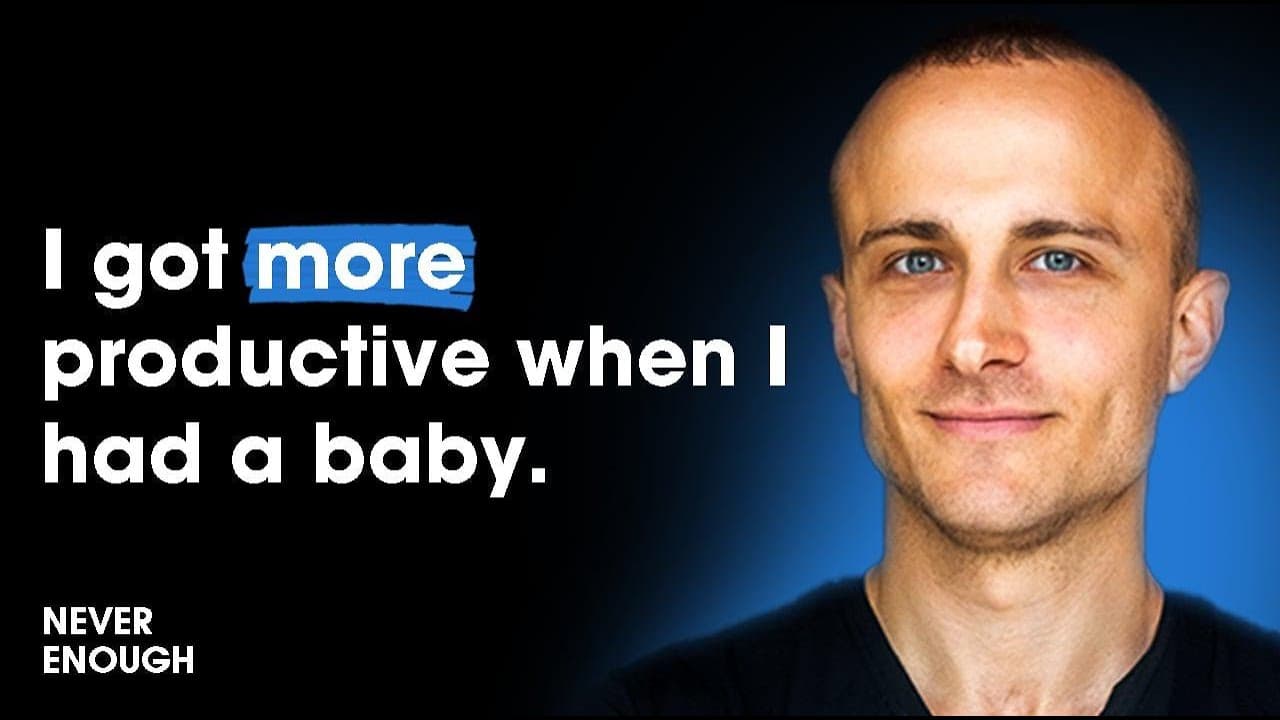
- Marriage and parenthood can reduce weekly output by substantial hours, forcing tighter prioritization and more efficient use of a smaller available work window.
- Creating buffers prevents friction from disruptive tools and habits, such as using passwords or social media, to maintain a cleaner focus and better time discipline.
- Waking hours and daily routines can be optimized with simple hacks like setting alarms for every commitment to stay present and avoid late or missed meetings.
- Temperature and sleep quality significantly affect productivity, with light sleepers benefiting from specific sleeping aids and techniques to reduce latency and improve rest.
- A dopamine friendly approach to distractions includes limiting access to social media and using structured restrictions to protect deep work time.
- Learning and knowledge intake can be accelerated through audiobooks and AI tools, enabling efficient consumption during commutes or downtime.
- Minimalism in work setup and life reduces decision fatigue, enabling sharper focus on high impact tasks and long term goals.
Install to Summarize YouTube Videos and Get Transcripts
Explore YouTube Video Summarizer or Get YouTube Transcript Extractor
Questions & Answers
Q: How can I align my stated priorities with my calendar and daily actions?
To align priorities with calendar and actions, start by tracking how you actually spend your time over a representative period. Compare this with your stated priorities, identify gaps, and adjust your schedule to allocate concrete time blocks to those priorities. Use buffers for inevitable interruptions and automate or simplify tasks that siphon attention away from core goals. This approach creates a feedback loop that steadily reduces misalignment and improves focus.
Q: What impact can life events have on productivity and how should you adapt?
Life events such as marriage and parenthood can reduce available work hours and shift priorities. A practical adaptation is to reframe time management around a smaller, more focused set of high impact activities. Rebalance expectations, compress your work into tighter time frames, and use explicit boundaries to protect deep work time while accommodating family needs.
Q: What practical hacks help minimize distractions in daily work?
Practical hacks include buffering disruptive channels with restricted access, using alarms to cue present moments, and creating routines that reduce decision fatigue. Implement automated safeguards like password buffers for social apps, set alarms for meetings and deep work blocks, and keep a minimal workspace to lower cognitive load. These approaches collectively improve sustained attention.
Q: How do alarms help with staying present during conversations or meetings?
Alarms act as non intrusive reminders that cue transition moments, ensuring you remain present with others. By scheduling alarms for upcoming commitments, you avoid mental drift and reduce the urge to check devices mid conversation. This practice supports better listening, more meaningful interactions, and timely adherence to your planned agenda.
Q: What role do sleep and temperature play in productivity?
Sleep quality directly affects cognitive performance, mood, and focus. Using sleep aids like silicone earplugs or optimizing room temperature can shorten sleep latency and increase restfulness. High quality sleep leads to clearer thinking, faster decision making, and better energy levels for demanding tasks the next day.
Q: Can learning be accelerated with audiobooks and AI tools, and how to use them effectively?
Audiobooks enable hands free learning during commutes or chores, while AI tools can help summarize or extract actionable insights from complex material. Use structured listening plans, note key takeaways, and schedule periodic reviews to reinforce learning. Integrating these tools speeds knowledge acquisition without sacrificing time for core work.
Q: What is the role of minimalism and buffers in managing a busy life?
Minimalism reduces decision fatigue by limiting options and simplifying tools, while buffers create friction for undesirable habits. Together they free cognitive capacity for high impact work and important relationships. Focus on essential tasks, automate where possible, and design environments that support steady, intentional progress.
Q: How should I think about AI and the future of software work based on current trends?
AI can augment coding and learning tasks, changing how developers work rather than replacing the need for human judgment. Embrace AI as a collaborator for routine or repetitive work while sharpening core skills like problem solving and design thinking. Stay adaptable by experimenting with new tools and workflows and focusing on areas where human insight adds value.
Summary & Key Takeaways
-
The interview shows that time tracking makes priorities visible and actionable, turning intention into measurable behavior over five years of data. It explains how life events like marriage and parenthood shift output and prioritization, emphasizing the need to adapt systems to new constraints and maintain progress. The discussion highlights practical hacks and routines that create space for intentional work and family life.
-
Sam Corcos emphasizes that minimalism, buffers, and automation can reduce cognitive load and distractions. He shares concrete hacks like alarms for present focus, sleep improvements, and temperature management to optimize energy. The dialogue also explores the role of AI and learning tools in modern software work and how to stay productive in a fast changing environment.
-
The episode combines personal experiments with practical systems, illustrating how to design a time management approach that survives major life changes. It provides a framework for evaluating time spent versus time spent on what matters, plus actionable tips for reducing distractions, improving sleep, and leveraging technology to support deliberate work.
Read in Other Languages (beta)
Share This Summary 📚
Summarize YouTube Videos and Get Video Transcripts with 1-Click
Try YouTube Summary with ChatGPT & Claude or YouTube Transcript Generator
Explore More Summaries from Andrew Wilkinson 📚


Summarize YouTube Videos and Get Video Transcripts with 1-Click
Try YouTube Summary with ChatGPT & Claude or YouTube Transcript Generator