How to Run a $60,000 AI Audit as an AI Agency
TL;DR
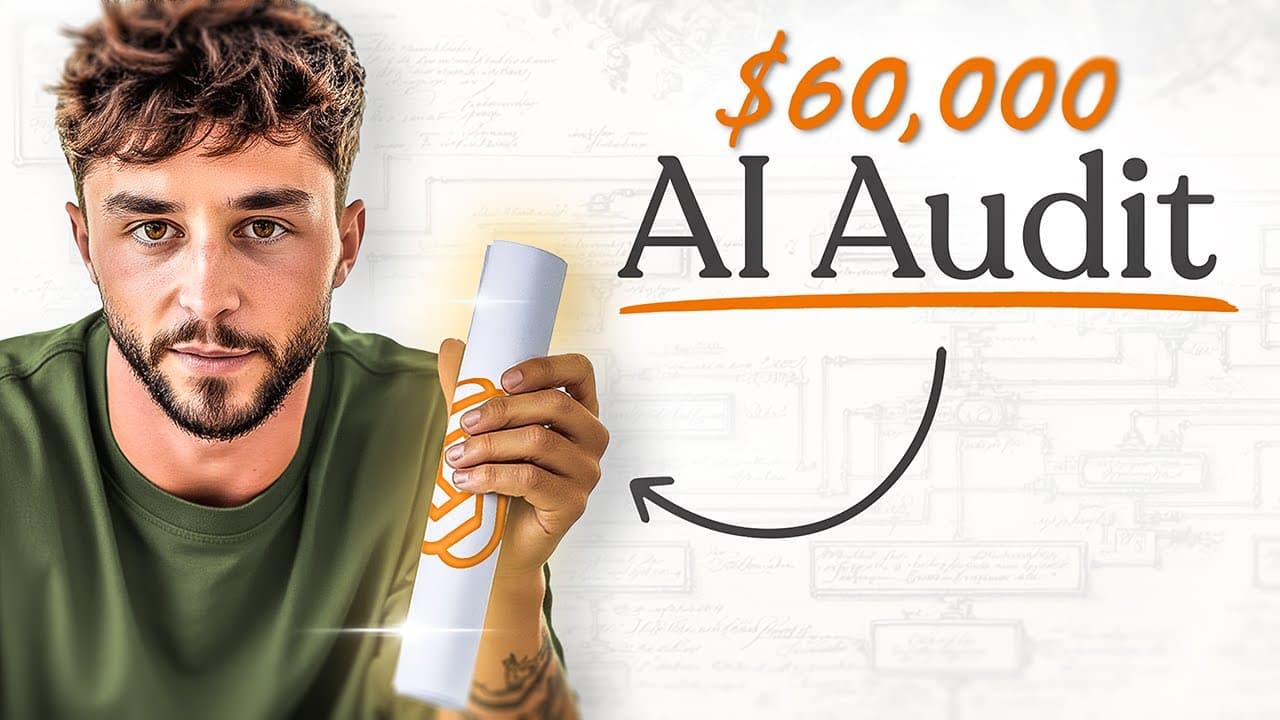
To run a $60,000 AI audit, an AI agency should position consulting as the strategic entry point to development and use a four-week engagement to study the client’s business, processes, and technology stack. Morningside AI refined this model over 6 to 8 months, progressing from a free eight-week audit that cost $30,000 to its current offer. Read on to understand the model, pricing journey, and beginner-friendly starting point.
Transcript
how to perform a $60,000 AI audit as an AI agency. This is a follow-up video to the one that I've done previously on is AI replacing us as agencies. And the answer is in the development side, yes. And the solution to this that we've had at my agency, Morningside AI, is to pivot more into offering the consultancy services and education as the sort o... Read More
Key Insights
- AI is commoditizing agency development work, as tools like Claude, n8n, Microsoft Copilot, Cursor, Bolt, and Lovable let businesses self-serve automation, pushing agencies to sell strategy and consulting instead of just building workflows and agents.
- Morningside AI's consulting journey went from a free 8-week audit that cost them $30,000, to a paid $30,000 six-week audit, to a current $60,000 four-week audit, with proposals out for $80,000 and above.
- Consulting lets agencies land much larger clients than development can, because a consulting project does not require getting into the technical weeds, making it easier to work with big companies and build stronger case studies.
- A four to six week audit functions as an extended sales cycle: by learning the business, tech stack, and processes deeply, agencies build trust so development deals close almost automatically afterward.
- Consulting historically emerges from technological upheaval, with McKinsey founded in 1926 amid industrial revolution complexity, followed by web and digital agencies during the dotcom boom, and now AI consulting today.
- AI creates more complexity than any prior technology because it can change everything, including the business model itself, not just marketing or online presence, so consulting means helping businesses navigate change they do not understand.
- The AI consulting market is expected to grow to $73 billion by 2033, making it one of the fastest growing industries, while roughly $50 billion of a consulting gap remains largely unaddressed for small to medium businesses.
- AI projects fail at an 80 to 85 percent rate, roughly twice the failure rate of usual IT projects like a custom CRM at around 40 percent, which is why businesses need guidance on where to apply AI rather than just how to build it.
Install to Summarize YouTube Videos and Get Transcripts
Explore YouTube Video Summarizer or Get YouTube Transcript Extractor
Questions & Answers
Q: How do you perform a $60,000 AI audit as an AI agency?
Morningside AI runs its $60,000 audit as a four-week consulting engagement focused on understanding the client’s business, processes, and technology stack before recommending AI opportunities. The audit positions strategic consulting as a primer for later development work and makes the agency an AI transformation partner throughout the transformation cycle.
Q: How much does Morningside AI charge for an AI audit?
Morningside AI currently charges $60,000 for a four-week AI audit. Its first audit was a free eight-week engagement that cost the agency $30,000, followed by a paid six-week audit for $30,000; it also has proposals out for $80,000 and more.
Q: How long did Morningside AI take to refine its AI consulting process?
Morningside AI spent about 6 to 8 months refining its consulting process and building its consulting team. That work enabled the agency to progress from longer experimental audits to its current four-week engagement.
Q: Why are AI agencies pivoting from development to consulting?
Tools including Claude, n8n, Microsoft Copilot, Cursor, Bolt, and Lovable are making it easier for businesses to attempt AI automations, workflows, and agents themselves. Morningside AI therefore shifted toward consulting and education, helping clients decide where to apply AI before offering development services.
Q: What is the AI transformation partner model?
The AI transformation partner model combines strategic consulting with development instead of limiting the agency to isolated build projects. Morningside AI uses this approach to partner with businesses throughout the full AI transformation cycle and remain involved in delivering its recommendations.
Q: How can an AI audit lead to development projects?
A four- to six-week audit gives the agency time to learn the client’s business, processes, and technology stack while building trust. After identifying and recommending AI opportunities, the agency can move into the resulting development projects one by one.
Q: Why can consulting help an AI agency work with larger clients?
Morningside AI found that consulting projects are easier to begin with large companies because the agency does not have to enter the technical weeds immediately. This approach helped it pursue progressively larger clients and develop stronger case studies before moving into implementation work.
Q: What beginner-friendly AI audit can a small agency offer?
The speaker recommends starting with a simplified two-week assessment distilled from Morningside AI’s work with small and larger businesses. It is presented as an entry-level AI audit and consulting package for agencies that are not ready to deliver the more advanced four-, six-, or eight-week engagements.
Summary & Key Takeaways
-
Morningside AI, an agency, is pivoting from pure AI development into strategic consulting because tools like Claude, Cursor, Bolt, and Lovable let businesses self-serve automation. The solution is offering consultancy and education as a primer for development services, becoming an AI transformation partner across the full transformation cycle.
-
The agency's consulting track record progressed from a free 8-week audit for a New Zealand steel company that cost them $30,000, to a paid $30,000 six-week audit, to a current $60,000 four-week audit, with proposals out for $80,000 and more. Bigger consulting clients lead into development work.
-
Consulting is framed as helping businesses navigate change they do not understand, a pattern seen since McKinsey's 1926 founding and the dotcom-era web agencies. AI consulting is projected to reach $73 billion by 2033, and Morningside plans to share a beginner-friendly simplified two-week assessment.
Read in Other Languages (beta)
Share This Summary 📚
Summarize YouTube Videos and Get Video Transcripts with 1-Click
Try YouTube Summary with ChatGPT & Claude or YouTube Transcript Generator
Explore More Summaries from Liam Ottley 📚



Summarize YouTube Videos and Get Video Transcripts with 1-Click
Try YouTube Summary with ChatGPT & Claude or YouTube Transcript Generator