Microsoft Stock Plunges! A Buying Opportunity? MSFT Earnings Analysis
TL;DR
Microsoft’s stock decline presents a mixed investment case rather than a clear buying opportunity: quarterly revenue grew 11% to $50.1 billion and beat Wall Street’s estimate, but margins fell as expenses outpaced revenue growth. Intelligent Cloud and Azure remained strong, while personal computing stagnated and faced a weaker outlook. Read on for the earnings, guidance, valuation, and business indicators investors should weigh.
Transcript
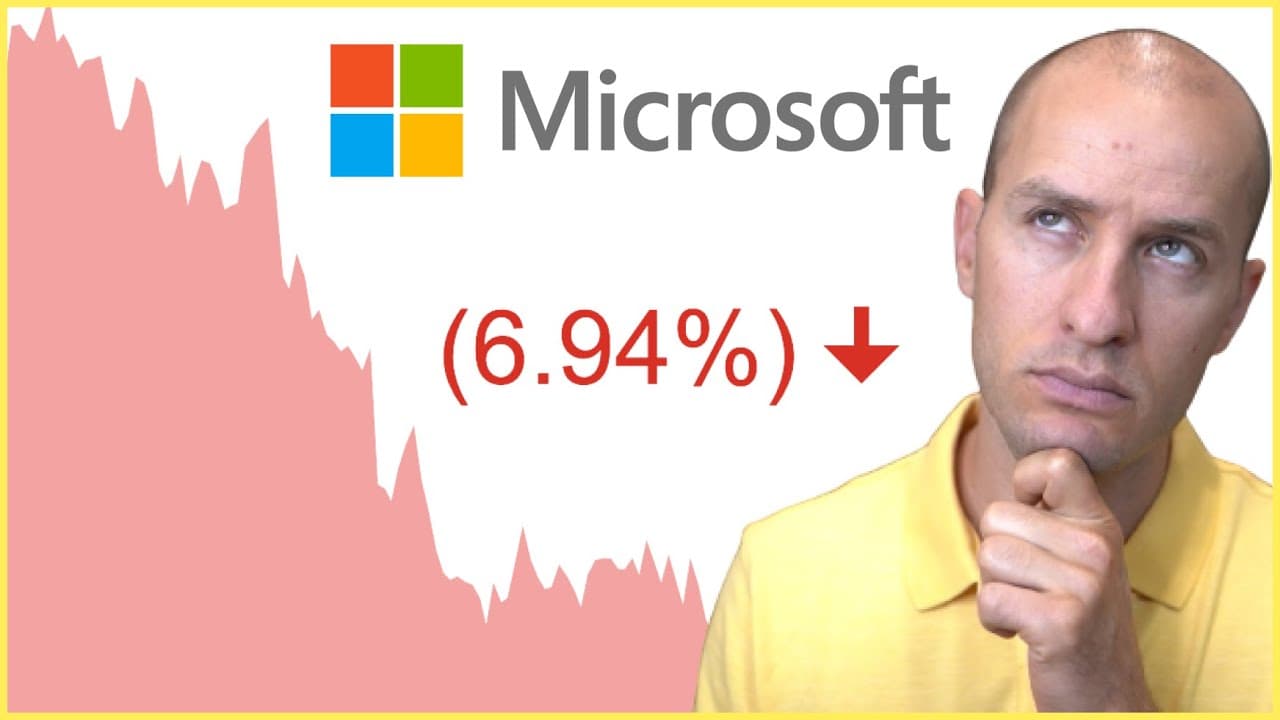
shares of Microsoft are tumbling about seven percent today in response to reporting q1 23 3 results yesterday what is going on at Microsoft today here's everything you need to know about this company's qn results in about 10 minutes my name is Brian faraldi I do not own shares of Microsoft and my name is Brian stoffel and I do not own shares of Mic... Read More
Key Insights
- 😶🌫️ Microsoft's Q1 2023 results exceeded expectations, driven by strong revenue growth and performance in the cloud division.
- 😶🌫️ The more personal computing segment, including gaming and devices, had no growth, while the intelligent cloud division, including Azure, thrived.
- 🍂 Margins fell, and expenses outpaced revenue growth, impacting profitability.
- 💱 Microsoft's outlook includes headwinds from foreign currency movements and increased operating expenses.
- 🎚️ The company's valuation remains stable but elevated compared to historical levels.
- 🥶 Areas to watch include revenue, Azure's growth, free cash flow, and the advertising business.
Install to Summarize YouTube Videos and Get Transcripts
Explore YouTube Video Summarizer or Get YouTube Transcript Extractor
Questions & Answers
Q: Is Microsoft stock a buying opportunity after its plunge?
The analysis presents Microsoft as a stable, valuable company with a fair valuation, but not an obvious high-growth opportunity. Strong cloud performance supports the case, while falling margins, rising expenses, currency pressure, and weakness in personal computing create reasons for caution.
Q: How did Microsoft’s quarterly results compare with Wall Street’s expectations?
Revenue grew 11% to $50.1 billion, exceeding Wall Street’s estimate of $49.7 billion. Adjusted earnings per share grew about 4% and also beat Wall Street’s estimate.
Q: Which Microsoft business segments delivered the strongest growth?
Intelligent Cloud grew 20% on a reported basis and 26% on a constant-currency basis. Microsoft Cloud revenue reached $25 billion, while server and Azure each posted growth of 20% or more.
Q: Which parts of Microsoft’s business dragged on its results?
More Personal Computing recorded zero growth on a reported basis and was the company’s lagging segment. Windows, Xbox, and Microsoft-manufactured devices were among the areas weighing on the quarter.
Q: Why did Microsoft’s profitability weaken?
Margins fell across the board, with gross margin at 69.2%. Operating margin faced greater pressure because expenses grew faster than revenue, while the sharp change in net margin largely reflected a normalized tax payment.
Q: How did foreign currency movements affect Microsoft’s outlook?
Management expected foreign currency movements to create a revenue headwind of about 5% and an expense headwind of about 3%. The mismatch reflects Microsoft earning substantial revenue in other currencies while a large portion of its expenses is denominated in dollars.
Q: What did Microsoft’s guidance suggest about future growth and expenses?
Management expected top-line growth of 1% to 4% while operating expenses were projected to grow 17% to 18% on a constant-currency basis. That combination indicated continued pressure on profitability because spending was expected to rise much faster than revenue.
Q: What should investors monitor after Microsoft’s earnings?
Azure and the broader cloud division remain central indicators because cloud continued to be the strongest part of the business. Investors should also watch revenue, free cash flow, personal computing, margins, and Microsoft’s advertising partnership with Netflix.
Summary & Key Takeaways
-
Microsoft's Q1 2023 revenue grew by 11% to $50.1 billion, surpassing Wall Street estimates.
-
The company's cloud division, Azure, continues to perform well, growing by 20-24%.
-
The more personal computing segment, including gaming and devices, experienced zero percent growth.
-
Margins declined, and expenses grew faster than revenue, impacting profitability.
Read in Other Languages (beta)
Share This Summary 📚
Summarize YouTube Videos and Get Video Transcripts with 1-Click
Try YouTube Summary with ChatGPT & Claude or YouTube Transcript Generator
Explore More Summaries from Brian Feroldi 📚



Summarize YouTube Videos and Get Video Transcripts with 1-Click
Try YouTube Summary with ChatGPT & Claude or YouTube Transcript Generator