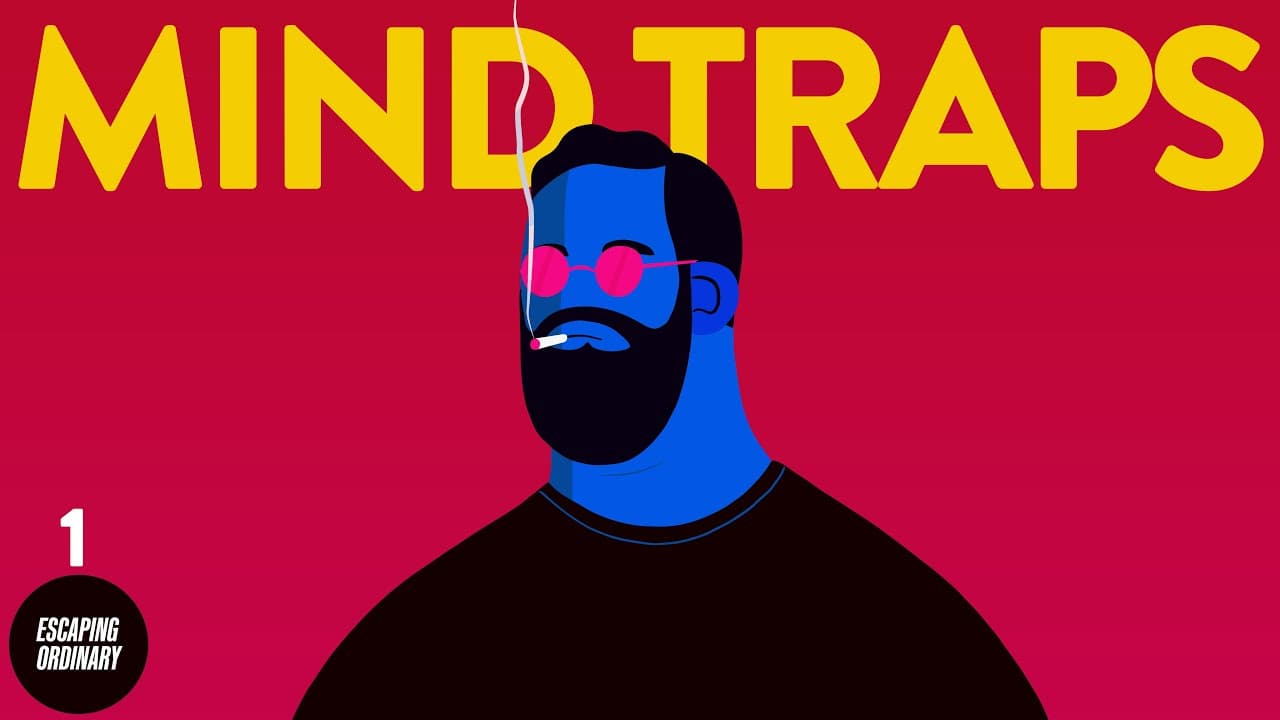
What Are the 21 Cognitive Mind Traps and How to Overcome Them?
TL;DR
The 21 cognitive mind traps are biases and fallacies that influence our thoughts and decision-making, including cognitive dissonance, the halo effect, and confirmation bias. By recognizing these traps, individuals can improve their thinking and become more rational decision-makers. Awareness and strategies like challenging assumptions can help mitigate these biases.
Transcript
You probably think you are in complete control of your decisions and thoughts….But how often are they guided by something else? Something you don’t even notice occuring deep within your mind… Here are 21 cognitive mind traps, fallacies, biases and other phenomenon that exist within your brain. Strange things that are hard wired into all hu... Read More
Key Insights
- 🤔 Cognitive biases and traps are hardwired into human thinking and influence our decision making on a daily basis.
- 🆘 Recognizing and understanding these biases can help individuals become more thoughtful and rational thinkers.
- 🥺 Cognitive dissonance arises when conflicting beliefs create discomfort, leading to reinterpreting situations or creating new beliefs.
- 😇 The halo effect influences our perception of others, with the initial piece of information shaping our judgment.
- ⚓ The anchoring effect influences our judgments and decisions based on anchors, whether informative or random.
- 🥺 The spotlight effect leads us to believe that others are observing and judging us more than they actually are.
- 💁 Confirmation bias affects our ability to objectively evaluate information, as we seek evidence that confirms our existing beliefs.
- 🥺 The paradox of choice can lead to decision paralysis and decreased satisfaction when faced with an overwhelming number of options.
Install to Summarize YouTube Videos and Get Transcripts
Explore YouTube Video Summarizer or Get YouTube Transcript Extractor
Questions & Answers
Q: What is cognitive dissonance and how does it impact decision making?
Cognitive dissonance occurs when individuals hold conflicting beliefs, leading to discomfort. They may reinterpret a situation or create new beliefs to reduce this discomfort, which can affect their decision making.
Q: How does the halo effect influence our perception of others?
The halo effect occurs when a single aspect of a person influences our judgment of their overall character. Our initial interpretation of someone heavily influences our perception, as we tend to give more weight to the first piece of information we receive.
Q: What is confirmation bias and why is it important to be aware of it?
Confirmation bias is the tendency to seek evidence that supports our existing beliefs while ignoring contradictory evidence. Being aware of confirmation bias is crucial as it can lead to narrow perspectives and hinder our ability to objectively evaluate information.
Q: How does the paradox of choice impact decision making?
The paradox of choice occurs when having too many options leads to decision paralysis and decreased overall satisfaction. People may feel overwhelmed and struggle to make a decision, leading to regrets and dissatisfaction.
Key Insights:
- Cognitive biases and traps are hardwired into human thinking and influence our decision making on a daily basis.
- Recognizing and understanding these biases can help individuals become more thoughtful and rational thinkers.
- Cognitive dissonance arises when conflicting beliefs create discomfort, leading to reinterpreting situations or creating new beliefs.
- The halo effect influences our perception of others, with the initial piece of information shaping our judgment.
- The anchoring effect influences our judgments and decisions based on anchors, whether informative or random.
- The spotlight effect leads us to believe that others are observing and judging us more than they actually are.
- Confirmation bias affects our ability to objectively evaluate information, as we seek evidence that confirms our existing beliefs.
- The paradox of choice can lead to decision paralysis and decreased satisfaction when faced with an overwhelming number of options.
- Various phenomena, such as the Baader Meinhof phenomenon and Zeigarnik effect, influence our perception and memory of events and tasks.
Summary & Key Takeaways
-
Cognitive Dissonance: When held beliefs clash, cognitive dissonance occurs, leading individuals to reinterpret a situation or create new beliefs to reduce discomfort and stress.
-
The Spotlight Effect: People tend to believe that others are observing and judging them more than they actually are, leading to social anxiety and self-consciousness.
-
The Anchoring Effect: Anchors, whether informative or random, influence our judgments and decisions, leading to biased outcomes.
-
The Halo Effect: First impressions shape our perception of a person or situation, and initial information heavily influences our overall judgment.
-
Gambler’s Fallacy: People tend to believe that streaks or patterns will balance out, leading to biased decision making in gambling and other areas.
-
Contrast Effect: Our judgment of something is influenced by its context, and absolute judgments become difficult when comparing to contrasting stimuli.
-
Confirmation Bias: We seek evidence that supports our existing beliefs while ignoring or filtering out disconfirming evidence, reinforcing our beliefs.
-
The Baader Meinhof Phenomenon: After noticing something for the first time, we start seeing it more often due to increased awareness, leading to the illusion of coincidence.
-
Zeigarnik Effect: Incomplete tasks stay in our memory longer than completed tasks, leading to increased mental burden and stress.
-
Paradox of Choice: While a larger selection is generally seen as positive, having too many choices can lead to decision paralysis and decreased overall satisfaction.
Read in Other Languages (beta)
Share This Summary 📚
Summarize YouTube Videos and Get Video Transcripts with 1-Click
Try YouTube Summary with ChatGPT & Claude or YouTube Transcript Generator
Explore More Summaries from Escaping Ordinary (B.C Marx) 📚

Summarize YouTube Videos and Get Video Transcripts with 1-Click
Try YouTube Summary with ChatGPT & Claude or YouTube Transcript Generator