How Does Accepting Death Transform Your Life?
TL;DR
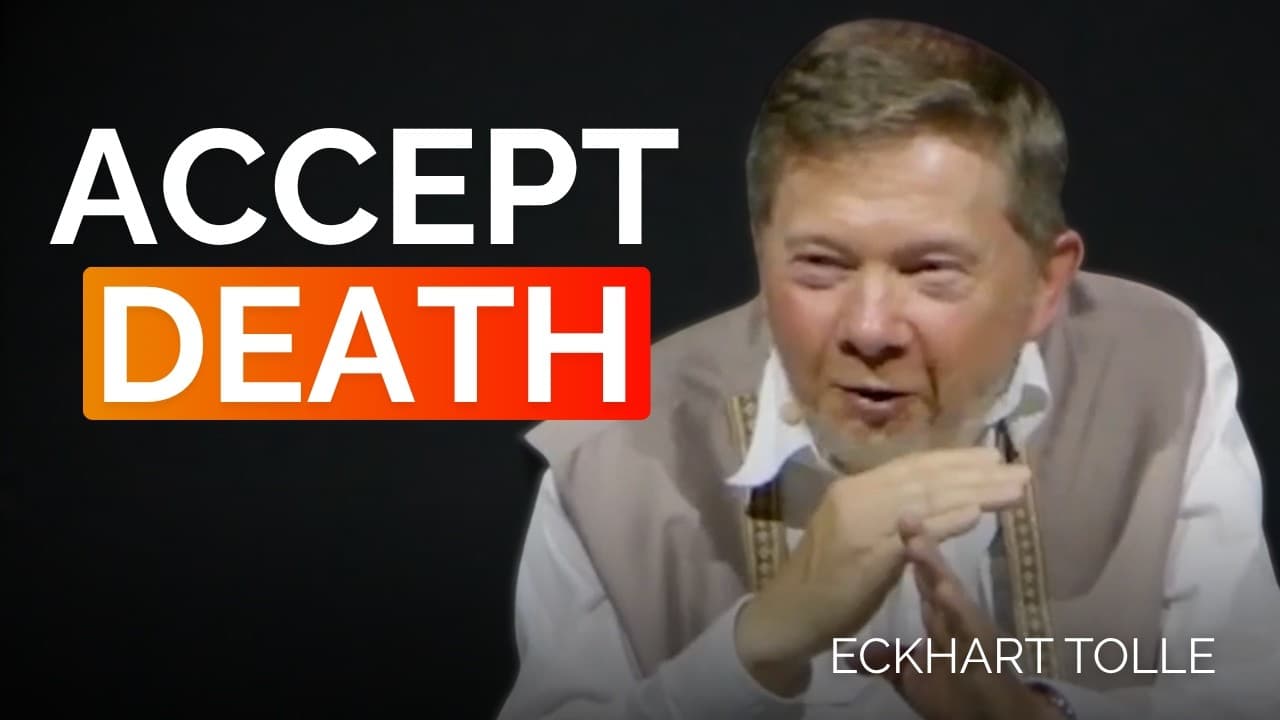
Remembering that physical and psychological forms are impermanent weakens identification with appearance, identity, and the egoic self. By accepting mortality and meeting suffering consciously, a person can become more present, discover alert stillness within, and recognize a dimension that spiritual traditions describe as eternal life or the deathless.
Transcript
Approaching death is something also that is has wonderful possibility of realizing that which is beyond death. That which is beyond form, both the psychological form and the physical form. And all of us will sooner or later be faced with death. When it comes, it won't be tomorrow. It'll one day it will be today. Now people in this world say oh don'... Read More
Key Insights
- Mortality is an unavoidable fact of physical existence, and contemplating it can clarify what matters. Avoiding thoughts of death may preserve egoic illusions, while remembering impermanence makes it harder to treat physical form, appearance, or psychological identity as permanently important.
- Memento mori is the practice of remembering that one is mortal in physical form. The human skull appearing in medieval European paintings and rooms served as a reminder that the body is a temporary vehicle rather than the complete foundation of identity.
- The deathless is a dimension within that is not subject to the decay affecting physical form. Buddhism calls it amara, or the deathless, while Jesus calls it eternal life, with both expressions pointing toward the same reality beyond impermanent form.
- Egoic unconsciousness is presented as the source through which suffering arises. The Buddhist teaching on suffering includes both understanding its origin and discovering its end, which becomes possible through awakening rather than through continued unconscious identification with the ego.
- The Christian cross symbolizes both intense suffering and the divine. Its dual meaning suggests that suffering is not only painful but can also contain the possibility of transcendence, represented by resurrection after the crucifixion.
- Jesus is presented as an archetype whose crucifixion and resurrection depict a human movement from suffering toward transcendence. The image communicates a truth about suffering's purpose and potential that may be difficult to express or understand through words alone.
- Life circumstances can become spiritual practice when they are used to cultivate awakening. Instead of complaining about the world or other people, a person can allow experiences, including difficult ones, to bring attention back to conscious presence.
- Alert still presence is the inner dimension through which being becomes directly accessible. Accepting impermanence, meeting suffering consciously, and allowing life to awaken awareness all return to this capacity to recognize stillness within oneself.
Install to Summarize YouTube Videos and Get Transcripts
Explore YouTube Video Summarizer or Get YouTube Transcript Extractor
Questions & Answers
Q: How does accepting death change the way a person lives?
Accepting death reveals that the body, physical appearance, psychological identity, and egoic self are impermanent. This makes it harder to remain deluded about their importance. Rather than making life miserable, awareness of mortality can redirect attention toward what is beyond changing form, deepen presence, and help a person discover alert stillness within.
Q: Why should people contemplate death instead of avoiding it?
Contemplating death prepares a person for a reality everyone will eventually face and exposes the temporary nature of physical form. Avoidance does not prevent death, while remembering mortality can weaken attachment to ego, appearance, and identity. It also creates an opportunity to recognize a deeper dimension that is not defined by physical decay or psychological form.
Q: What does memento mori mean in this teaching?
Memento mori means remembering that one is mortal as a physical vehicle. The teaching refers to medieval European paintings and rooms where a human skull appeared on a desk, table, or windowsill. Such reminders kept impermanence visible and helped people remember that physical form is temporary, encouraging attention toward something deeper than the body.
Q: What is the deathless dimension described by Eckhart Tolle?
The deathless dimension is an inner reality that is not subject to the decay experienced by physical form. Buddhism calls it amara, translated as the deathless, while Jesus calls it eternal life. These positive and negative expressions are presented as pointing toward the same dimension, which can be found within through awakening and conscious presence.
Q: How does egoic unconsciousness create suffering?
Egoic unconsciousness creates suffering by keeping a person identified with temporary psychological and physical forms. The Buddhist teaching described here shows both how suffering arises through this unconsciousness and how it can end through awakening. Becoming aware interrupts automatic identification and opens access to a deeper, still dimension of being that lies beyond the egoic self.
Q: What do the crucifixion and resurrection symbolize?
The crucifixion symbolizes severe human suffering, while the resurrection represents the possibility that suffering can lead toward transcendence. The cross has a dual nature because it is both a torture instrument and a symbol of the divine. Together, these images communicate suffering's potential direction more immediately than a purely verbal explanation might accomplish.
Q: How can suffering become part of spiritual practice?
Suffering becomes spiritual practice when it is used as an invitation to awaken instead of becoming a basis for unconscious resistance and complaint. The teaching advises using whatever life provides, including difficult experiences, to return to presence. In this way, the world and other people become conditions that can reveal awareness rather than merely sources of frustration.
Q: How can someone access alert still presence?
Alert still presence is accessed within by allowing life to bring attention out of egoic unconsciousness and into immediate awareness. Remembering impermanence, accepting mortality, and meeting suffering without habitual complaint support this movement. The essential practice is to let circumstances awaken presence, making the quiet dimension of being recognizable beneath physical form and psychological identity.
Summary & Key Takeaways
-
Contemplating death is presented as a practical way to recognize impermanence rather than a reason for misery. Remembering that the body, appearance, and psychological identity will pass makes it harder to exaggerate their importance. This recognition can loosen egoic identification and direct attention toward a deeper dimension beyond changing physical form.
-
The Buddhist idea of the deathless and Jesus's expression eternal life are presented as different names for the same inner dimension. This dimension is not subject to physical decay and can be discovered within. Awakening from egoic unconsciousness reveals it while also showing how psychological suffering arises and can end.
-
The crucifixion symbolizes severe suffering, while resurrection represents suffering's potential to lead toward transcendence. The practical teaching is to use whatever life provides as spiritual practice. Instead of complaining about people or the world, allow circumstances to awaken presence and access the alert, still dimension of being within yourself.
Read in Other Languages (beta)
Share This Summary 📚
Summarize YouTube Videos and Get Video Transcripts with 1-Click
Try YouTube Summary with ChatGPT & Claude or YouTube Transcript Generator
Explore More Summaries from Eckhart Tolle 📚




Summarize YouTube Videos and Get Video Transcripts with 1-Click
Try YouTube Summary with ChatGPT & Claude or YouTube Transcript Generator