How Does Tesla Autopilot Process Data?
TL;DR
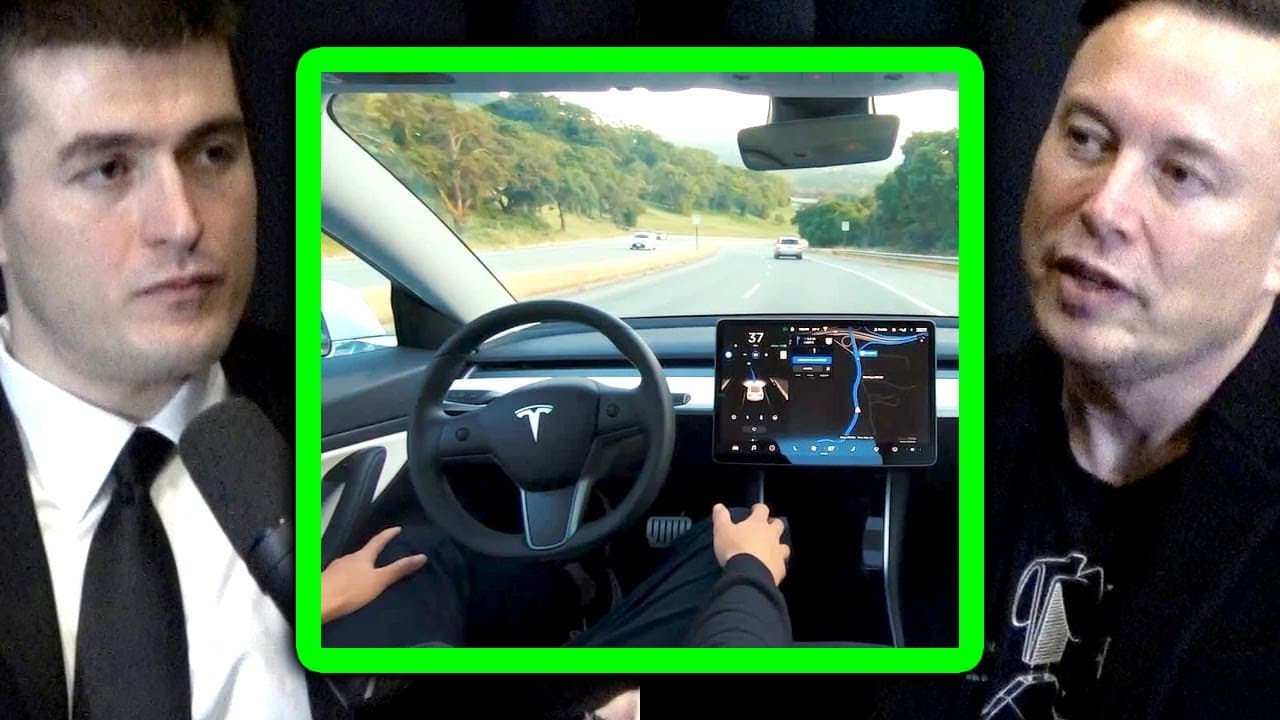
Tesla's Autopilot utilizes an iterative data engine to enhance neural networks for self-driving capabilities. By optimizing their own C compiler and removing image post-processing, they achieve low latency and minimal jitter, improving real-time decision-making. Ultimately, Tesla aims for their self-driving cars to perform complex maneuvers better than humans.
Transcript
and i i just think the data engine side of that so getting the data to learn all the concepts that you're saying now is an incredible process it's this iterative process of just it's this this hydrogen at many we're changing the name to something else okay all right i'm sure it would be equally as rick and morty like there's a lot of yeah we've re-... Read More
Key Insights
- 😨 Tesla's data engine for self-driving cars undergoes an iterative process to optimize performance.
- ⌛ Re-architecting neural nets multiple times contributes to efficiency and functionality improvements.
- 💻 Tesla prioritizes efficiency in their compute, developing their own C compiler for maximum performance.
- 😨 Removing post-processing on images allows Tesla's self-driving cars to capture more raw data.
- 🎴 Lowering latency and jitter is crucial for real-time decision-making and control in self-driving cars.
- 🤳 Tesla aims to surpass human maneuvering abilities over time with their Full Self-Driving system.
- 😤 Optimization efforts in compute and control systems involve a team of talented software engineers.
- 🎙️ More videos with Elon Musk:
Install to Summarize YouTube Videos and Get Transcripts
Explore YouTube Video Summarizer or Get YouTube Transcript Extractor
Questions & Answers
Q: How does Tesla improve the efficiency of their compute in self-driving cars?
Tesla puts effort into optimizing their compute for maximum efficiency, creating their own C compiler. They have dedicated software engineers working at a bare metal level to improve efficiency and use of the trip accelerators, ultimately achieving high frame rates and low latency.
Q: What is the advantage of removing post-processing on the image in Tesla's self-driving cars?
By removing post-processing, Tesla can obtain raw photon counts and capture more data, even in low light conditions. Additionally, they save 13 milliseconds of latency by bypassing the image processor, which is crucial for real-time decision-making in self-driving cars.
Q: How does Tesla handle latency and jitter in the self-driving car's control systems?
Tesla tracks latency and jitter throughout the entire pipeline, from photon hits to output commands. They aim to reduce latency by updating the drivers on steering and braking control to have a higher frequency. Jitter, which can cause variable latency, is a challenge that requires interpolation to make robust control decisions.
Q: How does Tesla aim to surpass human maneuvering abilities with Full Self-Driving?
Tesla believes that over time, their Full Self-Driving system will be capable of maneuvers far beyond human capabilities. They envision the cars maneuvering with superhuman ability and reaction times, surpassing even the impossible maneuvers seen in action movies.
Summary & Key Takeaways
-
Tesla uses an iterative process to enhance the data engine for learning concepts in their self-driving cars.
-
They have re-architected neural nets multiple times to improve efficiency and performance.
-
Tesla focuses on optimizing their own C compiler for maximum efficiency in computing.
Read in Other Languages (beta)
Share This Summary 📚
Summarize YouTube Videos and Get Video Transcripts with 1-Click
Try YouTube Summary with ChatGPT & Claude or YouTube Transcript Generator
Explore More Summaries from Lex Clips 📚

Summarize YouTube Videos and Get Video Transcripts with 1-Click
Try YouTube Summary with ChatGPT & Claude or YouTube Transcript Generator