Who Was King William III, Prince of Orange?
TL;DR
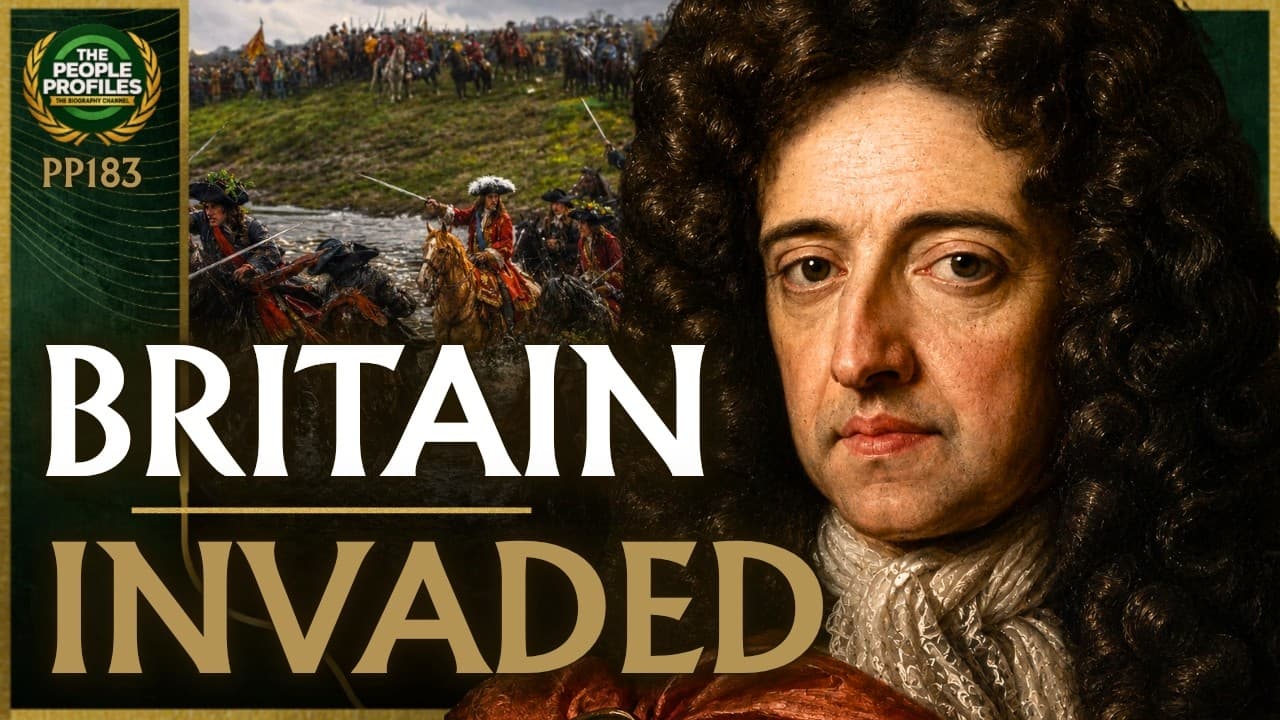
William III was the Prince of Orange who became King of England, Scotland and Ireland after a youth shaped by Dutch political conflict. Born in November 1650, eight days after his father died of smallpox, he entered the First Stadtholderless Period as an infant unable to inherit the office. His family, guardianship and struggle with Johan de Witt’s Statist faction explain his path to power. Read on for the key details.
Transcript
The man known to history as King William III of England, Scotland and Ireland was born in early November 1650. His father was William II, Prince of the House of Orange and the foremost nobleman in the Dutch Republic. His mother was Princess Mary, whose father King Charles I of England, Scotland and Ireland, had at the time of young William’s birth ... Read More
Key Insights
- William III was born in early November 1650 as the first and last child of William II of the House of Orange and Princess Mary, whose father King Charles I had been executed by the English parliament less than two years earlier at the end of the 1640s civil war.
- Two different birth dates exist for William because the Dutch Republic used the Gregorian Calendar, placing it on 14 November, while England still operated the Julian Calendar, placing it on 4 November. Studies give either date depending on British or Dutch perspective.
- The House of Orange functioned as a quasi-royal family in a republic. William the Silent, pivotal in leading the Dutch Revolt against Spanish rule before his assassination in 1584, established the tradition of Orange princes holding the Stadtholdership of Holland, Zeeland and Utrecht from the 1570s.
- The Principality of Orange was not in the Low Countries at all. It was a small lordship in Provence in southern France that William's ancestors had inherited over a century before his birth, despite the family's political base being the Dutch Republic.
- The First Stadtholderless Period began because William II died of smallpox eight days before his son's birth, leaving an infant who could not hold the office. Reclaiming what he deemed his birth right shaped much of William's early life.
- Control of the infant prince was itself a political contest. His mother Mary and grandmother Amalia clashed even over his name, Mary preferring Charles and Amalia insisting on William, with Amalia winning; guardianship was then split three ways by the supreme court.
- William was surrounded by people of British ancestry in youth through governesses appointed by his grandmother, including the Englishwoman Walburg Howard and the Scottish noblewoman Lady Anna Mackenzie, a fortunate upbringing for someone who would later rule England and Scotland.
- The Perpetual Edict of 1667, engineered by Johan de Witt, promised William the office of Captain General and a Council of State seat only at 23 in 1673, and barred any Captain General from becoming Stadtholder of any Dutch province.
Install to Summarize YouTube Videos and Get Transcripts
Explore YouTube Video Summarizer or Get YouTube Transcript Extractor
Questions & Answers
Q: Who was William III, Prince of Orange?
William III was the son of William II of the House of Orange and Princess Mary, daughter of King Charles I. He became known to history as King William III of England, Scotland and Ireland, while his early life centered on reclaiming the Dutch offices he considered his birthright.
Q: When was William III born, and why are two dates given?
William III was born in early November 1650. The Dutch Republic’s Gregorian calendar dated his birth to 14 November, while England’s Julian calendar dated it to 4 November.
Q: Who were William III’s parents?
His father was William II, Prince of Orange and Stadtholder of Holland, Zeeland and Utrecht. His mother was Princess Mary, whose father, King Charles I of England, Scotland and Ireland, had been executed less than two years before William’s birth.
Q: Why did the First Stadtholderless Period begin?
William II died of smallpox eight days before his son was born. Because the younger William was an infant and could not become Stadtholder, the First Stadtholderless Period began.
Q: Why was William III’s guardianship politically important?
William was head of the House of Orange from birth, so controlling his upbringing could bring increasing political influence as he grew older. The supreme court of Holland and Zeeland divided guardianship among his mother Mary, his grandmother Amalia of Solms-Braunfels and Frederick William, Elector of Brandenburg.
Q: Who primarily raised William III?
Although guardianship was formally shared, Amalia of Solms-Braunfels raised William in practice. His governesses included the Englishwoman Walburg Howard and the Scottish noblewoman Lady Anna Mackenzie.
Q: Why was the Dutch royal house called the House of Orange?
The name came from the Principality of Orange, a small lordship in Provence in southern France that William’s ancestors had inherited more than a century before his birth. The family’s political base, however, was in the Dutch Republic.
Q: How did Johan de Witt try to prevent William III from becoming Stadtholder?
Johan de Witt, Grand Pensionary from 1653 and leader of the Statist faction, worked to keep William from the Stadtholdership. The Perpetual Edict of 1667 barred a Captain General from also serving as Stadtholder of a Dutch province, while William was promised the military office and a Council of State seat only at age 23 in 1673.
Summary & Key Takeaways
-
William III was born in early November 1650 to William II, Prince of the House of Orange and foremost nobleman in the Dutch Republic, and Princess Mary, daughter of King Charles I of England, Scotland and Ireland, who had been executed by the English parliament less than two years earlier. Mary had married the fourteen year old William II after a marriage alliance arranged when she was nine.
-
His birth date differs by country because the Dutch Republic used the Gregorian Calendar, dating it 14 November, while England still used the Julian Calendar, dating it 4 November. Eight days before that birth his father died of smallpox, so the infant could not become Stadtholder, ushering in the First Stadtholderless Period and making guardianship of his person a major political prize.
-
Guardianship was divided by the supreme court of Holland and Zeeland between his mother Mary, his grandmother Amalia of Solms-Braunfels and Frederick William, Elector of Brandenburg, though Amalia raised him in practice. Johan de Witt, Grand Pensionary from 1653, worked to keep him from the Stadtholdership, culminating in the Perpetual Edict of 1667 which barred the Captain General from holding that office.
Read in Other Languages (beta)
Share This Summary 📚
Summarize YouTube Videos and Get Video Transcripts with 1-Click
Try YouTube Summary with ChatGPT & Claude or YouTube Transcript Generator
Explore More Summaries from The People Profiles 📚





Summarize YouTube Videos and Get Video Transcripts with 1-Click
Try YouTube Summary with ChatGPT & Claude or YouTube Transcript Generator