How Can a Brand Recover From Consumer Backlash?
TL;DR
A brand facing sustained consumer backlash should first stabilize its sales decline and stop the damaging narrative before trying to regain market share. Kevin O'Leary argues that CEOs must own major branding decisions, monitor reactions across platforms, find supportive customer segments, and ensure paid spokespeople genuinely use the product, understand its audience, and accept continuous public scrutiny.
Transcript
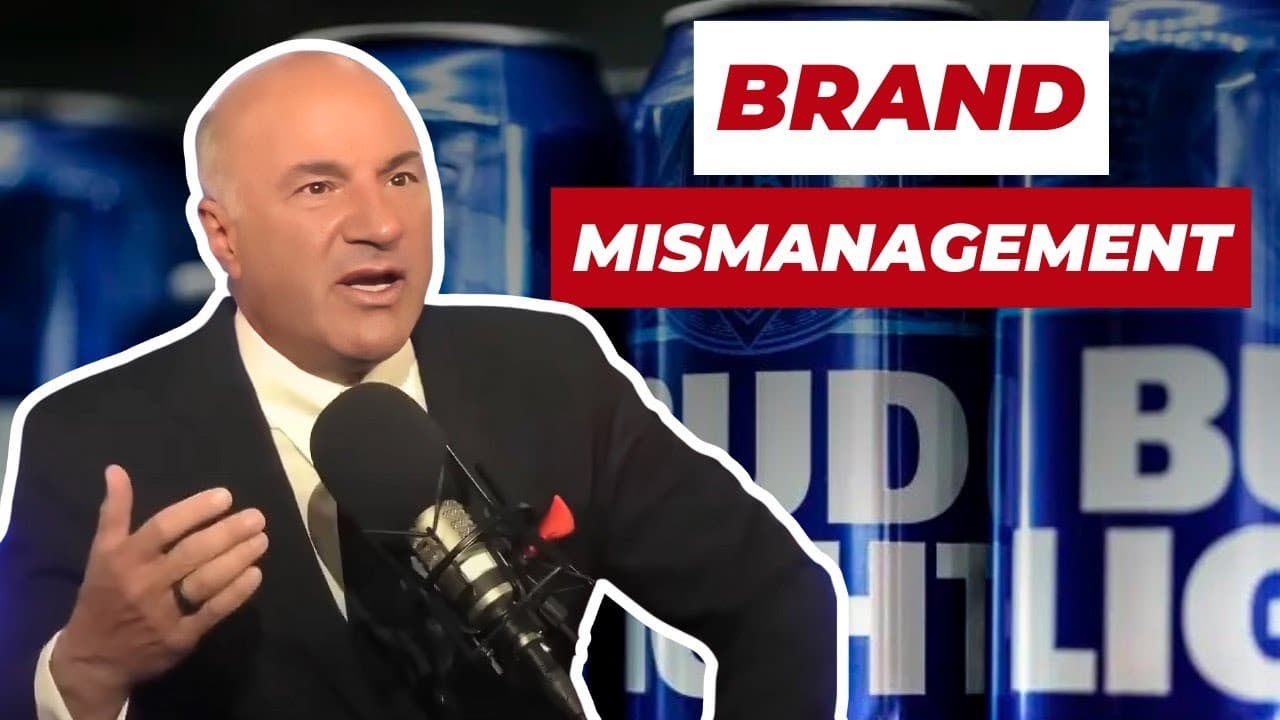
well Bud Light has become the poster boy for brand mismanagement from multiple perspectives so let me let me lay it out for you because these the discussions that have risen and the narrative that's risen around Bud Light is probably a good lesson for every CEO in every sector of the economy number one it highlights the power of social media this t... Read More
Key Insights
- Social media can transform a brand controversy within 48 hours, while reposted clips, boycotts, and user-created content can keep the issue alive far longer. Once content is published, the company loses control over how other people reuse it to advance their own narratives.
- Consumer backlash can become a lasting sales problem when dissatisfied buyers immediately boycott a product and switch to competing brands. In Bud Light's case, the narrative moved beyond the original social-media partnership and became focused on continuing sales declines during the controversy's second month.
- Polarized brand messaging can alienate a substantial portion of a broad customer base. O'Leary argues that consumer-goods companies must analyze negative consequences as carefully as possible positive attention, especially when people with opposing social views all purchase the same category of product.
- The CEO is ultimately responsible for major brand decisions and their consequences. O'Leary says leadership cannot place final blame on a brand manager or advertising agency when a campaign enters controversial territory and puts billions of dollars of capitalization at stake.
- Brand recovery begins with stabilizing the decline rather than immediately trying to gain market share. The initial objective is to stop the damaging narrative, cauterize the wound, and identify where favorable consumer sentiment remains before committing resources to a larger recovery campaign.
- Real-time platform monitoring can reveal supportive customer conversations during a crisis. O'Leary recommends reviewing activity by the hour, finding positive signals such as favorable memories or product attributes, and directing spending toward audiences that still express demand for the brand.
- Effective paid spokespeople genuinely use and understand the products they promote. O'Leary says personal experience helps an influencer understand a brand's DNA, while audience awareness helps the spokesperson avoid irrelevant narratives that conflict with the concerns of the intended customer base.
- Paid spokesperson roles require continuous personal responsibility because public conduct can affect the company at any hour. O'Leary says prominent representatives must modify their behavior, recognize that audiences scrutinize them around the clock, and understand that one damaging incident may cause a company to end the relationship.
Install to Summarize YouTube Videos and Get Transcripts
Explore YouTube Video Summarizer or Get YouTube Transcript Extractor
Questions & Answers
Q: How should a brand recover from sustained consumer backlash?
A brand should first stabilize the decline rather than attempt to regain market share immediately. Kevin O'Leary recommends stopping the damaging narrative, monitoring activity across platforms by the hour, and identifying favorable signals among existing users. The company can then direct resources toward supportive conversations, useful product attributes, and customer groups that continue to demonstrate demand before attempting broader recovery.
Q: Why did the Bud Light controversy become a prolonged brand crisis?
The issue went viral within 48 hours, but it did not disappear after another 48 hours as many viral stories do. According to O'Leary, the narrative shifted toward sales as dissatisfied consumers boycotted Bud Light and changed their brand preferences. Additional social-media content, including people shooting or dumping beer cans, encouraged others to join the backlash and kept the controversy active into a second month.
Q: Why are polarized messages risky for consumer brands?
Polarized messages are risky because customers with opposing social beliefs may still purchase the same consumer product. O'Leary uses beer as the example, noting that Republicans and Democrats both drink it, while consumers also hold different views about gender. A company seeking positive viral attention must therefore examine the negative scenario because controversial positioning may alienate a large part of its established customer base.
Q: Who is responsible when a major branding campaign fails?
The CEO is ultimately responsible for a major branding failure, according to O'Leary. A chief executive cannot place final responsibility on a brand manager or advertising agency when the company enters controversial territory. The CEO must own the decision because the campaign can damage the brand, reduce sales, and place billions of dollars of capitalization at stake. Boards should also examine who controls brand content and distribution.
Q: How can social media amplify a corporate branding mistake?
Social media can make an issue viral within 48 hours and allow users to reshape the story through boycotts, reaction clips, reposts, and content supporting their own narratives. After a company publishes promotional material, it no longer controls every frame or its subsequent use. In the Bud Light case, viral videos and continuing sales discussions extended the controversy well beyond the initial partnership announcement.
Q: What should companies measure during a brand crisis?
Companies should monitor what is happening on every relevant platform, potentially by the hour, and search for supportive signals within the broader negative conversation. O'Leary calls these signals green shoots. They might include users sharing favorable memories, discussing why they previously chose the product, or emphasizing attributes such as calories or nutrition. Those observations can guide where the company spends during stabilization.
Q: How should a company choose a paid spokesperson or influencer?
A company should choose a spokesperson who genuinely consumes or uses its product, understands the brand's DNA, and can prove that connection. The person should also understand the intended customers and read the room before entering unrelated or divisive discussions. O'Leary argues that an effective spokesperson must help expand the business, reduce customer acquisition costs, and accept responsibility to the company's board.
Q: What responsibilities come with representing a brand publicly?
A paid spokesperson must recognize that personal behavior can affect the represented company from morning until night. O'Leary says public representatives are watched continuously and cannot assume that off-brand conduct will remain private. They may need to modify how they live, avoid reckless behavior, and understand that one bad move can generate extensive criticism and prompt the company to end the relationship quickly.
Summary & Key Takeaways
-
Bud Light's controversy demonstrates how social media can turn a branding decision into a sustained commercial crisis. The issue went viral within 48 hours, but instead of fading after another 48 hours, it became a sales story as dissatisfied customers boycotted the beer and moved toward brands unconnected to the dispute.
-
Kevin O'Leary argues that companies selling broadly consumed products should carefully assess both the potential benefits and negative consequences of polarized messaging. Because customers may hold conflicting social views while buying the same product, a controversial position can divide the audience. The CEO must ultimately accept responsibility for the resulting brand damage.
-
Recovery should begin with stabilization, not immediate market-share growth. O'Leary recommends monitoring every platform by the hour, identifying favorable conversations and customer groups, and investing where supportive signals appear. He also says influencers should use the products they promote, understand the intended audience, and accept responsibility for their conduct around the clock.
Read in Other Languages (beta)
Share This Summary 📚
Summarize YouTube Videos and Get Video Transcripts with 1-Click
Try YouTube Summary with ChatGPT & Claude or YouTube Transcript Generator
Explore More Summaries from Kevin O'Leary 📚
Summarize YouTube Videos and Get Video Transcripts with 1-Click
Try YouTube Summary with ChatGPT & Claude or YouTube Transcript Generator