Could There Be Life on Venus Due to Phosphine Discovery?
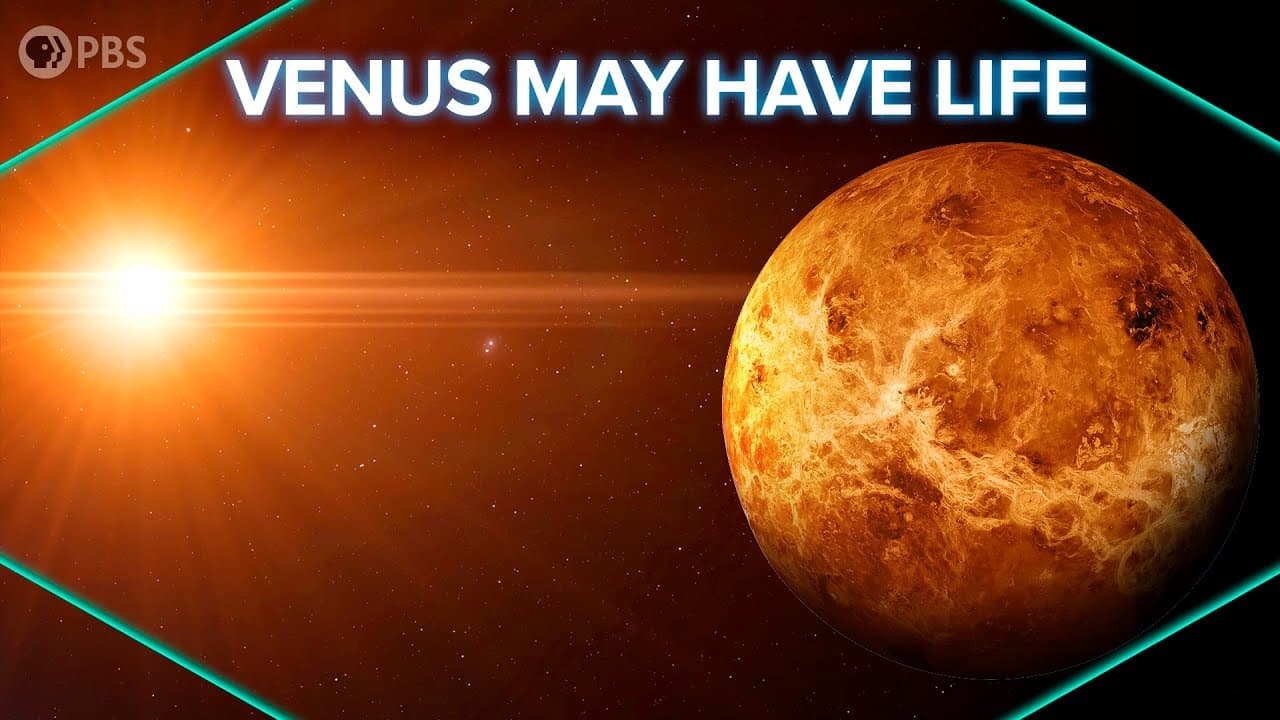
TL;DR
The detection of phosphine in Venus's atmosphere raises the possibility of extraterrestrial life, as this molecule typically requires biological processes for its production. Observations suggest that phosphine's presence is maintained at a rate faster than its destruction, indicating either unknown non-biological processes or microbial life thriving in the planet's upper atmosphere.
Transcript
If you rank the most habitable places in our solar system Venus lands pretty low, with surface temperatures hot enough to melt lead and sulphuric acid rain. And yet it may have just jumped to the front of the pack. In fact we may have detected the signature of alien life - Venusian life -for the first time. Our searches for life-beyond Earth have t... Read More
Key Insights
- Venus, historically considered inhospitable, may harbor life due to the detection of phosphine in its atmosphere.
- Phosphine, a potential biosignature, is hard to produce without biological processes, making its detection significant.
- The discovery was made using the James Clerk Maxwell telescope and confirmed by the Atacama Large Millimeter/submillimeter Array.
- Phosphine's presence suggests a production rate faster than its destruction in Venus' atmosphere, indicating a potential unknown process or life.
- The harsh conditions of Venus' surface are contrasted by more favorable conditions in the upper atmosphere for potential microbial life.
- The idea of life in Venus' atmosphere was first proposed in 1967 by Carl Sagan and Harold Morowitz.
- Potential Venusian life would need to survive in extreme acidity, possibly by existing in a spore state during adverse conditions.
- Further observations and missions to Venus are necessary to confirm phosphine's presence and explore the possibility of life.
Install to Summarize YouTube Videos and Get Transcripts
Explore YouTube Video Summarizer or Get YouTube Transcript Extractor
Questions & Answers
Q: What makes the discovery of phosphine on Venus significant?
The discovery of phosphine on Venus is significant because phosphine is considered a potential biosignature, a chemical that is difficult to produce without biological processes. Its presence in Venus' atmosphere suggests a production rate faster than its destruction, indicating either an unknown non-biological process or the presence of life, making it a major lead in the search for extraterrestrial life.
Q: How was phosphine detected on Venus?
Phosphine was detected on Venus using the James Clerk Maxwell telescope and confirmed by the Atacama Large Millimeter/submillimeter Array. These observatories identified the characteristic absorption features of phosphine in Venus' atmosphere, providing strong evidence of its presence. However, further observations are necessary to confirm these findings and eliminate any possibilities of observational errors.
Q: What are the conditions on Venus that make it inhospitable?
Venus is considered inhospitable due to its extreme surface conditions, including temperatures hot enough to melt lead and a thick atmosphere composed mainly of carbon dioxide, creating a runaway greenhouse effect. The surface pressure is crushing, and the atmosphere contains sulfuric acid clouds, making it a hostile environment for life as we know it. However, the upper atmosphere has more favorable conditions for potential microbial life.
Q: What are the potential implications of finding life on Venus?
Finding life on Venus would have profound implications, suggesting that life might be more common in the universe than previously thought. It would challenge our understanding of life's adaptability and resilience, particularly in extreme environments. Such a discovery could shift the focus of astrobiological research and influence future space missions, potentially prioritizing Venus in the search for extraterrestrial life.
Q: How could life exist in Venus' harsh atmosphere?
Life in Venus' harsh atmosphere could exist in the form of microbial life residing in the upper atmosphere, where conditions are more favorable. These microbes might live in droplets of sulfuric acid, surviving the extreme acidity. They could enter a resilient spore state during adverse conditions, similar to some Earth bacteria, allowing them to withstand the harsh environment and remain metabolically active when conditions improve.
Q: What are the next steps in confirming the presence of life on Venus?
The next steps in confirming the presence of life on Venus involve conducting more observations to verify the presence of phosphine and to search for other potential biosignatures. Future missions to Venus may be necessary to collect atmospheric samples and directly search for life signatures. These efforts will require advanced instrumentation and possibly new mission proposals to prioritize the search for life on Venus.
Q: What historical proposals exist regarding life on Venus?
The possibility of life on Venus was first proposed in 1967 by Carl Sagan and Harold Morowitz, who speculated about microbial life existing permanently aloft in Venus' relatively habitable upper atmosphere. They suggested that life could exist in the form of microbes or larger creatures, potentially supported by hydrogen balloons, although these ideas were considered fringe at the time. Recent discoveries have renewed interest in these proposals.
Q: Why is phosphine considered a potential biosignature?
Phosphine is considered a potential biosignature because it is a common byproduct of living metabolisms and is difficult to produce through non-biological processes. Its presence in a planet's atmosphere, especially in significant quantities, can indicate biological activity. On Venus, the detected levels of phosphine are much higher than what could be explained by known abiotic processes, making it a compelling candidate for indicating life.
Summary & Key Takeaways
-
Venus, once deemed inhospitable, may harbor life due to the detection of phosphine, a potential biosignature, in its atmosphere. This discovery was made using sophisticated telescopes and suggests a production rate faster than phosphine's destruction, hinting at unknown processes or life.
-
Phosphine, a molecule difficult to produce without biological processes, was detected on Venus, sparking excitement about potential extraterrestrial life. The discovery was confirmed by multiple observatories, though further studies are needed to validate these findings and explore the possibility of life.
-
The discovery of phosphine on Venus challenges previous assumptions about the planet's habitability. While the surface is extremely hostile, the upper atmosphere offers conditions where microbial life could exist, possibly surviving in a spore state during harsh conditions.
Read in Other Languages (beta)
Share This Summary 📚
Summarize YouTube Videos and Get Video Transcripts with 1-Click
Try YouTube Summary with ChatGPT & Claude or YouTube Transcript Generator
Explore More Summaries from PBS Space Time 📚






Summarize YouTube Videos and Get Video Transcripts with 1-Click
Try YouTube Summary with ChatGPT & Claude or YouTube Transcript Generator