Why Is US Money Losing Value Soon?
TL;DR
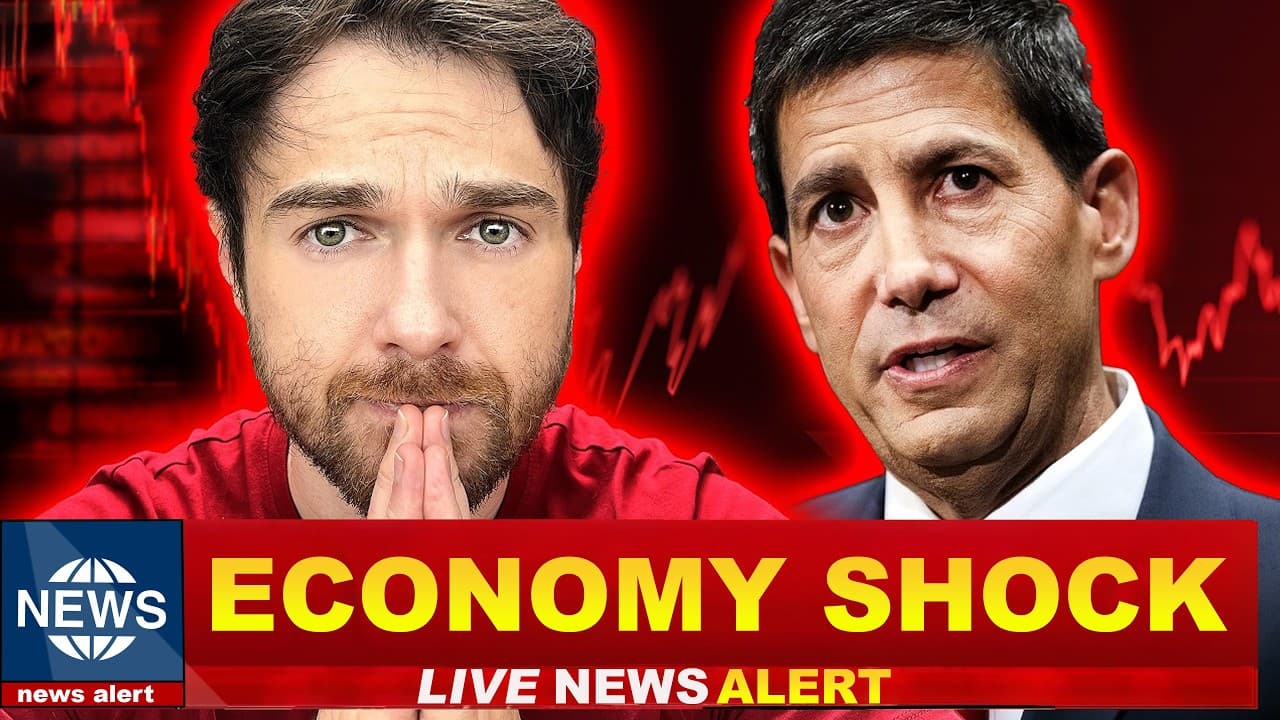
The US dollar's value is expected to decline due to geopolitical tensions and Federal Reserve strategies. The Fed's actions, including interest rate decisions and data control, are shaping economic narratives. Oil prices and the Iran deal play crucial roles in inflation and monetary policy, impacting the dollar's purchasing power.
Transcript
So, a few days ago, the United States and Iran signed a deal to end one of the most destructive wars in decades. And within just days, it fell apart just like we said it would. Israel kept on bombing Lebanon. The agreement broke and Iran shut the straight of Hermuz again. And that means no more oil for the world. And the crisis is sort of back on. ... Read More
Key Insights
- The US and Iran deal collapsed, reigniting geopolitical tensions affecting oil supply.
- A conflict exists between the military-industrial and technological-industrial complexes, influencing global stability.
- Federal Reserve's interest rate decisions are crucial for economic stability, with current rates being held steady.
- Kevin Worsh's strategy involves dropping forward guidance to create uncertainty and control economic narratives.
- The Fed is forming task forces to improve data accuracy, potentially manipulating inflation perceptions.
- Quantitative easing may continue through indirect methods, affecting the dollar's value.
- Oil prices heavily influence inflation, with the Iran deal being a pivotal factor.
- Market reactions to Fed policies are mixed, with potential impacts on stocks and bond yields.
Install to Summarize YouTube Videos and Get Transcripts
Explore YouTube Video Summarizer or Get YouTube Transcript Extractor
Questions & Answers
Q: How does the US-Iran deal affect oil prices?
The US-Iran deal's collapse has reignited geopolitical tensions, affecting oil supply through the Strait of Hormuz. This disruption can lead to increased oil prices, impacting global markets and inflation. The deal's failure highlights the fragile nature of international agreements and their direct influence on energy costs and economic stability.
Q: What is the conflict between military and technological complexes?
The conflict between the military-industrial and technological-industrial complexes centers on resource allocation and strategic priorities. The military's focus on perpetual warfare contrasts with the technological sector's need for stability to advance AI and data infrastructure. This tension influences geopolitical decisions, economic policies, and the shifting dynamics of global power structures.
Q: Why is the Federal Reserve maintaining interest rates?
The Federal Reserve is maintaining interest rates to create economic stability amid geopolitical tensions and inflation concerns. By holding rates steady, the Fed aims to project independence and control over monetary policy. This strategy allows future flexibility in rate adjustments, depending on inflation trends and economic conditions driven by global events.
Q: What is Kevin Worsh's strategy with the Federal Reserve?
Kevin Worsh's strategy involves dropping forward guidance, creating uncertainty in economic forecasts. This approach allows the Fed to control narratives, influencing market reactions and policy decisions. By forming task forces to improve data accuracy, the Fed aims to manipulate inflation perceptions, potentially justifying future quantitative easing and economic interventions.
Q: How does data manipulation affect inflation perceptions?
Data manipulation affects inflation perceptions by controlling the narrative around economic indicators. By improving data accuracy and potentially excluding volatile elements like oil, the Federal Reserve can present a more favorable inflation outlook. This manipulation influences policy decisions, such as interest rate adjustments, and affects public and market confidence in economic stability.
Q: What role does oil play in inflation and monetary policy?
Oil plays a crucial role in inflation and monetary policy due to its impact on energy prices and production costs. Fluctuations in oil supply, driven by geopolitical events like the US-Iran deal, directly affect inflation rates. The Federal Reserve considers these factors when setting interest rates and formulating economic strategies to maintain stability.
Q: How does quantitative easing impact the dollar's value?
Quantitative easing impacts the dollar's value by increasing the money supply, potentially leading to inflation. By purchasing assets, the Federal Reserve injects liquidity into the economy, affecting interest rates and spending. This can devalue the dollar, reducing its purchasing power, as more currency circulates without a corresponding increase in economic output.
Q: What are the potential market reactions to Fed policies?
Market reactions to Fed policies can vary, with potential impacts on stocks, bonds, and currency values. Holding interest rates steady may lead to stock market declines if investors anticipate future rate hikes. Bond yields may fluctuate based on inflation expectations and economic narratives. These reactions reflect investor confidence in the Fed's ability to manage economic challenges.
Summary & Key Takeaways
-
The video discusses the collapse of a US-Iran deal and its impact on oil prices and global stability. It highlights the conflict between military and technological interests, affecting economic strategies. The Federal Reserve's approach, led by Kevin Worsh, involves controlling economic narratives through data manipulation and indirect quantitative easing, impacting the dollar's value.
-
The Federal Reserve's decision to maintain interest rates and control economic narratives through data manipulation is central to the discussion. The video explains how oil prices, influenced by geopolitical tensions, are crucial to inflation and monetary policy. The Fed's strategies, including indirect quantitative easing, aim to stabilize the economy but may devalue the dollar.
-
Geopolitical tensions, particularly the US-Iran conflict, are affecting oil prices and economic stability. The Federal Reserve's approach, including dropping forward guidance and forming task forces for data accuracy, aims to control economic narratives. The video explores the potential impacts on inflation, interest rates, and the dollar's purchasing power, highlighting the complex interplay of global events and monetary policy.
Read in Other Languages (beta)
Share This Summary 📚
Summarize YouTube Videos and Get Video Transcripts with 1-Click
Try YouTube Summary with ChatGPT & Claude or YouTube Transcript Generator
Explore More Summaries from Andrei Jikh 📚


Summarize YouTube Videos and Get Video Transcripts with 1-Click
Try YouTube Summary with ChatGPT & Claude or YouTube Transcript Generator