What is the Master Mind in Napoleon Hill’s Law of Success
TL;DR
The Master Mind is the idea that success arises from organized knowledge and coordinated effort among people. The concept emphasizes cooperation, mutual benefit, and action that goes beyond individual effort. Imagination, initiative, and planning are used to align minds toward common goals, unlocking greater potential than solitary work.
Transcript
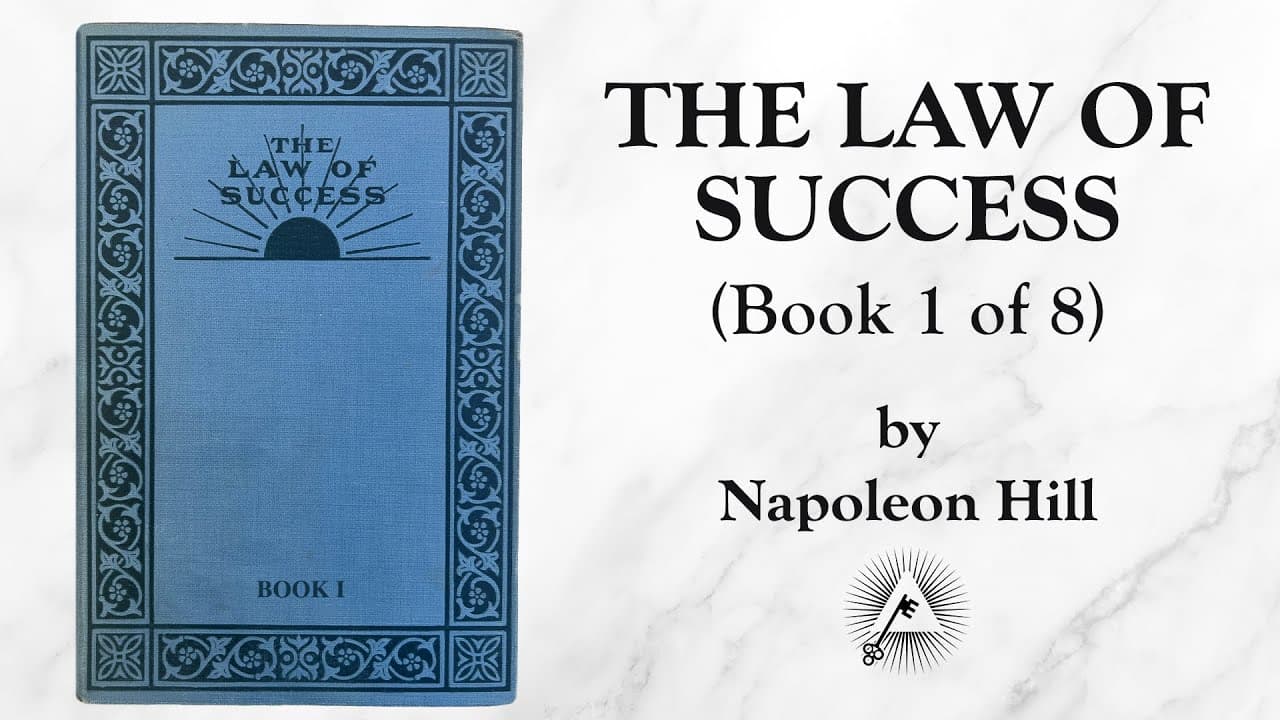
The law of success in 16 lessons. Teaching for the first time in the history of the world. The true philosophy upon which all personal success is built by Napoleon Hill. Read by Dan John Miller. Originally published in 1928. This recording is copyright 2025 Master Key Society. General introduction to the law of success course by Napoleon Hill dedic... Read More
Key Insights
- The Master Mind is a defined concept that relies on harmonious cooperation among individuals to achieve goals.
- The law of success course is built on organizing knowledge into practical rules that guide action.
- Imagination is a cultivated faculty that fuels discovery, opportunity, and the ability to plan with others.
- Success requires cooperation from others, not just individual effort, and hinges on offering value first.
- The course acknowledges influential figures like Ford and Carnegie as inspirations for its principles.
- The framework emphasizes doing more than is paid for as a core habit for advancement.
- People should analyze their own capabilities and seek to improve through structured feedback.
- The material frames success as a philosophy that can be taught, learned, and applied by learners of all ages.
Install to Summarize YouTube Videos and Get Transcripts
Explore YouTube Video Summarizer or Get YouTube Transcript Extractor
Questions & Answers
Q: What is the Master Mind as described in the law of success course
The Master Mind is presented as a deliberate alliance of two or more minds that harmonize toward a common purpose. It posits that organized knowledge and cooperative effort create leverage beyond what a single person can achieve alone. The concept notes that success grows from coordinated action, shared resources, and mutual accountability.
Q: Why does the course emphasize imagination
Imagination is emphasized as the seed of opportunity, enabling individuals to envision plans and potential collaborations before they become reality. The material states that great achievements begin in the mind and then require cooperative execution to turn imagined ideas into tangible outcomes, illustrating how imagination drives strategic action.
Q: How are success and cooperation connected in this course
The course argues that success is not possible by solitary effort alone; cooperation is essential for securing the necessary support and resources. It teaches that individuals must first demonstrate willingness to cooperate and contribute, thereby creating a network of collaboration that amplifies personal capability.
Q: Who are some historical figures linked to the course’s philosophy
Napoleon Hill references Henry Ford, Thomas Edison, Andrew Carnegie, and others as foundational influences. Their showcased achievements are used to illustrate how imagination, leadership, and coordinated effort contributed to remarkable outcomes, grounding the course’s laws in real world examples from business and innovation.
Q: What is the purpose of the personal analysis chart
The personal analysis chart is designed to help learners evaluate their own strengths and weaknesses against the 15 laws of success. By comparing performance with a set of notable figures, individuals can identify improvement areas and monitor progress over the course duration.
Q: What role does the concept of capital or resources play
The material frames capital as available to those who can create practical plans for using it, suggesting that opportunity is accessible through imaginative planning and cooperative action. Resources are shown as leverage that arises when ideas are translated into actionable projects with the help of others.
Q: How does the course present its target audience
The course is presented as accessible to a broad audience, including young people and the workaday learner. It stresses simplicity and practical application, aiming to translate complex ideas into straightforward rules that can be mastered through disciplined study and real world practice.
Q: What is the overall aim of the 16 laws of success
The overall aim is to organize known truths into a usable framework that helps individuals become more capable in their chosen field. By applying the 16 laws, learners should improve their imagination, cooperation skills, and ability to secure the aid of others, leading to measurable personal and professional growth.
Summary & Key Takeaways
-
The Master Mind introduces a philosophy where success comes from coordinating two or more minds toward a shared goal, leveraging collective knowledge and effort.
-
Imagination plays a key role in identifying opportunities, while cooperation with others is essential before asking for their support or collaboration.
-
The course presents 16 laws of success and highlights the importance of practical application and disciplined self assessment to achieve meaningful progress.
Read in Other Languages (beta)
Share This Summary 📚
Summarize YouTube Videos and Get Video Transcripts with 1-Click
Try YouTube Summary with ChatGPT & Claude or YouTube Transcript Generator
Explore More Summaries from Master Key Society 📚



Summarize YouTube Videos and Get Video Transcripts with 1-Click
Try YouTube Summary with ChatGPT & Claude or YouTube Transcript Generator