How Does Building 100 Wells Change Lives in Africa?
TL;DR
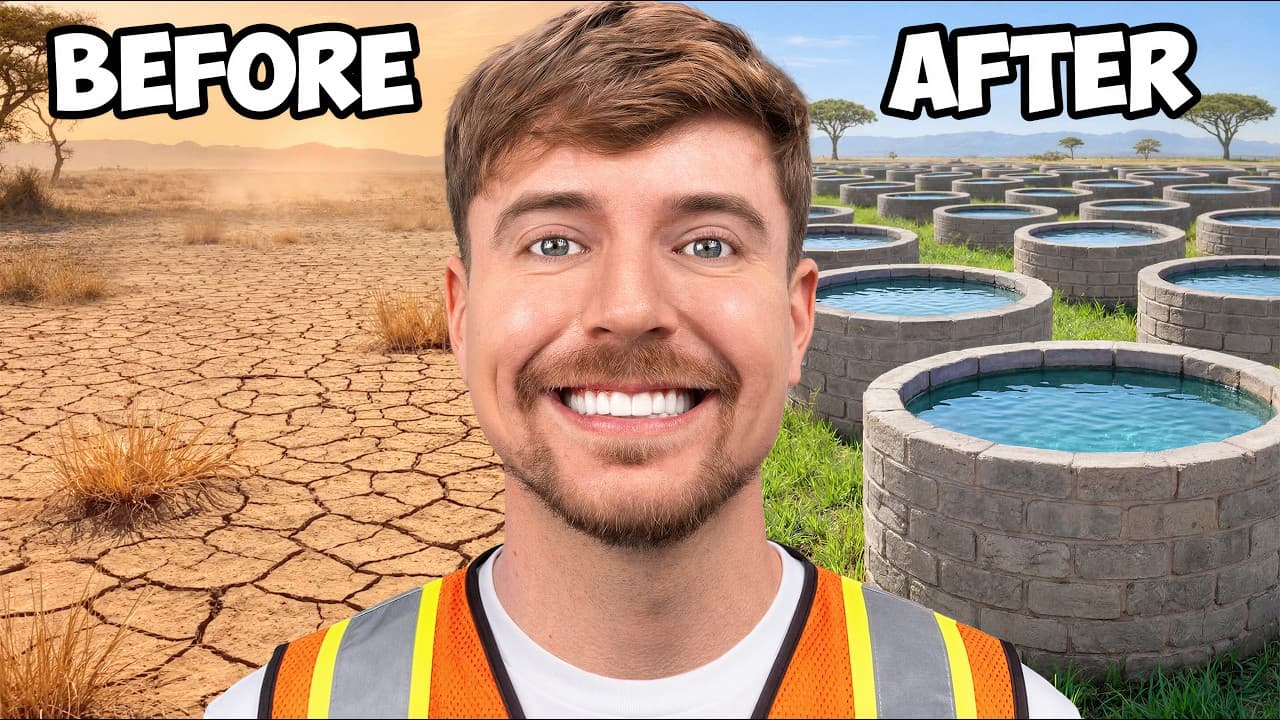
Building 100 wells in Africa provides clean drinking water to approximately half a million people, significantly improving health and living conditions. The initiative also includes infrastructure enhancements and educational resources, highlighting how access to safe water can transform communities and empower individuals.
Transcript
This is the first of 100 wells we're going to build in this video. Wow! Water! Water! - Oh.
- Oh, crap. You just witnessed a small village in Kenya get access to unlimited clean drinking water in less than a second. One down, 99 more wells in Africa to go. You're going to love this video. Combined, these 100 wells are going to give around half a mi... Read More
Key Insights
- The video documents the construction of 100 wells across Africa, providing clean water to approximately half a million people.
- In Kenya, students previously sourced water from unsafe rivers, leading to health issues like diarrhea and typhoid.
- The wells are drilled deep into aquifers, providing clean, drinkable water and supporting local communities' needs.
- The project also included infrastructure improvements, such as bridges, to ensure safe access to water and other resources.
- In addition to wells, the video highlights the donation of bikes and educational resources to enhance community well-being.
- The initiative underscores the importance of clean water for health, education, and community development.
- The video emphasizes the potential for individuals and smaller organizations to make significant impacts without government-level resources.
- Viewers are encouraged to donate to further the cause, with all proceeds going towards building more wells globally.
Install to Summarize YouTube Videos and Get Transcripts
Explore YouTube Video Summarizer or Get YouTube Transcript Extractor
Questions & Answers
Q: What is the main goal of the video content?
The main goal of the video is to document the construction of 100 wells across Africa, providing clean and safe drinking water to communities in need. The initiative aims to improve health, education, and daily living conditions by reducing reliance on unsafe water sources and supporting community development.
Q: How do the wells impact the communities featured in the video?
The wells provide clean, drinkable water, significantly improving the health and well-being of the communities. They reduce the incidence of waterborne diseases and save time spent fetching water, allowing children to focus on education and other productive activities. The wells also support local agriculture and livestock, enhancing food security.
Q: What additional support did the project provide beyond building wells?
Beyond constructing wells, the project included infrastructure improvements such as building bridges to ensure safe access to resources. It also provided educational resources like new computers, furniture, and projectors for schools, as well as bicycles for students, enhancing overall community development and quality of life.
Q: How does the video emphasize the importance of individual and small-scale efforts?
The video highlights that significant impacts can be achieved without government-level resources, showcasing how individual and small-scale efforts can drive meaningful change. It encourages viewers to contribute to the cause, demonstrating that collective action can address global challenges like access to clean water.
Q: What challenges did the communities face before the wells were built?
Before the wells were built, communities faced challenges such as sourcing water from unsafe rivers, leading to health issues like diarrhea and typhoid. Some communities had to undertake long, treacherous hikes to access water, which was often unsafe to drink, posing additional risks to health and safety.
Q: How are the wells constructed to ensure a sustainable water supply?
The wells are drilled deep into aquifers, accessing pure, drinkable water. They are equipped with solar-powered pumps and large storage tanks to ensure a continuous and sustainable water supply. The infrastructure is designed to last for decades, providing long-term benefits to the communities.
Q: What role do local communities play in the project?
Local communities are actively involved in the project, assisting with the construction and maintenance of the wells. Their participation ensures that the infrastructure is tailored to meet their specific needs and that they have the knowledge and resources to maintain the wells for long-term use.
Q: What is the call to action at the end of the video?
The video concludes with a call to action, urging viewers to visit beastphilanthropy.org/wells and donate to support the construction of more wells globally. It emphasizes that 100% of the donations will go towards building wells, highlighting the importance of collective efforts in addressing the global water crisis.
Summary & Key Takeaways
-
MrBeast's video showcases the construction of 100 wells across Africa, providing clean water to communities in need. The initiative aims to improve health and living conditions by offering safe water access and reducing reliance on unsafe sources.
-
In addition to building wells, the project includes infrastructure improvements like bridges, educational resources, and bicycles to support community development. The video emphasizes the transformative impact of clean water on health, education, and daily life.
-
Viewers are encouraged to contribute to the cause, with all donations directed towards furthering the construction of wells globally. The video highlights the potential for significant change through philanthropy and individual action.
Read in Other Languages (beta)
Share This Summary 📚
Summarize YouTube Videos and Get Video Transcripts with 1-Click
Try YouTube Summary with ChatGPT & Claude or YouTube Transcript Generator
Explore More Summaries from MrBeast 📚






Summarize YouTube Videos and Get Video Transcripts with 1-Click
Try YouTube Summary with ChatGPT & Claude or YouTube Transcript Generator