How to Take a Stand and Live with Purpose
TL;DR
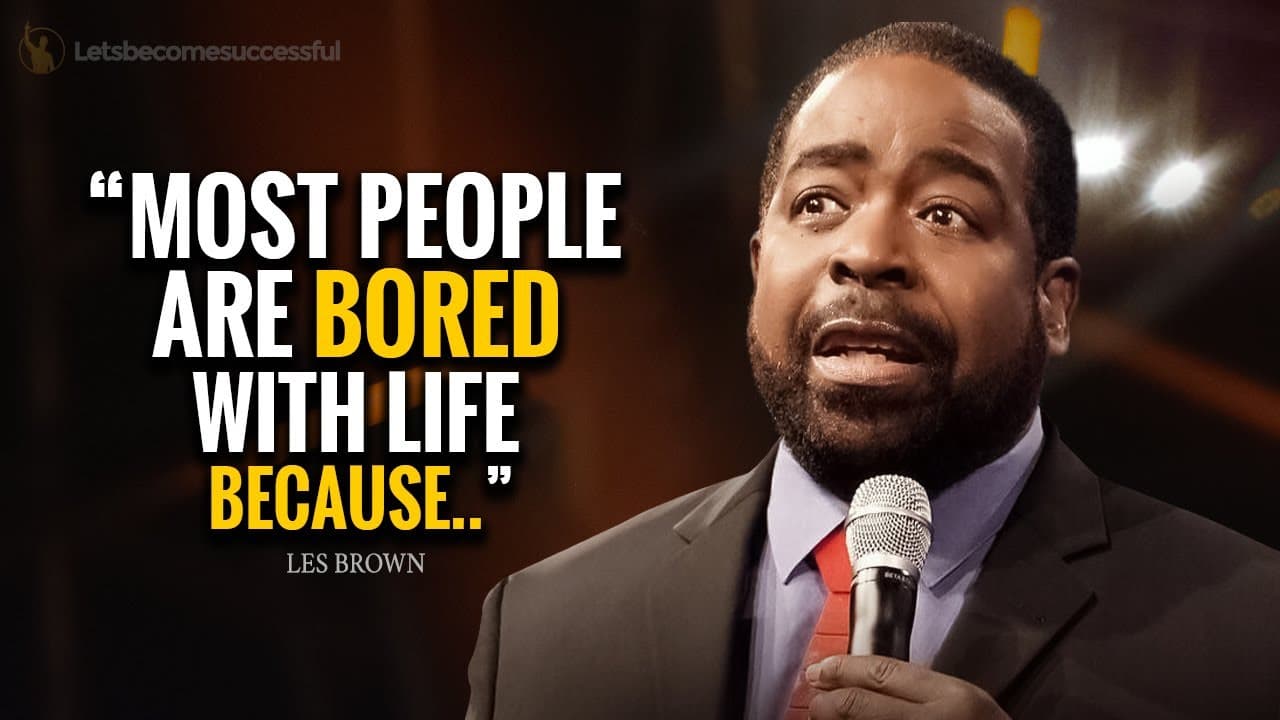
Take a stand by choosing a meaningful direction, accepting honest feedback, and dedicating your life to something larger than yourself. Purpose does not guarantee recognition, favorable circumstances, or special treatment, but acting from integrity creates fulfillment and helps you remain inwardly strong when disappointment, resistance, or hardship tries to hold you down.
Transcript
thinking about a guy who he had everything going for went to harvard became a lawyer joined a large prestigious law firm married the perfect wife had children and guess what he was going through the motions day in and day out but it wasn't giving him what he wanted out of life he was going through an act he was acting on a road and one day ... Read More
Key Insights
- A prestigious career and an outwardly ideal family life can still feel empty when a person is merely performing a role. Brown's story of a lawyer unable to leave bed illustrates the inner conflict that may arise when necessary growth and change are repeatedly resisted.
- Taking a stand is a conscious choice to design a life of substance, purpose, and meaning. Following the crowd leaves people unfocused because they are copying what others do instead of becoming deeply involved in something that gives their own lives direction.
- Honest feedback can support growth only when it is not treated as a personal attack. Brown describes how defensiveness, justification, and ego initially prevented him from accepting a young attendee's valid criticism that he had failed to give seven people his best effort.
- Service should not depend on audience size or whether circumstances match expectations. After apologizing for his poor response to a small gathering, Brown resolved that if he received another speaking opportunity, he would give everything he had even if only one person attended.
- Inner strength is the ability to remain committed even when external forces restrict or discourage you. The story of a boy declaring that he was standing inside himself shows that circumstances may control someone's position without controlling that person's spirit or convictions.
- Integrity means acting because an action expresses who you are, not because you expect a reward. Brown warns that doing good does not guarantee recognition, protection, favorable treatment, a banquet, a plaque, or any special bargain from life.
- Dedication to a cause larger than yourself gives life focus and intensity. Brown argues that vague or scattered dedication produces a weak quality of life, while a clear commitment helps people stop following the crowd and persist when the odds appear unfavorable.
- A sufficiently meaningful dream changes how a person responds to difficulty. Brown says dedication activates personal power that can work through people and circumstances, producing changes they might never discover if they remained casual about living or unwilling to commit themselves fully.
Install to Summarize YouTube Videos and Get Transcripts
Explore YouTube Video Summarizer or Get YouTube Transcript Extractor
Questions & Answers
Q: How can I take a stand and live with purpose?
Choose a direction that has genuine meaning for you, then become consciously involved in building a life around it. Brown contrasts this commitment with following the crowd and repeating what everyone else does. Taking a stand also requires accepting growth, giving your best under imperfect conditions, and dedicating yourself to something valuable that is larger than personal comfort or recognition.
Q: Why can a successful life still feel empty?
External success can feel empty when a person is only performing an expected role rather than living with focus and meaning. Brown describes a Harvard-educated lawyer with a prestigious firm, a wife, and children who was simply going through the motions. His inner conflict became so severe that he could not get out of bed, although doctors found nothing physically wrong with him.
Q: Why do people resist personal growth and change?
People may resist growth because change disrupts the familiar lifestyle to which they want to return. Brown says life can call people to change, grow, and expand, yet they respond by refusing to listen so they can return to sleep and mediocrity. That resistance can create conflict because their present routine no longer provides the fulfillment, joy, or peace of mind they need.
Q: How should I respond to honest criticism?
Listen without immediately identifying the criticism as a personal attack, becoming defensive, or justifying your behavior. Brown initially argued with a young attendee who said he had allowed disappointment and ego to prevent him from giving his best. After a long debate, Brown admitted his mistake and apologized. The encounter shows that accepting valid feedback requires humility and a willingness to change future conduct.
Q: Why should I give my best to a small audience?
The number of people present does not determine how much each person needs or deserves your effort. Brown expected hundreds at a community event but found only seven attendees, so he delivered a brief speech with a poor attitude. One participant later explained that they had needed hope and direction. Brown then promised to give his full effort even if only one person attended.
Q: What does it mean to stand up inside yourself?
Standing up inside yourself means preserving your convictions and inner strength even when external circumstances restrain you. Brown illustrates this idea with a boy whom larger children repeatedly forced into his seat. The boy acknowledged that they could hold him down physically, but insisted he remained standing inwardly. The lesson is that hardship does not have to conquer a person's spirit.
Q: Why should integrity not depend on rewards?
Integrity means doing what expresses who you are without demanding special benefits in return. Brown says life does not guarantee protection, favorable treatment, public recognition, a banquet, or a plaque because someone acts honorably. A person should therefore serve and behave well because those actions reflect personal character, not because the universe is expected to provide compensation or prevent misfortune.
Q: How does dedication to a larger cause change a life?
Dedication gives life focus, intensity, and a reason to persist beyond personal comfort. Brown says the quality of life is often shaped by what an individual serves, while vague and scattered dedication produces weakness. Committing to a cause larger than yourself separates you from the crowd, makes unfavorable odds less controlling, and allows personal power to work through purposeful action.
Summary & Key Takeaways
-
Les Brown contrasts following the crowd with consciously designing a meaningful life. He argues that resisting necessary change can produce deep inner conflict, while taking a stand creates focus and power. A fulfilling life requires choosing what matters instead of merely repeating socially approved routines that feel empty or monotonous.
-
Brown recounts arriving exhausted to address hundreds of expected participants, only to find seven people. After he delivered less than his best, a young attendee confronted him about failing to provide the hope they needed. The experience taught Brown to receive feedback, move beyond defensiveness, apologize, and serve every audience fully.
-
The speech urges people to remain inwardly upright even when circumstances hold them down. Brown says integrity should guide action without expectations of rewards, recognition, or protection from hardship. He concludes that dedication to a cause larger than oneself gives life intensity and enables individuals to persist despite unfavorable odds.
Read in Other Languages (beta)
Share This Summary 📚
Summarize YouTube Videos and Get Video Transcripts with 1-Click
Try YouTube Summary with ChatGPT & Claude or YouTube Transcript Generator
Explore More Summaries from Let's Become Successful 📚



Summarize YouTube Videos and Get Video Transcripts with 1-Click
Try YouTube Summary with ChatGPT & Claude or YouTube Transcript Generator