How to Draw Male Anatomy Step-by-Step
TL;DR
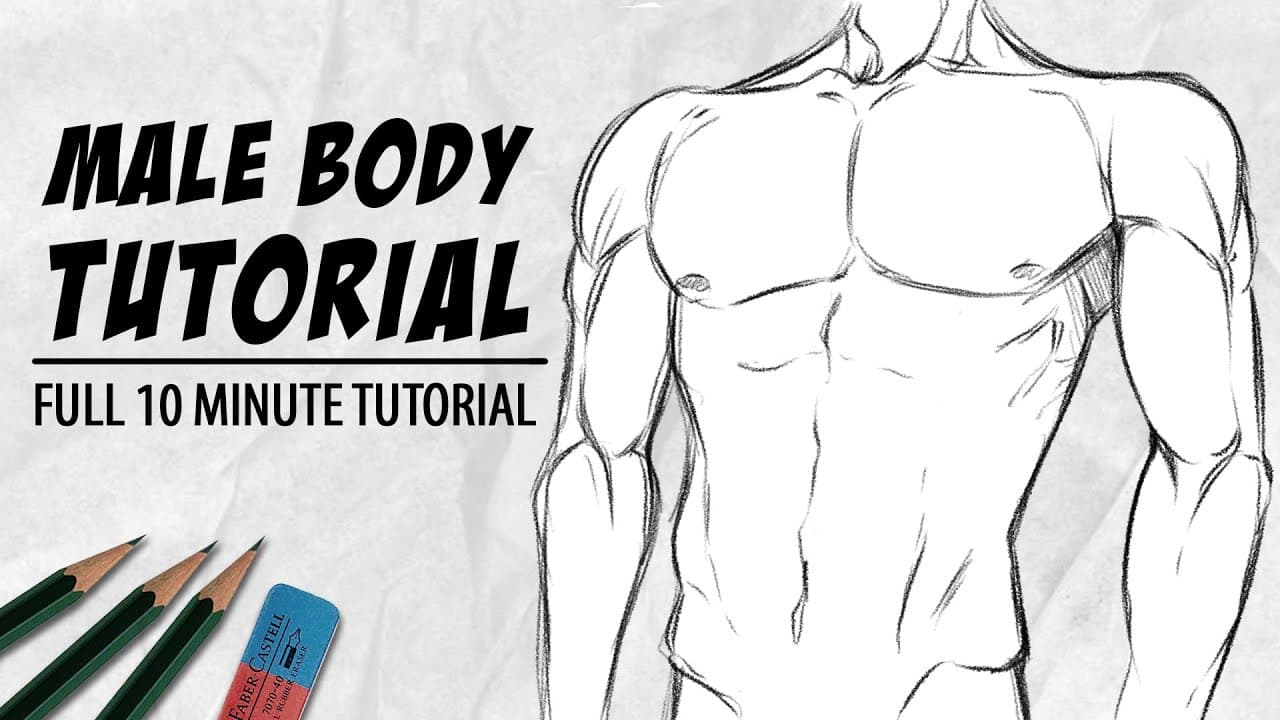
To draw male anatomy effectively, begin with basic shapes to establish proportions, such as squares for the neck and ovals for the thighs. Key tips include emphasizing the rib cage's length, ensuring limbs appear relaxed for a natural look, and focusing on muscle connections for realism. Practicing from different angles will enhance your understanding and accuracy.
Transcript
[music] Hi guys. My name is Marcel and welcome to a new video here on my drawing channel. And today, you're gonna learn how to draw like a Sir. Today's video is about male anatomy, so I don't think I've got to explain all that much, right? Just a heads up, I'm thankful for everyone who likes and subscribes since my tutorial channel is still pretty ... Read More
Key Insights
- ⭕ Starting with basic shapes like squares and circles assists in establishing accurate proportions when drawing anatomy.
- 💝 The rib cage's size is commonly underestimated, and recognizing its length is vital for realistic figure drawing.
- 👔 Muscle structure is intricately tied to overall body proportions, necessitating a focus on both form and detail.
- ☺️ Relaxed limbs are crucial for achieving a natural depiction of human anatomy and avoiding stiffness in drawings.
- 🤩 The importance of key anatomical landmarks, such as the pelvic crest and connection points for muscles, enhances realism.
- 💗 Encouraging feedback and community support are essential for a growing artist, reinforcing the value of likes and subscriptions.
- 🧑🎨 Practicing from various angles challenges artists and builds their confidence in rendering anatomy correctly.
Install to Summarize YouTube Videos and Get Transcripts
Explore YouTube Video Summarizer or Get YouTube Transcript Extractor
Questions & Answers
Q: What is the first step in drawing the male anatomy?
The first step begins with the upper body where you draw the neck as a square, adding triangles on each side to represent the shoulders. By using simple shapes like squares and circles, you can establish a basic structure before refining details. This approach helps in maintaining accurate proportions throughout the drawing process.
Q: How do you determine the proportions of the legs in relation to the rib cage?
When drawing the legs, it's important to remember that thighs should approximately match the height of the rib cage. This proportional technique ensures that the figure appears balanced and realistic. It's recommended to draw the legs slightly longer than you might initially think, as this often enhances the overall aesthetic of the character.
Q: What tips does Marcel provide for drawing a realistic arm?
Marcel emphasizes that drawing arms follows a similar principle to drawing legs, with a crucial difference in thickness. He advises that the upper and lower parts of the arms are slimmer compared to the legs. Special attention should also be given to avoiding stiff lines, as relaxed limbs appear more natural.
Q: Can you explain how to draw the chest muscles?
Drawing the chest involves representing four muscles on each side, originating where the biceps and deltoids meet. Marcel suggests sketching lightly to create saggy, realistic chest muscles, depending on whether the character is muscular or slim. This technique allows for a natural look without overly defined features unless that is desired.
Q: What common mistakes should beginners avoid when drawing anatomy?
Beginners often overlook the importance of body proportions, such as aligning the elbow, belly button, and rib cage along the same line. Another key mistake is drawing limbs straight instead of relaxed, which can result in an unnatural appearance. By keeping these tips in mind, artists can improve the realism of their figures.
Q: What is the significance of the pelvic crest in drawing anatomy?
The pelvic crest is crucial as it creates the V-shaped line on the lower torso. Its representation helps delineate where the upper body meets the lower body, contributing to overall body shape and realism. Beginners should practice sketching this area to ensure they capture the essential shape in their figures.
Q: How can one improve their anatomical drawing skills?
Improving skills in anatomical drawing involves consistent practice and experimentation from various angles. Utilizing resources like color-coded muscle diagrams, as suggested by Marcel, can enhance understanding of muscle groups and their placement. Regularly revisiting practice exercises helps reinforce learning and build confidence in drawing.
Q: What resources does Marcel provide for further learning?
Marcel offers color-coded diagrams that illustrate different muscles and muscle groups, useful for understanding anatomy from various perspectives. He encourages viewers to screenshot these diagrams or return to the video for additional reference. His commitment to providing free resources aims to support artists in their development.
Summary & Key Takeaways
-
The video tutorial by Marcel guides viewers through the process of drawing male anatomy, emphasizing proportions and basic shapes to create a realistic figure.
-
Key anatomical features are discussed, including the rib cage, limbs, and muscles, with tips for achieving accurate proportions.
-
Marcel encourages viewers to practice from different angles and consider the details of musculature, providing additional resources to support their learning.
Read in Other Languages (beta)
Share This Summary 📚
Summarize YouTube Videos and Get Video Transcripts with 1-Click
Try YouTube Summary with ChatGPT & Claude or YouTube Transcript Generator
Explore More Summaries from Draw like a Sir 📚


Summarize YouTube Videos and Get Video Transcripts with 1-Click
Try YouTube Summary with ChatGPT & Claude or YouTube Transcript Generator