How to Change Your Bad Habits
TL;DR
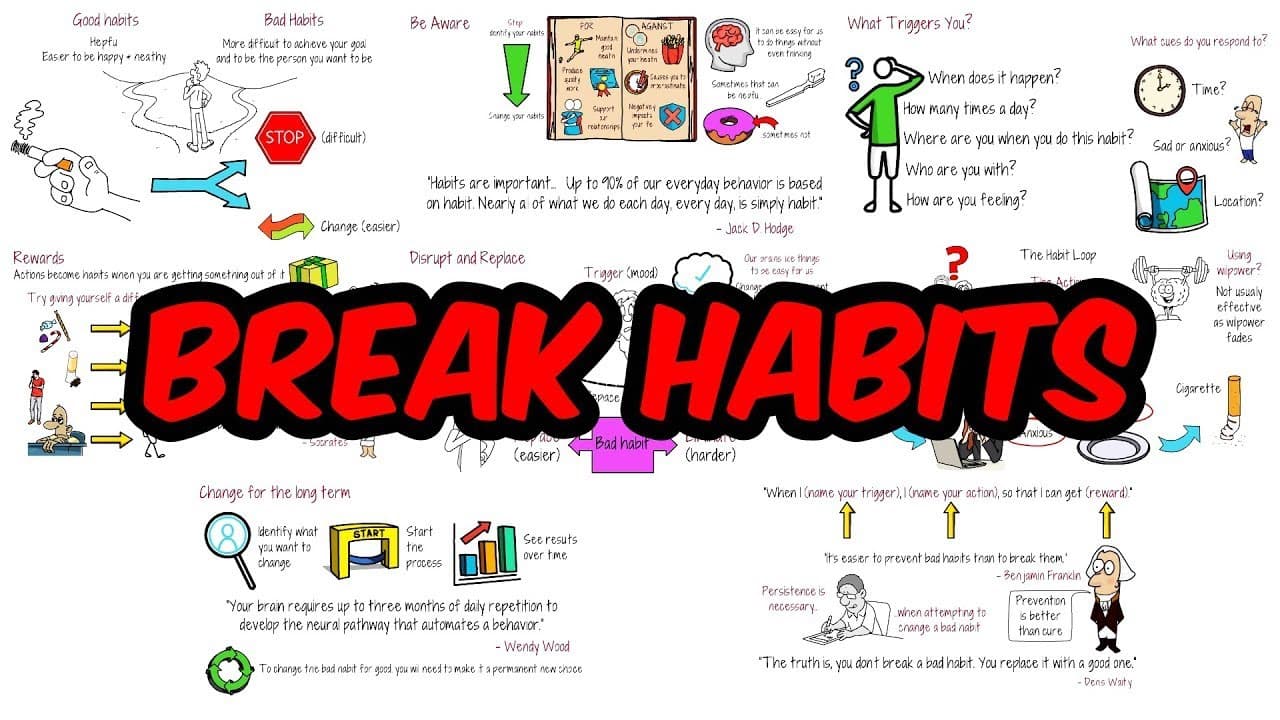
Change a bad habit by identifying its trigger, replacing the unwanted action with a healthier choice, adjusting your environment, and choosing a different reward. The habit loop has three parts: trigger, action, and reward, while willpower tends to have only short-term effects. Read on for practical replacements and questions that can reveal what drives your routine.
Transcript
Do you have a bad habit or two? Most people do. While good habits can be helpful, and make it easier to live happy, healthy lives, bad habits can make things more difficult to achieve our goals, and to be the people we want to be. So if you have a bad habit that’s creating problems for you, it should be easy to just stop doing it, right? W... Read More
Key Insights
- 🧑⚕️ Good habits improve our health, work quality, and relationships, while bad habits hinder our progress.
- 🥹 Becoming aware of our habits and distinguishing between those that benefit us and those that hold us back is crucial.
- 🦡 Understanding the habit loop of triggers, actions, and rewards helps in changing bad habits.
- 🦡 Replacing a bad habit with a healthier alternative is more effective than solely relying on willpower.
- 💱 By changing our environment, we can influence the outcome of our habits.
- 🤑 Rewards play a significant role in developing habits, and replacing the reward can help transform bad habits into good ones.
- 👶 Changing a habit requires persistence and daily repetition to create new neural pathways.
Install to Summarize YouTube Videos and Get Transcripts
Explore YouTube Video Summarizer or Get YouTube Transcript Extractor
Questions & Answers
Q: How do you change a bad habit?
First, identify the habit and determine whether it is working for or against your goals. Then examine its trigger, action, and reward, replace the unwanted action with a healthier option, and adjust your environment when possible.
Q: Why is it difficult to simply stop a bad habit?
A habit may be deeply rooted, physically addictive, or so automatic that you hardly notice it. Willpower may produce short-term success, but it fades over time and the habit can return.
Q: How can you identify what triggers a bad habit?
Ask when the habit happens, how many times a day it occurs, where you are, who you are with, and how you feel. Look for connections to particular people, places, situations, or emotions such as sadness and anxiety.
Q: What is the habit loop?
The habit loop consists of a trigger, an action, and a reward. For example, anxiety caused by a phone call from your boss may trigger nail-biting, while finishing a meal may trigger smoking.
Q: Why should you replace a bad habit instead of eliminating it?
Replacing the action is easier than eliminating the response altogether. A healthier choice can provide a similar reward without requiring you to do nothing when a familiar trigger appears.
Q: How can changing your environment help break a bad habit?
Changing the environment can remove visible or convenient cues that trigger an action. The transcript suggests keeping cookies out of the house and leaving your phone in another room if you habitually check it in bed.
Q: What are some healthier replacements for bad habits?
The suggested replacements include fruit instead of processed sweets, chewing gum instead of a cigarette, and journaling instead of biting your nails. Going for a walk is offered as an alternative to succumbing to boredom.
Q: How do rewards influence habits?
Actions become habits when they provide something rewarding that you begin to anticipate. Giving yourself a different reward through a replacement behavior may help turn a bad habit into a good one.
Summary & Key Takeaways
-
Bad habits can hinder our progress and happiness, while good habits support our goals and well-being.
-
Awareness is the first step in changing a bad habit, distinguishing between habits that benefit us and those that hold us back.
-
By identifying triggers, replacing the action with healthier choices, and reinforcing the change, we can transform bad habits into good ones.
Read in Other Languages (beta)
Share This Summary 📚
Summarize YouTube Videos and Get Video Transcripts with 1-Click
Try YouTube Summary with ChatGPT & Claude or YouTube Transcript Generator
Explore More Summaries from The Art of Improvement 📚
Summarize YouTube Videos and Get Video Transcripts with 1-Click
Try YouTube Summary with ChatGPT & Claude or YouTube Transcript Generator