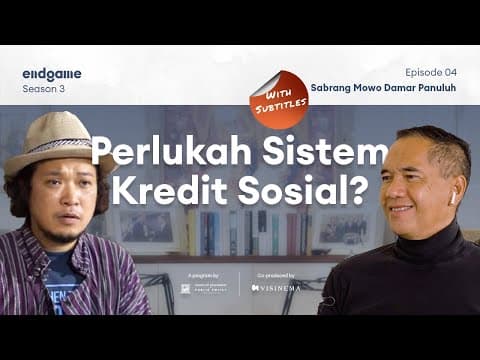
Is Democracy's Decline Temporary? Prof Jimly Explains

TL;DR
Democracy is experiencing a temporary regression due to populist leaders and polarized societies. Despite these challenges, maintaining the original vision of democracy is crucial for societal justice. The role of the state in the economy and the need for transformational leadership are emphasized to navigate these complex times.
Transcript
So we are trapped in market reality liberalism. So I like to mention two kinds of UUD; Undang-Undang Dasar (the constitution) at the highest norm, Ujung-Ujungnya Duit (all about money in the end) as the real reality. There must be constant dialogues. Let's not be too pragmatic like this. So the role of the state is big in the economic field, Sir. [... Read More
Key Insights
- Democracy is currently facing a regression marked by populist leaders and societal polarization.
- The original vision of democracy should be preserved to ensure societal justice.
- Transformational leadership is essential for navigating the complexities of modern democracy.
- The role of the state in the economy is significant and should not be overly pragmatic.
- Social media has contributed to political de-institutionalization, requiring careful management.
- Conflicts of interest between business and politics need to be addressed to prevent corruption.
- China's economic success challenges the necessity of democracy for prosperity.
- Future global conflicts may arise due to power shifts, necessitating strategic foresight.
Install to Summarize YouTube Videos and Get Transcripts
Explore YouTube Video Summarizer or Get YouTube Transcript Extractor
Questions & Answers
Q: Why is democracy experiencing a decline?
Democracy is experiencing a decline due to the rise of populist leaders who often adopt authoritarian tendencies and the increasing polarization within societies. These factors challenge the traditional democratic structures and principles, leading to a regression in democratic practices and ideals.
Q: How can transformational leadership help democracy?
Transformational leadership can help democracy by inspiring and guiding societies through complex challenges, fostering innovation, and ensuring that democratic principles are upheld. Such leadership focuses on long-term goals, encourages active participation, and promotes justice and equality, which are essential for a thriving democratic society.
Q: What role does the state play in the economy?
The state plays a significant role in the economy by setting regulations, ensuring fair competition, and providing public goods and services. A strong state presence can help balance market forces, protect consumer rights, and promote social welfare, which are crucial for maintaining economic stability and justice.
Q: How does social media affect political processes?
Social media affects political processes by facilitating rapid information dissemination and public engagement. However, it also contributes to political de-institutionalization, where personal opinions often overshadow institutional communications. This can lead to misinformation, polarization, and challenges in maintaining coherent public policies.
Q: What are the challenges of conflicts of interest in politics?
Conflicts of interest in politics arise when personal interests interfere with public duties, leading to decisions that may not serve the public good. These challenges can result in corruption, undermine public trust, and hinder effective governance. Addressing these conflicts is crucial for ensuring transparency and accountability in political processes.
Q: Is China's economic model a threat to democracy?
China's economic model, which combines state control with market elements, poses a challenge to traditional democratic ideals by demonstrating that economic prosperity can be achieved without democratic governance. This raises questions about the effectiveness and necessity of democracy for economic success, prompting a reevaluation of democratic principles in a global context.
Q: What are the potential global conflicts due to power shifts?
Potential global conflicts due to power shifts may arise as emerging powers challenge established ones, leading to geopolitical tensions. These conflicts could manifest as economic competition, military confrontations, or ideological clashes, necessitating strategic foresight and diplomatic efforts to manage and mitigate risks.
Q: How can societies prepare for future global changes?
Societies can prepare for future global changes by fostering resilience, promoting education, and encouraging innovation. Strategic planning, international cooperation, and adherence to democratic principles are essential for navigating uncertainties and ensuring sustainable development in a rapidly changing world.
Summary & Key Takeaways
-
Democracy is undergoing a temporary regression with the rise of populist leaders and polarized societies. Despite these challenges, it is crucial to adhere to the original democratic principles to ensure societal justice. Transformational leadership and a strong state role in the economy are vital to address these issues.
-
Social media has contributed to political de-institutionalization, making it essential to manage personal and institutional communications carefully. Conflicts of interest between business and politics need to be addressed to prevent corruption and ensure fair governance.
-
China's economic success poses questions about the necessity of democracy for prosperity, highlighting the need for strategic foresight in global politics. Future conflicts may arise due to power shifts, emphasizing the importance of maintaining democratic ideals and preparing for potential global changes.
Read in Other Languages (beta)
Share This Summary 📚
Summarize YouTube Videos and Get Video Transcripts with 1-Click
Try YouTube Summary with ChatGPT & Claude or YouTube Transcript Generator
Explore More Summaries from Gita Wirjawan 📚



Summarize YouTube Videos and Get Video Transcripts with 1-Click
Try YouTube Summary with ChatGPT & Claude or YouTube Transcript Generator