Why I'm Buying Paypal Stock RIGHT NOW | Episode #4
TL;DR
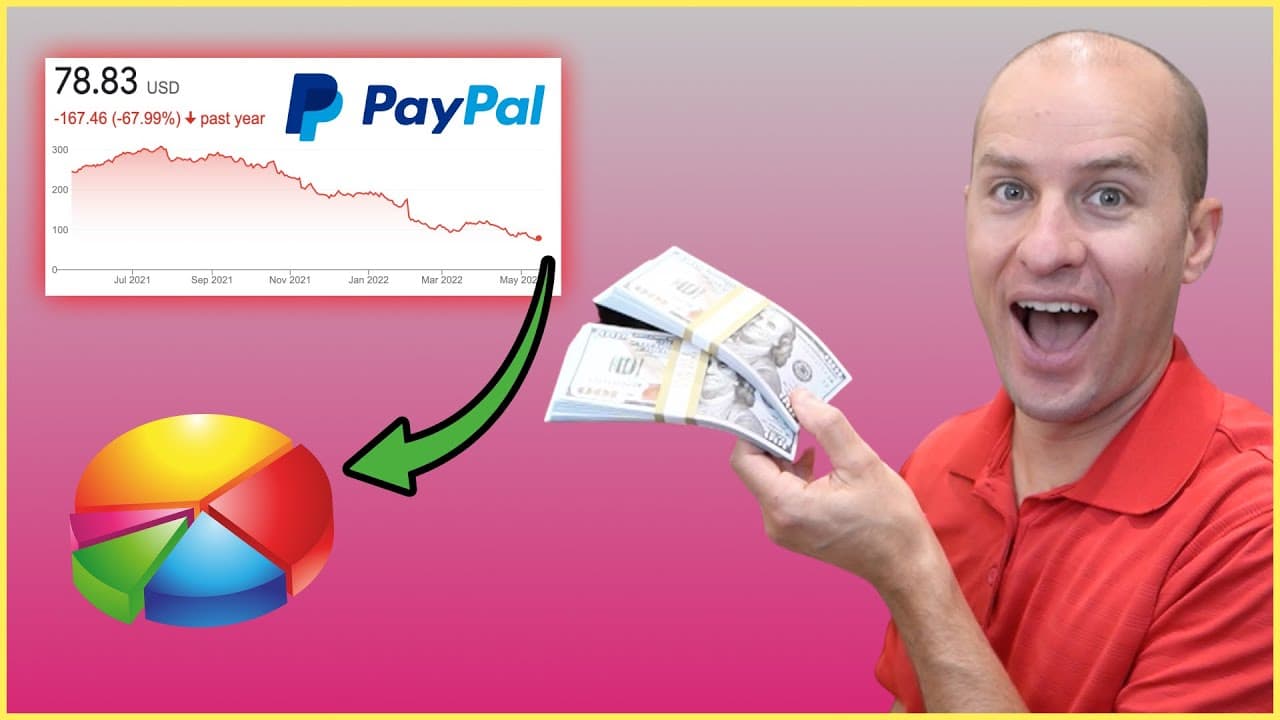
PayPal is presented as a busted stock rather than a busted company because its shares are down 74% from their 2021 highs while the business retains solid financials, a strong payment network, and multiple growth avenues. Its balance sheet holds over $15 billion in cash against $8 billion in debt, although slowing growth, competition, cryptocurrencies, interest rates, and valuation remain risks. Read on for the full investment case.
Transcript
Paypal stock is currently down 74% from its 2021 highs. This is the largest decline in paypal's short history as a public company by far. So is this a busted company or is this just a busted stock? Here's why i think it's the latter and I'm happy to buy shares today my name is Brian Feroldi and my name is Brian Stoffel thanks to commonsto... Read More
Key Insights
- 😀 PayPal stock has faced a significant decline but maintains strong fundamentals.
- 💯 The company's core focus on democratizing financial services underscores its long-term potential.
- 👾 PayPal's diversified product offerings and strong network effects contribute to its resilience in the payment space.
- 🧑⚕️ Despite challenges, PayPal's financial health, management stability, and market position make it a compelling investment opportunity.
- 😘 PayPal's current valuation metrics indicate low market optimism, presenting a potential buying opportunity.
- 🤩 Total payment volume and user growth are key metrics to monitor for PayPal's long-term performance.
- 🪛 Recent strategic shifts by PayPal management in response to economic conditions aim to drive growth and maintain financial stability.
Install to Summarize YouTube Videos and Get Transcripts
Explore YouTube Video Summarizer or Get YouTube Transcript Extractor
Questions & Answers
Q: Why is Brian Feroldi buying PayPal stock in Episode #4?
Brian Feroldi believes PayPal is a busted stock rather than a busted company after its shares fell 74% from their 2021 highs. He points to its strong balance sheet, plentiful net income and free cash flow, established payment network, and more compelling valuation, while disclosing that he owned shares at the time of recording.
Q: How does PayPal make money?
PayPal primarily earns a percentage of the transactions processed through its ecosystem, making its core business usage-based. It can also generate additional revenue from foreign exchange, cross-border transfers, and value-added services.
Q: Which brands and services does PayPal own?
PayPal owns several brands, including PayPal, Xoom, Venmo, Braintree, Hyperwallet, and Honey. These offerings support its core position as a payments company and give it multiple products through which to pursue growth.
Q: How quickly have PayPal's transactions and payment volume grown?
Transactions grew at a 25% annualized rate over the previous seven years. Total payment volume grew even faster at 28% per year and exceeded $1 trillion in the prior year, although recent quarterly growth had slowed.
Q: What gives PayPal a competitive moat?
PayPal benefits from network effects because wider merchant acceptance attracts more users, which in turn encourages more merchants to accept it. The speakers also credit the company with high switching costs and strong brand value, concluding that its moat is stable.
Q: How strong is PayPal's financial position?
PayPal had over $15 billion in cash and only $8 billion in debt, which the speakers described as a strong balance sheet. Revenue growth had been solid, gross margins were decent, returns on capital were relatively high, and both net income and free cash flow were plentiful, though not growing very quickly.
Q: What did PayPal report in its most recent quarter?
Revenue increased 8% to $6.48 billion, beating Wall Street's estimate and management's guidance. Earnings per share fell 28%, while free cash flow and net income also declined; these results were broadly expected as management increased investment and business growth slowed.
Q: What are the main risks of investing in PayPal?
The speakers identify competition, disruption, particularly from cryptocurrencies, and outside forces such as interest rates and the macroeconomic environment as major risks. They also note that valuation remained somewhat high, while total payment volume had declined sequentially to $323 billion and new-account growth had slowed dramatically.
Summary & Key Takeaways
-
PayPal stock is down 74% from its 2021 highs, making it a busted stock rather than a busted company.
-
The company's core focus is on democratizing financial services and is primarily a payments company.
-
Despite recent challenges, PayPal's solid financials, strong moat through network effects, and diversified product offerings make it a compelling investment.
Read in Other Languages (beta)
Share This Summary 📚
Summarize YouTube Videos and Get Video Transcripts with 1-Click
Try YouTube Summary with ChatGPT & Claude or YouTube Transcript Generator
Explore More Summaries from Brian Feroldi 📚


Summarize YouTube Videos and Get Video Transcripts with 1-Click
Try YouTube Summary with ChatGPT & Claude or YouTube Transcript Generator