How Does GPT-5.6 Handle Long Coding Projects?
TL;DR
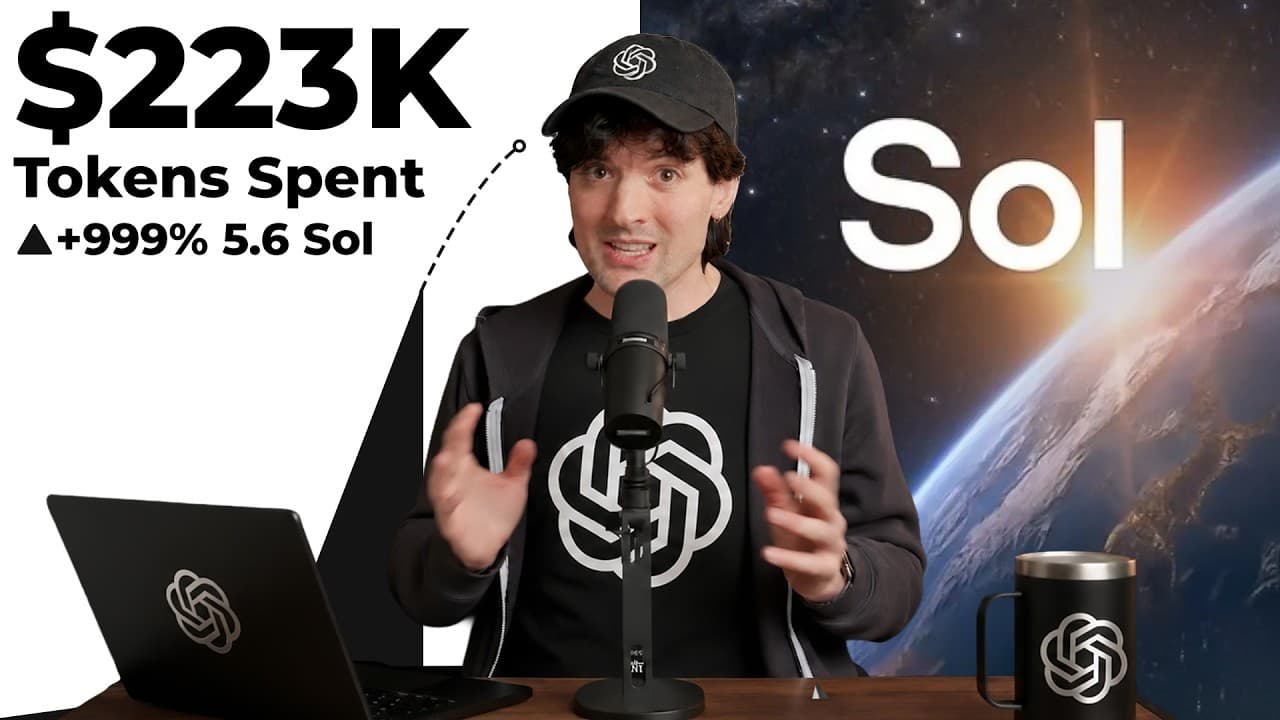
GPT-5.6 can sustain complex coding and computer-use tasks for hours while retaining the original goal and recovering from messy context. During roughly six weeks of early access, the creator used an estimated $180,000 to $240,000 of inference across 67 projects, including major TypeScript restructuring, infrastructure automation, authentication systems, database improvements, and native mobile rewrites.
Transcript
GBT 56 is finally here and I don't think I've ever been this excited to talk about a model. There's a reason why though. It's not cuz it's the best thing ever. It is really great. But the reason is cuz I've had access for a while now since before Fable even first dropped. I've been waiting to talk about this model for so goddamn long that I've been... Read More
Key Insights
- GPT-5.6 was tested through an estimated $180,000 to $240,000 of inference during roughly six weeks of early access. The creator says this exceeded all inference he had previously used in his life and produced substantial work across 67 separate projects.
- GPT-5.6 is better at maintaining intent than GPT-5.5 according to the creator's experience. It holds onto an assigned objective, tolerates problematic context, and continues working without forcing the user to abandon a thread and restart the task in a fresh conversation.
- Long-running autonomy is a defining strength of GPT-5.6 in the reported tests. The creator assigned large tasks that continued for hours, including runs exceeding 20 hours, without using slash goal, because an ordinary instruction was often sufficient to sustain the work.
- Computer and browser use improved enough to change the creator's earlier skepticism about agents operating graphical interfaces. GPT-5.6 could navigate websites, configure dashboards, modify Notion, and help establish a fleet through SSH computer use and a centralized configuration distributed across multiple machines.
- Lakebed's codebase was substantially restructured by GPT-5.6 from large monolithic JavaScript files into a properly divided and managed TypeScript project. The change required extensive verification and hands-on work, yet the model completed the migration without causing the creator significant difficulty.
- GPT-5.6 created infrastructure that remained useful after testing, including a new CI pipeline, preview and release workflows, artifact storage, Railway buckets for user-uploaded files, and deployment refresh handling through Postgres events. The creator expects to keep using the workflows indefinitely.
- Authentication work was among GPT-5.6's more complex contributions to Lakebed. It built a relationship between the production server and CLI for login, implemented whitelist access, centralized OAuth into a dedicated system, and forked the creator's OAuth service with limited UX guidance.
- The reported usage is presented as an experiment rather than a recommended monthly practice. The creator explicitly says that spending around $200,000 on inference is unrealistic for ordinary users and resulted from pushing generous early-access limits to discover how far the model could go.
Install to Summarize YouTube Videos and Get Transcripts
Explore YouTube Video Summarizer or Get YouTube Transcript Extractor
Questions & Answers
Q: How well does GPT-5.6 handle long coding tasks?
GPT-5.6 handled long coding tasks unusually well in the creator's early-access testing. He reports allowing a single thread to continue for hours without losing the original objective, including assignments that ran for more than 20 hours without slash goal. Compared with his experience using GPT-5.5, the model was less likely to become lost, stop prematurely, or require a fresh thread after problematic information entered its context.
Q: What did the creator build with GPT-5.6?
The creator used GPT-5.6 across 67 projects. The disclosed work included restructuring Lakebed into a managed TypeScript project, creating CI and release workflows, configuring artifact and file storage, building CLI login and whitelist access, centralizing OAuth, improving database reactivity, and reviewing file-related contracts. The description also identifies a Rust rewrite of a TypeScript Go compiler and two native T3 Code mobile rewrites using SwiftUI.
Q: How much GPT-5.6 inference did the creator use?
The creator estimates that he used between $180,000 and $240,000 of GPT-5.6 inference during roughly a month and a half, described elsewhere as six weeks. He says this was more inference than he had used throughout his life before that period. He also emphasizes that the amount was experimental, depended on how usage was estimated, and should not be treated as a realistic monthly pattern for ordinary users.
Q: Why was GPT-5.6 better than GPT-5.5 for persistent work?
GPT-5.6 was better for persistent work because it understood intent more reliably and remained attached to the assigned objective, according to the creator. With GPT-5.5, he sometimes felt that the model became lost, stopped, or needed a new thread after harmful context accumulated. GPT-5.6 allowed him to keep one thread running for extended periods, making large goals and lengthy autonomous work more practical.
Q: What changes did GPT-5.6 make to the Lakebed project?
GPT-5.6 moved Lakebed away from large monolithic JavaScript files and toward a properly separated TypeScript project. It also created CI, preview, and release workflows, established artifact storage and Railway buckets, addressed deployment refresh behavior involving Postgres events, built CLI authentication, implemented whitelist access, centralized OAuth, hardened the capsule database layer, and repeatedly reviewed file contracts, opaque identifiers, MIME policy, and object storage behavior.
Q: Can GPT-5.6 use browsers and computer interfaces?
GPT-5.6 demonstrated substantially better browser and computer use in the creator's experience. It could receive tasks such as configuring a dashboard, changing something in Notion, or navigating the web, then operate the interface to complete them. It also helped configure a multi-machine fleet through SSH computer use and a centralized configuration. Browserbase was used to provide hosted, programmatic browser access without dedicating the creator's whole computer to Codex.
Q: Is spending $200,000 on GPT-5.6 a realistic use case?
Spending around $200,000 on GPT-5.6 inference is not presented as a realistic use case. The creator explicitly says nobody should do this every month. His usage resulted from deliberately pushing the model's limits, experimenting across many projects, and taking advantage of generous near-unlimited early access. The purpose was to determine what the model could accomplish under unusually intensive use, not to recommend a normal budget.
Q: Is this assessment a complete GPT-5.6 review?
The assessment is not intended as a complete GPT-5.6 review. It focuses on how the creator used the model and what he built before reading broader coverage or public sentiment. It excludes Luna, Terra, comparisons with Fable, ultra and max reasoning, benchmarks, pricing, usage limits, the fast version, ChatGPT testing, and GPT-5.6 Pro. Separate reviews, comparisons, and practical usage guidance were planned for later coverage.
Summary & Key Takeaways
-
The creator received early access to GPT-5.6 before Fable appeared and used it far more heavily than any previous model. Over roughly a month and a half, estimated inference usage reached $180,000 to $240,000 across 67 projects, providing extensive experience with ambitious coding, infrastructure, browser-use, and computer-use assignments.
-
The most important behavioral improvement was GPT-5.6's ability to understand intent and remain attached to a task until completion. Unlike GPT-5.5, which could become lost or stop after context problems, GPT-5.6 supported long-running threads and completed assignments lasting more than 20 hours without requiring the slash goal feature.
-
Lakebed demonstrates the scale of work GPT-5.6 handled. It restructured monolithic JavaScript into a managed TypeScript project, created CI and release workflows, added artifact storage and Railway buckets, built CLI authentication and whitelist access, centralized authentication, improved database reactivity, and repeatedly reviewed contracts for files, identifiers, MIME policy, and object storage.
Read in Other Languages (beta)
Share This Summary 📚
Summarize YouTube Videos and Get Video Transcripts with 1-Click
Try YouTube Summary with ChatGPT & Claude or YouTube Transcript Generator
Explore More Summaries from Theo - t3․gg 📚






Summarize YouTube Videos and Get Video Transcripts with 1-Click
Try YouTube Summary with ChatGPT & Claude or YouTube Transcript Generator