How to Balance Training, Validation, and Test Sets in ML?
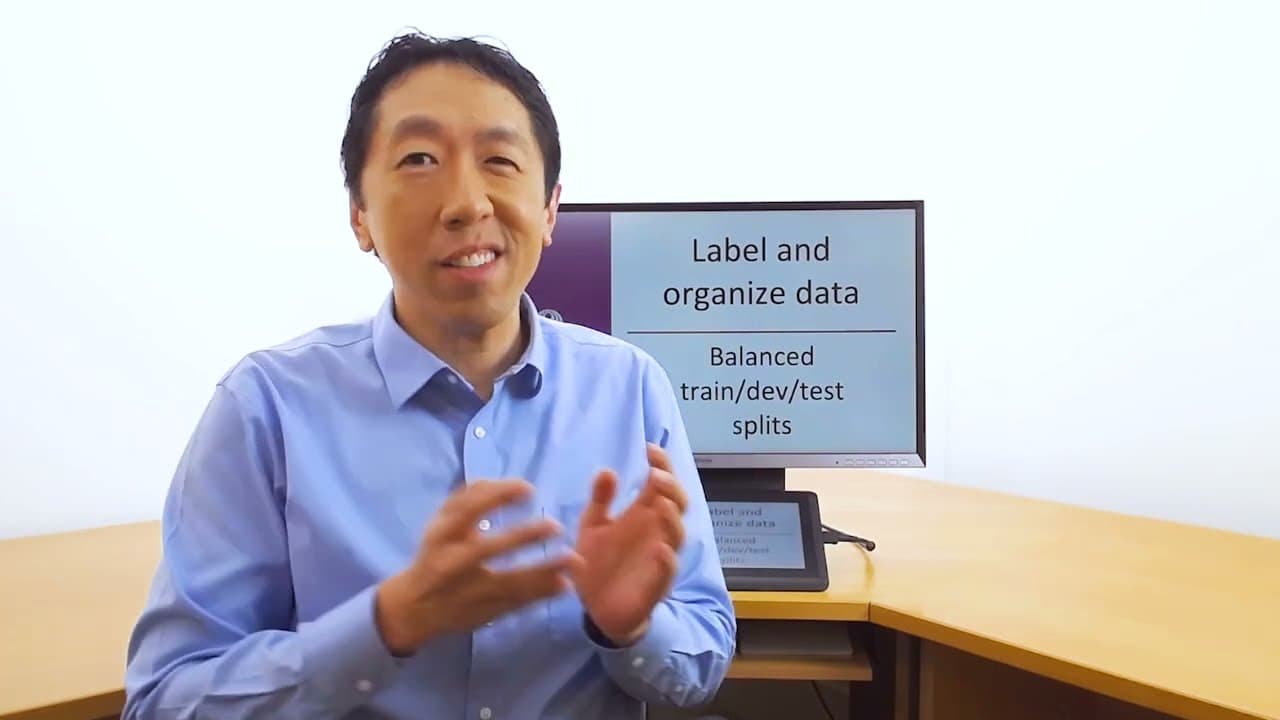
TL;DR
Balancing training, validation, and test sets in small datasets is crucial for improving machine learning model accuracy. This involves ensuring each subset has an equal representation of positive examples, which prevents non-representative splits that can skew performance evaluations. For small data problems, adopting this balanced approach significantly enhances the reliability of model assessments.
Transcript
many of us are used to taking a data set and randomly splitting it into train depth and tests it turns out when your data set is small having balance trained dev and test sets can significantly improve your machine learning development process let's take a look let's use our manufacturing visual inspection example say your training set has a hundre... Read More
Key Insights
- 😫 Balancing training, validation, and test sets in small data enhances model performance.
- 🥺 Random splits in small data can lead to non-representative subsets, impacting model accuracy.
- 🍧 Having an equal distribution of positive examples in subsets improves model reliability.
- 😫 Balancing data sets is crucial for accurate evaluation in machine learning, especially in small data scenarios.
- 😫 Large data sets are less affected by imbalanced splits due to the representative nature of random splits.
- 😈 Small data problems benefit significantly from balanced train dev test splits.
- 🎰 Ensuring balanced subsets improves the reliability of machine learning algorithms' performance evaluations.
Install to Summarize YouTube Videos and Get Transcripts
Explore YouTube Video Summarizer or Get YouTube Transcript Extractor
Questions & Answers
Q: Why is balancing training, validation, and test sets important?
Balancing sets ensures that each subset accurately represents the data distribution, leading to better model performance by avoiding biased evaluations.
Q: How does random split affect model performance in small data sets?
Random splitting can result in non-representative validation sets, skewing model accuracy due to imbalanced positive examples distribution.
Q: What is the significance of having a balanced split in small data problems?
A balanced split ensures that each subset has an equal representation of positive examples, improving the reliability of model evaluations in small data scenarios.
Q: When is balancing sets less critical in machine learning development?
Balancing becomes less critical in large data sets where random splits are likely to be representative of the overall data distribution, reducing the impact of imbalanced subsets.
Summary & Key Takeaways
-
Small data sets benefit from balanced splits, enhancing model accuracy.
-
Random splitting can lead to non-representative validation sets.
-
Balancing positive examples in training, validation, and test sets crucial for accurate model performance.
Read in Other Languages (beta)
Share This Summary 📚
Summarize YouTube Videos and Get Video Transcripts with 1-Click
Try YouTube Summary with ChatGPT & Claude or YouTube Transcript Generator
Explore More Summaries from DeepLearningAI 📚


![How Does the Logistic Regression Decision Boundary Work? — #33 Machine Learning Specialization [Course 1, Week 3, Lesson 1] thumbnail](/_next/image?url=https%3A%2F%2Fi.ytimg.com%2Fvi%2F0az8RjxLLPQ%2Fhqdefault.jpg&w=750&q=75)



Summarize YouTube Videos and Get Video Transcripts with 1-Click
Try YouTube Summary with ChatGPT & Claude or YouTube Transcript Generator