Why Did Oil Prices Crash After “Trump May Seize Hormuz” and Iran's Strait of Hormuz Showdown?
TL;DR
Oil prices crashed because traders reacted immediately to Trump's suggestion that the United States might seize the Strait of Hormuz, while continuing Western and Venezuelan supply weakened fears of a lasting shortage. Crude fell 6.19% to $85.27 after approaching $120, and the panel expects prices to trend lower once uncertainty resolves. Read on for the supply, production, and Iran strategy behind that forecast.
Transcript
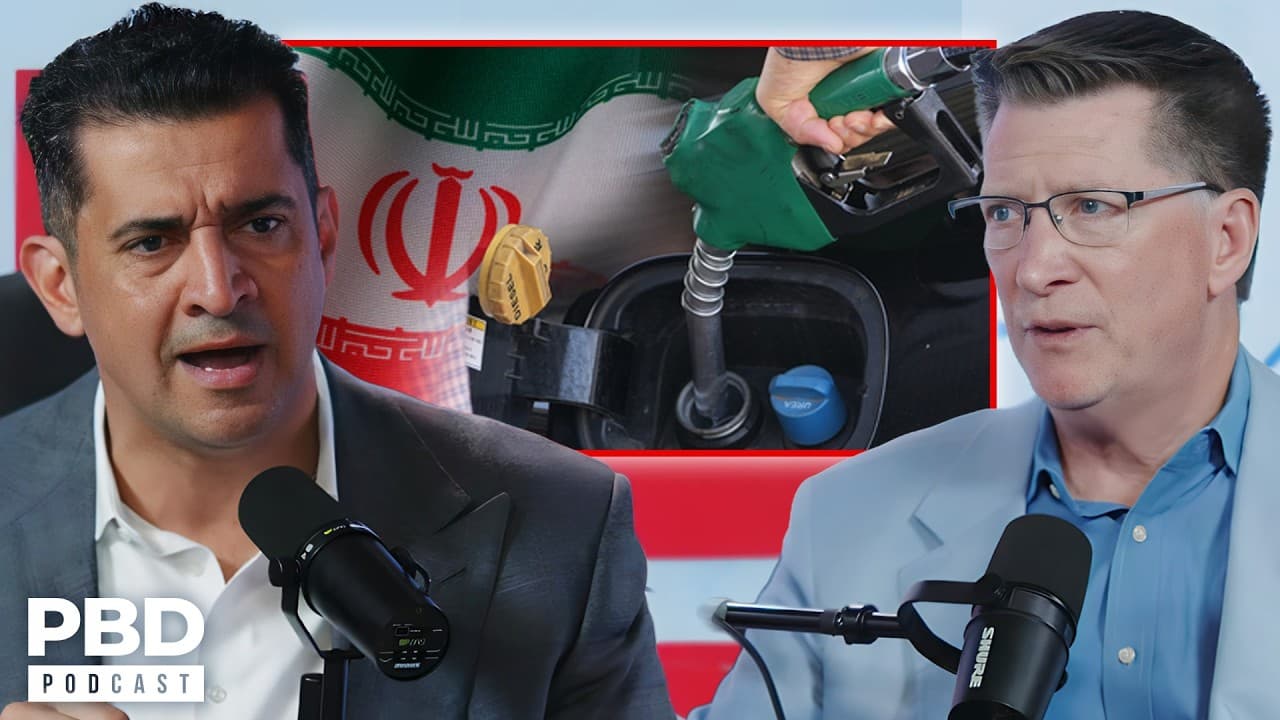
Oil prices decline after hitting nearly $120 as Trump says US con considering taking over straight of Hormuz. Rob, I think you got a video on this one. If you want to pull it up, I'll read it and then we'll get right into the story. So, oil prices fell Monday in extended trading after President Trump said he was considering seizing control straight... Read More
Key Insights
- Immediate comments moved markets: The oil decline followed Trump's CBS News phone comments that ships were moving through the Strait of Hormuz and that he was considering taking it over. The panel emphasizes that the market moved as soon as he spoke, illustrating how rapidly uncertainty can change crude prices before physical supply conditions fully adjust.
- WTI and Brent move differently: West Texas Intermediate and Brent crude are presented as the two global markers. WTI normally trades about $2 to $3 below Brent. That distinction explains why the panel compares the current WTI price near $85 with a broader pre-spike range rather than treating every quoted oil price as interchangeable.
- Hormuz carries concentrated risk: About 20% of the world's oil passes through a channel described as only 21 miles wide. This concentration makes a threat to the Strait of Hormuz unusually important. The danger is not limited to blocked ships, because interrupted transit can force regional producers to stop producing oil they cannot store.
- Restart delays prolong disruption: Shutting production is consequential because restarting takes approximately three to six weeks. The panel explicitly rejects the idea that oil output works like an on-and-off switch. Even if passage through Hormuz becomes secure quickly, the production response can lag, allowing volatility to continue after the immediate political threat eases.
- Uncertainty can overpower fundamentals: The panel calls the price spike reactionary rather than permanent. It compares the move with the market decline around Liberation Day in the previous April, when uncertainty initially drove prices down before earnings and other fundamentals reasserted themselves. Oil differs because physical production needs time to restart.
- Earlier prices remained profitable: Before the Hormuz-driven spike, oil spent roughly three months between $67 and $74 and briefly reached about $62 to $63. The panel describes $67 to $70 as a profitable level for most participants in the value chain. Even Alberta oil sands and North Dakota shale could operate profitably there.
- Western output provided a cushion: Production from the North Sea, West Texas, North Dakota, and Alberta did not stop during the confrontation. That continuing business-as-usual supply is central to the forecast that prices will decline. The panel sees the market as disrupted by fears around one crucial route, not deprived of all major sources.
- Venezuelan shipments roughly doubled: The panel says about twice as much oil was leaving Venezuela as during the 30 days before Maduro was removed. Previous embargoes and related restrictions had limited shipments. With those constraints changed and pipelines operating, Venezuela became a larger source of crude while the market worried about supplies passing through Hormuz.
- Refineries fit Venezuelan crude: Venezuela produces heavy crude, and United States refineries were configured before Chavez and Maduro to process that grade. The panel argues this makes Venezuela an easy source for shipments to the United States. Existing refinery compatibility turns increased Venezuelan exports into a practical supply response rather than merely a theoretical reserve.
- Two countries hold major reserves: Venezuela and Iran together are said to contain 31% of the world's oil reserves. The panel treats that combined share as evidence of a larger strategic contest behind United States actions. Oil access, refinery compatibility, relations with China, and political alignment are presented as connected elements.
- Trump sought a friendly pivot: Scaramucci describes the intended Iran strategy as “regime change light,” modeled on the Venezuelan outcome. Rather than pursuing complete political reconstruction, Trump allegedly wanted to remove top leaders and find a secularist partner who could create a friendlier government willing to do business with the United States.
- Iran presents two hard barriers: Iranian citizens are described as disarmed, deprived of peaceful dissent, and monitored through an extensive security state, limiting their ability to overthrow the regime. Separately, roughly 460 kilos, or about 1,000 pounds, of uranium believed to be weapons-grade is missing, creating pressure to consider a ground recovery operation.
Install to Summarize YouTube Videos and Get Transcripts
Explore YouTube Video Summarizer or Get YouTube Transcript Extractor
Questions & Answers
Q: Why did oil prices crash after Trump's Strait of Hormuz threat?
Oil prices fell because traders reacted immediately when Trump said he was considering taking control of the Strait of Hormuz. Crude dropped 6.19% to $85.27 after having approached $120, while WTI's five-day high was around $110 to $112. The panel argues that uncertainty, rather than a complete loss of global supply, drove the sharp reversal. Western production continued and Venezuelan shipments increased, supporting the expectation that the spike will fade once the confrontation is resolved.
Q: Why is the Strait of Hormuz so important to oil markets?
The Strait of Hormuz is a 21-mile passage carrying about 20% of the world's oil. A disruption prevents producers such as Saudi Arabia and Qatar from moving supply through the route. Because there is nowhere to store all that oil, they must shut down production. This matters beyond the immediate blockage because restarting production takes approximately three to six weeks.
Q: Will oil prices fall after the Hormuz crisis ends?
The panel predicts that prices will trend lower once the crisis resolves. Before the spike, oil had generally traded between $67 and $74 during the preceding three months, with prices around $62 to $63 at one point. A level near $67 to $70 was still described as profitable across most of the value chain. Continuing output from the North Sea, West Texas, North Dakota, Alberta, and Venezuela supports that forecast.
Q: How does Venezuela support United States oil supply?
Venezuela was shipping roughly twice as much oil as during the 30 days before Maduro's removal. Earlier embargoes and other restrictions had limited those shipments, but the panel says the pipelines were now operating. Venezuela's heavy crude is particularly useful because United States refineries established before Chavez and Maduro were designed to process it. That compatibility makes the crude comparatively easy to ship to and refine in the United States.
Q: What strategy does the panel attribute to Trump in Iran?
Scaramucci describes Trump's approach as “regime change light,” based on the outcome he believed he achieved in Venezuela. Trump allegedly wanted to remove Iran's top leaders and work with a secularist partner rather than conduct complete regime change. Intelligence and the DIA reportedly told him secularists existed and that 85% of Iranians opposed the regime. The intended result was a friendly political pivot that could do business with the United States.
Q: Why did the United States and Israel diverge over Iran?
The panel says the United States and Israel were aligned during the original strikes but pursued different objectives afterward. Trump reportedly wanted potential secularist leaders left available as future partners. Israel instead killed people the panel identifies as possible secularist leaders, frustrating that plan. The panel portrays Israel's objective as emotional and focused on survival, while Trump's objective centered more on business and oil.
Q: Why does the panel doubt Iranians can overthrow the regime?
The panel says Iran's population has been “declawed” during the previous 20 years. Citizens have had guns and ammunition taken away, lost the right to peaceful dissent, and been placed under an extensive security state. A payment system reportedly encourages neighbors to inform on one another. Therefore, Trump's encouragement to overthrow the regime does not give citizens the practical tools or independence needed to do it.
Q: Why is the missing uranium a concern?
The panel says about 460 kilos, or roughly 1,000 pounds, of uranium believed to be weapons-grade has been missing since bombs were dropped. United States officials and the president are described as knowing about the missing material. Its location matters because leaving it unrecovered could preserve the danger the strikes were meant to address. The panel says this concern is why ground troops or special forces were being considered for a recovery operation.
Summary & Key Takeaways
-
Oil reacts to Trump: Oil prices declined after approaching $120 when President Trump said the United States was considering taking control of the Strait of Hormuz. Crude fell 6.19% to $85.27 in extended Monday trading. WTI, which generally trades $2 to $3 below Brent crude, was hovering near $85 after reaching a five-day high around $110 to $112. The panel attributes the abrupt movement to traders reacting immediately to Trump's comments.
-
Hormuz disruption constrains production: The panel describes the Strait of Hormuz as a 21-mile passage carrying about 20% of the world's oil. If traffic through it is disrupted, producers in places such as Saudi Arabia and Qatar must shut down output because they have nowhere to put the supply. Production cannot simply be switched back on afterward. Restarting it takes roughly three to six weeks, creating a real delay even when the underlying confrontation is resolved.
-
Prices could trend lower: Anthony Scaramucci predicts oil will return toward its beginning-of-year level once the situation resolves, and Tom agrees. During the preceding three months, prices generally ranged from about $67 to $74, with readings around $62 to $63 before the spike. The panel says $67 to $70 still provides good profit across much of the value chain, including Alberta oil sands and North Dakota shale, supporting the view that the elevated price is temporary.
-
Western and Venezuelan supply continues: North Sea oil, West Texas Intermediate, North Dakota production, and Alberta production continued operating during the crisis. Venezuela was also shipping about twice as much oil as during the 30 days before Maduro's removal, after embargoes had previously restricted shipments. Its heavy crude fits United States refineries established before Chavez and Maduro. The panel therefore expects the price spike to settle rather than produce a lasting increase in travel and aviation fuel costs.
-
Iran strategy complicates the outlook: Scaramucci characterizes Trump's approach as a lighter form of regime change modeled on Venezuela, where Deli Rodriguez allegedly helped turn the country into a friendly partner. Trump was reportedly told that Iran contained secularists and that 85% of its population opposed the regime. The effort then faltered because Israel killed potential secularist partners. Iran's disarmed, closely monitored population and about 460 kilos of missing uranium further complicate any political or military resolution.
Read in Other Languages (beta)
Share This Summary 📚
Summarize YouTube Videos and Get Video Transcripts with 1-Click
Try YouTube Summary with ChatGPT & Claude or YouTube Transcript Generator
Explore More Summaries from Valuetainment 📚




Summarize YouTube Videos and Get Video Transcripts with 1-Click
Try YouTube Summary with ChatGPT & Claude or YouTube Transcript Generator