What Are the Key Features of Our Solar System?
TL;DR
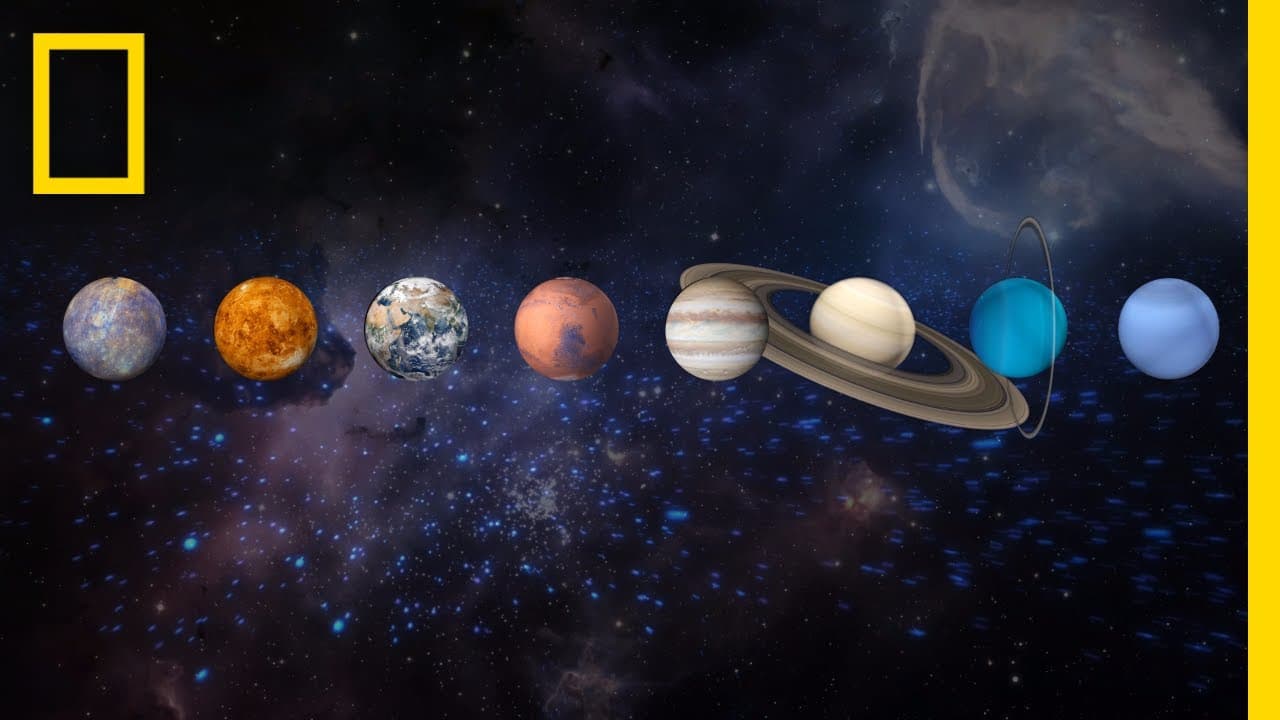
Our solar system, formed 4.5 billion years ago from a collapsing solar nebula, consists of eight planets classified as Terrestrial (Mercury, Venus, Earth, Mars) and Jovian (Jupiter, Saturn, Uranus, Neptune). Unique features include diverse planetary compositions, numerous moons, ring systems, and the asteroid belt and Kuiper Belt, home to dwarf planets like Pluto.
Transcript
- [Narrator] Our solar system is one of over 500 known solar systems in the entire Milky Way galaxy. The solar system came into being about 4.5 billion years ago, when a cloud of interstellar gas and dust collapsed, resulting in a solar nebula, a swirling disc of material that collided to form the solar system. The solar system is located in the Mi... Read More
Key Insights
- 🤩 Solar system formed 4.5 billion years ago from a collapsing solar nebula in the Milky Way's Orion star cluster.
- 🪐 Terrestrial planets (rocky) include Mercury, Venus, Earth, and Mars, while Jovian planets (gas and ice giants) include Jupiter and Saturn.
- 😋 Unique features like ring systems, moons, and asteroid belts characterize the diverse components of the solar system.
- 🪐 The Kuiper Belt and Oort Cloud beyond the planets harbor dwarf planets like Pluto and icy debris.
Install to Summarize YouTube Videos and Get Transcripts
Explore YouTube Video Summarizer or Get YouTube Transcript Extractor
Questions & Answers
Q: How did the solar system form?
The solar system formed from a collapsing solar nebula about 4.5 billion years ago, creating a swirling disc of material that eventually gave rise to planets, moons, and other objects.
Q: What are the characteristics of Terrestrial planets?
Terrestrial planets like Earth and Mars are rocky, have solid surfaces, few moons, no ring systems, and are relatively small in size compared to Jovian planets.
Q: What distinguishes the Jovian planets from Terrestrial planets?
Jovian planets like Jupiter and Saturn are gas giants predominantly made of helium and hydrogen, have ring systems, multiple moons, no solid surface, and are immense in size compared to Terrestrial planets.
Q: What is the significance of the Kuiper Belt in the solar system?
The Kuiper Belt, beyond the Jovian planets, is a disc of space debris containing dwarf planets like Pluto and comets, providing insights into the solar system's formation and evolution.
Summary & Key Takeaways
-
The solar system formed 4.5 billion years ago from a collapsing solar nebula in the Milky Way's Orion star cluster.
-
It consists of Terrestrial (rocky) planets like Earth and Jovian (gas and ice) giants like Jupiter.
-
Unique features include diverse planets, moons, ring systems, and asteroid belts.
Read in Other Languages (beta)
Share This Summary 📚
Summarize YouTube Videos and Get Video Transcripts with 1-Click
Try YouTube Summary with ChatGPT & Claude or YouTube Transcript Generator
Explore More Summaries from National Geographic 📚




Summarize YouTube Videos and Get Video Transcripts with 1-Click
Try YouTube Summary with ChatGPT & Claude or YouTube Transcript Generator