How Do 3 Killer Businesses Hidden in Plain Sight Make Money?
TL;DR
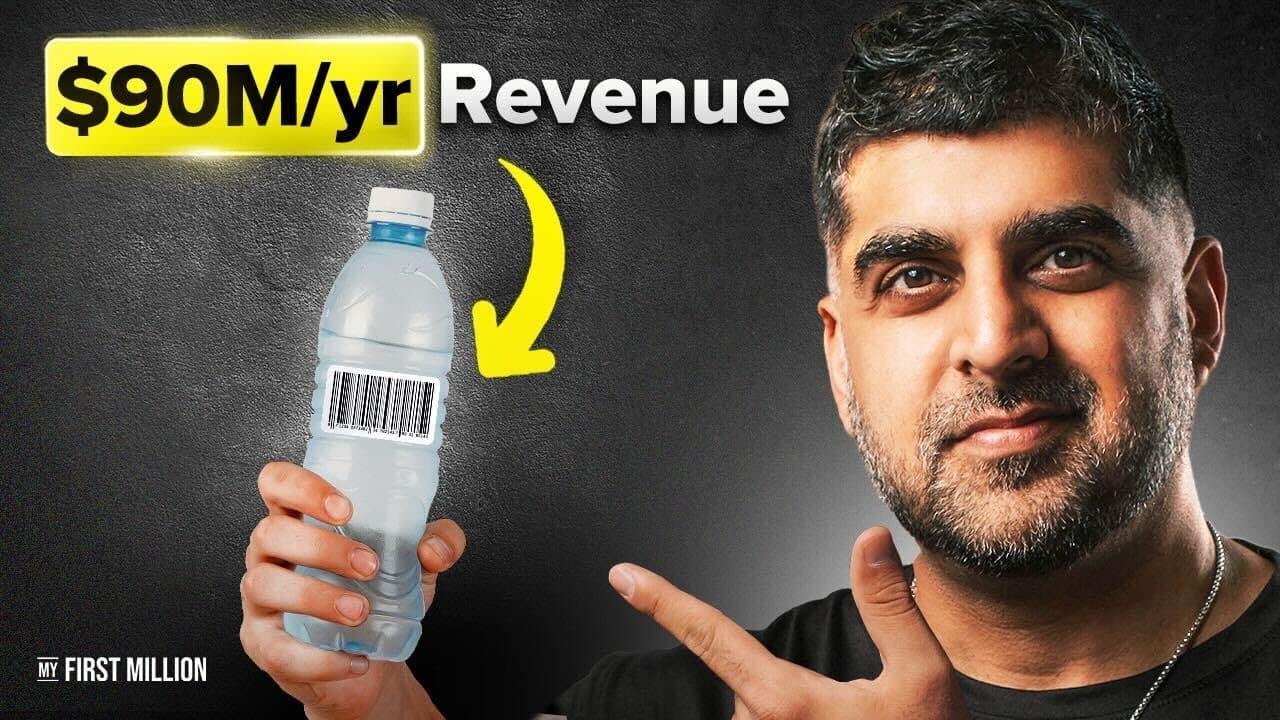
Three businesses hidden in plain sight make money by packaging free, accessible, or required information into products that save customers time and reduce uncertainty. Oasis aggregates water-quality reports, charges roughly $40 to $50 annually for fuller access, earns affiliate revenue, and gradually funds independent testing. Labor-law posters and barcodes show how the same model can operate at larger scales, making the underlying business pattern worth exploring.
Transcript
all right so check this out I'm going to tell you about three products that are hidden in PL sight and the genius of these is that they take something that's free and they sell it they take a free thing and they sell it and I'm going to tell you about one example that makes hundreds of thousands of dollars another one that makes millions of dollars... Read More
Key Insights
- Free information can become a paid product when collecting, interpreting, and presenting it saves customers meaningful time or reduces uncertainty. The commercial value comes from accessibility and organization, even when motivated users could locate the underlying reports independently.
- Oasis is an app and website that reports on water quality for cities, counties, and bottled-water products. Its founder created it after moving from Minnesota to Los Angeles, noticing that the tap water tasted different, and becoming sick after drinking it.
- Water-quality reports are available from cities and bottled-water companies upon request, according to the discussion. Oasis aggregates those separate reports into a convenient interface, allowing users to investigate contaminants without contacting every government office or company themselves.
- Oasis earns revenue through a paywall and an affiliate arrangement. Users receive some information for free, while fuller access costs roughly $40 to $50 for an annual membership, and the company can receive a cut when users purchase recommended products.
- Oasis grew from about $10,000 in monthly revenue when previously mentioned to roughly $40,000 per month in the later discussion. At about $45 per subscription, the hosts reason that only a few thousand paying subscribers are needed to approach half a million dollars annually.
- Independent product testing strengthens Oasis beyond simple aggregation, but each test can cost a couple thousand dollars. The founder therefore uses incoming revenue to test products gradually, compare laboratory findings with company reports, and build a platform positioned as independent.
- Short-form educational videos are Oasis's primary customer-acquisition method in the discussion. Simple green-screen posts examine familiar products, sometimes receive more than a million views, direct viewers toward the app, and can be repeated across TikTok, Instagram Reels, and YouTube Shorts.
- Labor-law posters and barcodes demonstrate that overlooked requirements can support much larger businesses. The episode categorizes water-quality testing as a million-dollar product, EZ Labor Law Posters as a $10 million product, and barcodes as a $100 million product.
Install to Summarize YouTube Videos and Get Transcripts
Explore YouTube Video Summarizer or Get YouTube Transcript Extractor
Questions & Answers
Q: How can free information become a profitable business?
Free information can become profitable when it is fragmented, inconvenient to obtain, or difficult to interpret. A business can collect and organize it, offer a convenient interface, and charge customers for fuller access, speed, or greater certainty.
Q: What is Oasis Water, and what problem does it solve?
Oasis is an app and website that reports on the quality of city, county, and bottled water. It aggregates reports that users could otherwise request from individual cities or bottled-water companies and makes the findings easier to access and compare.
Q: Why did Cormac create the Oasis water-quality app?
Cormac grew up in Minnesota drinking tap water and even hose water without concern. After moving to Los Angeles, he noticed that the tap water tasted different and developed an upset stomach, which led him to investigate local water reports and eventually create Oasis.
Q: How does Oasis make money from free water-quality data?
Oasis provides some information for free but charges roughly $40 to $50 for an annual membership with fuller reports. It also receives a cut when users purchase recommended products through its affiliate arrangement.
Q: How much revenue does Oasis generate?
Oasis was earning about $10,000 per month when it was first mentioned and later reached roughly $40,000 per month. The discussion describes that as approximately half a million dollars per year, supported by only a few thousand subscribers at around $45 each.
Q: Why does Oasis conduct independent water testing?
Independent tests let Oasis verify whether laboratory findings match reports from cities or bottled-water companies. Because each test can cost a couple thousand dollars, the company uses incoming revenue to test products gradually and build a fully independent platform.
Q: How does Oasis attract customers with short-form content?
Oasis publishes simple short-form videos examining familiar bottled-water products and their reported contaminants. Some posts receive more than a million views, directing attention toward the app, downloads, and paid memberships across TikTok, Instagram Reels, and YouTube Shorts.
Q: What business pattern connects water reports, labor-law posters, and barcodes?
All three turn something accessible, required, or hidden in plain sight into a more convenient paid offering. The episode presents water-quality testing as a million-dollar product, EZ Labor Law Posters as a $10 million product, and barcodes as a $100 million product.
Summary & Key Takeaways
-
The featured business pattern is to identify information or resources that are technically free but inconvenient to find, understand, or use. Entrepreneurs can create value by collecting that material, organizing it clearly, presenting it through a convenient product, and charging customers who care more about speed and certainty than doing the research themselves.
-
Oasis began after its founder struggled to determine whether tap water and bottled water contained contaminants. The app and website aggregate available water-quality reports, provide some information without charge, place fuller reports behind an annual membership, recommend relevant products through affiliate arrangements, and gradually fund independent testing to verify existing reports.
-
The broader discussion presents labor-law posters and barcodes as larger examples of businesses built around accessible or required systems. It also emphasizes distribution: Oasis uses simple short-form videos about recognizable water products, repeats formats that perform well, and converts the resulting attention into app downloads and paid memberships.
Read in Other Languages (beta)
Share This Summary 📚
Summarize YouTube Videos and Get Video Transcripts with 1-Click
Try YouTube Summary with ChatGPT & Claude or YouTube Transcript Generator
Explore More Summaries from My First Million 📚

Summarize YouTube Videos and Get Video Transcripts with 1-Click
Try YouTube Summary with ChatGPT & Claude or YouTube Transcript Generator