How Did I Make an AI Dropshipping Business in 24 Hours?
TL;DR
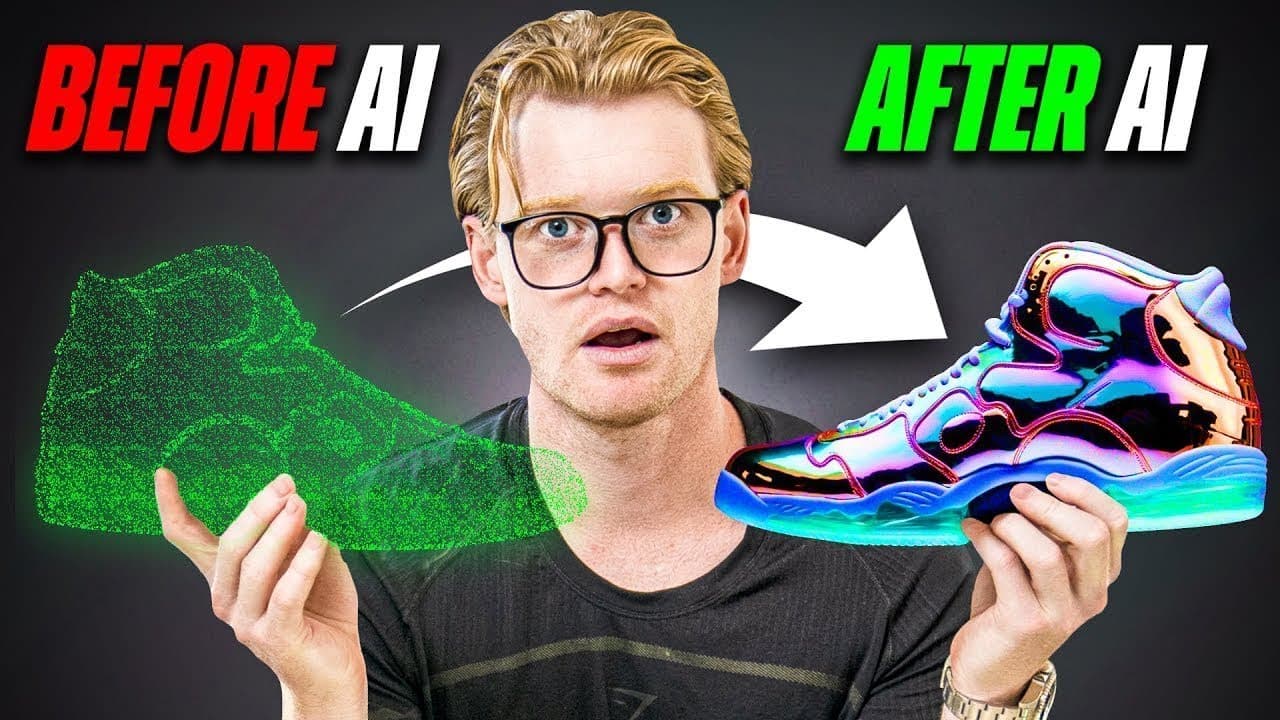
An AI dropshipping business can be assembled quickly by using Midjourney for product concepts and ChatGPT for research, naming, supplier emails, unique selling propositions and website copy. The creator produced initial running-shoe designs in two minutes, then contacted a manufacturer about a sample expected to cost over a thousand dollars. Read on to see where AI accelerated the process and where manufacturing, legal and design work still required human judgment.
Transcript
I'm going to see if I can use AI to create a million dollar snake fan we're going to create the website we're going to create the shoe designs it's going to prove once and for all is this AI at height at the moment or is it actually useful to create a business there's a ton of problems we don't know if we're going to get sued like Lululemon at the ... Read More
Key Insights
- Speed changes early concepting: Midjourney creates initial shoe concepts in two minutes. The creator contrasts this with the usual process of hiring a designer, developing concepts and examining competitors. That speed makes rapid experimentation possible, but the first output is not ready to use because it resembles an existing Converse All-Stars design and needs prompt refinement.
- Simple prompts produce risks: The prompt “cool shoe designs” generates a result that looks like a recognizable existing product. This demonstrates the legal and branding concern stated at the beginning of the experiment: AI output can still create possible infringement problems. Free generation does not remove the need to inspect whether a concept is too close to another company’s design.
- Manufacturability shapes the prompt: The creator deliberately requests a minimal shoe because highly customized designs may require custom molds. That manufacturing constraint changes what counts as a useful AI image. A visually appealing concept has limited value if a supplier cannot reproduce it economically, so the design process must consider construction before a sample is commissioned.
- Prompt compliance remains inconsistent: Even after receiving specific directions for a minimal white running shoe inspired by a Mac from Apple and without holes in the sole, Midjourney sometimes does the opposite. The creator responds by tinkering with the prompt rather than accepting the first result. AI accelerates iteration, but it does not guarantee precise execution of every instruction.
- AI expands positioning options: ChatGPT suggests specialized technology, sustainable materials, customization and social impact as possible unique selling propositions. These ideas broaden the creator’s view of how the shoe might differ from competing products. The value comes from quickly surfacing options he had not considered, while the creator still has to decide which proposition is practical and appropriate.
- Customization needs customer input: One proposed differentiator is to have customers film themselves running and examine whether their feet roll inward or outward. The resulting information could guide customized products. This concept connects a marketing promise to observable customer behavior, although the transcript does not show it being implemented or validated during the experiment.
- Social impact offers differentiation: ChatGPT also proposes donating shoes to people who do not have fresh running shoes. The creator treats this as another promising idea that had not occurred to him before the AI session. It gives the potential brand a purpose beyond product features, but the experiment does not establish a donation program or explain its operation.
- Technical vocabulary builds credibility: Before contacting the manufacturer, the creator learns terms for the upper, interior, midsole, outsole, heel counter, toe box and laces. Knowing these components helps him avoid sounding uninformed and supports a more specific production conversation. The manufacturer may still provide guidance, but basic terminology makes the request clearer and more credible.
- Material research informs features: ChatGPT identifies Gore-Tex as common in outdoor equipment and describes it as waterproof and breathable. The creator considers it a potentially valuable addition to the shoe. The exchange shows how AI-assisted research can connect a material with a product benefit, though the transcript does not confirm that Gore-Tex is selected for the sample.
- Text tasks become faster: The creator uses ChatGPT for research, unique selling propositions, brand naming and a manufacturer email. He describes it as useful for everything requiring text output, including eventual website copy. Combining these functions reduces the need to begin each written task from scratch, while factual, legal and production decisions still require review.
- Brand names need human review: ChatGPT proposes Pace Pilot, which the creator initially likes. He then notices that its initials are “PP” and questions whether the name is still suitable. The moment illustrates why an AI-generated name must be examined beyond its full wording, including abbreviations and other associations, before it becomes a final brand identity.
- Supplier feedback tests reality: The manufacturer’s reply moves the project from generated imagery toward production. The supplier asks about the ribbed pattern and suggests multiple outsole choices, including an option that appears close to the requested design. This feedback reveals the gap between an AI concept and available components, particularly because the creator finds the proposed outsole less unique than desired.
Install to Summarize YouTube Videos and Get Transcripts
Explore YouTube Video Summarizer or Get YouTube Transcript Extractor
Questions & Answers
Q: How can AI help start a dropshipping business quickly?
AI can accelerate product concepting, research, naming, supplier communication and website copy. In the experiment, Midjourney generated running-shoe concepts in two minutes, while ChatGPT supplied product ideas, construction terminology, a brand name and a sample-request email. This reduced the time needed to begin tasks that would normally involve more manual research, writing and design work. AI did not eliminate manufacturing costs, legal concerns or the need to judge whether the resulting product was distinctive and practical.
Q: How was Midjourney used to design the running shoes?
The creator began with the prompt “cool shoe designs,” but the output appeared to copy Converse All-Stars. He refined the request to minimal running-shoe designs and later specified a minimal white shoe inspired by a Mac from Apple, with no holes in the sole. He continued adjusting the prompt when Midjourney ignored parts of the instructions. This iterative process produced a final concept that could be shown to a manufacturer.
Q: Why did the AI shoe design need to stay minimal?
The creator wanted a design that a manufacturer could realistically make. He explains that an overly custom shoe may require custom molds, which creates another production obstacle. A minimal concept increases the chance that available manufacturing methods and components can approximate the generated image. The supplier’s later outsole suggestions show why production constraints must be considered alongside visual originality.
Q: What did ChatGPT contribute to the running-shoe business?
ChatGPT helped research what the creator needed to know about making a running shoe. It proposed unique selling propositions, explained shoe components, identified Gore-Tex as waterproof and breathable, drafted the supplier email and generated brand names. These outputs helped the creator move from a visual concept to a more informed manufacturing request. ChatGPT was also intended to support website copy, although the excerpt does not show that stage being completed.
Q: What unique selling propositions did ChatGPT suggest?
ChatGPT suggested specialized technology, sustainable materials, customization and social impact. The creator considered customization through videos showing how customers run and whether their feet roll inward or outward. He also considered donating shoes to people who do not have fresh running shoes. These ideas mattered because they gave the proposed brand potential points of difference that the creator had not generated before asking ChatGPT.
Q: What running-shoe components did the creator research?
The researched components included the upper, interior, midsole, outsole, heel counter, toe box and laces. Learning these terms helped the creator understand that a running shoe consists of several distinct parts rather than one large piece of fabric. He could then use the vocabulary in his email and speak more confidently with the manufacturer. The supplier could provide further help, but the initial knowledge made the discussion more precise.
Q: How did the creator contact a shoe manufacturer?
He downloaded the Midjourney images and asked ChatGPT to draft an email requesting a sample with the images enclosed. The generated message used a polite subject and presented the request as coming from the founder of a running-shoe brand. ChatGPT also proposed Pace Pilot as the brand name used in the process. On day two, the supplier replied, asked questions about the ribbed pattern and offered several outsole options.
Q: What limitations appeared when using AI to build the business?
The first Midjourney design resembled Converse All-Stars, creating concern about infringement and possible legal trouble. Midjourney also ignored some prompt instructions, while designs that were too custom could require custom molds. Manufacturing remained expensive, with the sample expected to cost over a thousand dollars, and the creator did not know whether the shoes would work or fall apart. The existing page also notes that professional design input, trademark attention and human oversight remain necessary.
Summary & Key Takeaways
-
Planning the AI business: The creator sets out to test whether free AI tools are genuinely useful for building an ecommerce business or merely overhyped. The plan has four stages: understand what makes running shoes effective, design the shoes, arrange manufacturing and create the website. Success would make ecommerce more accessible to the average person, but the experiment begins with serious uncertainties, including possible design infringement, a sample costing over a thousand dollars and shoes that might fall apart.
-
Generating the shoe concept: Midjourney produces the first designs from the prompt “cool shoe designs,” but the results appear too similar to Converse All-Stars. The creator refines the request toward minimal running shoes, then asks for a minimal white design inspired by a Mac from Apple, without holes in the sole. Although Midjourney sometimes ignores instructions, repeated adjustments yield a final concept. This initial design process takes two minutes, replacing much of the usual competitor research and early concepting work.
-
Researching product requirements: About 10 minutes into the experiment, the creator turns to ChatGPT for tasks requiring text output. It identifies market understanding and development of a unique selling proposition as important considerations. Suggested differentiators include specialized technology, sustainable materials, customization and social impact. The customization idea could use footage of customers running to determine whether their feet roll inward or outward, while the social-impact concept could involve donating shoes to people who lack fresh running shoes.
-
Learning shoe construction: To communicate credibly with a manufacturer, the creator asks ChatGPT about running-shoe components and materials. The response introduces Gore-Tex as a common outdoor-equipment material that is waterproof and breathable. It also breaks the shoe into parts including the upper, interior, midsole, outsole, heel counter, toe box and laces. This vocabulary does not replace the supplier’s expertise, but it helps the creator understand that a shoe is not simply one piece of fabric and prepares him to discuss production requirements.
-
Contacting the manufacturer: The Midjourney images are downloaded and paired with the terminology gathered through ChatGPT. ChatGPT drafts a polite sample-request email to a shoe manufacturer and also proposes possible brand names, including Pace Pilot. The creator notices that the initials form “PP” but proceeds after asking the AI assistant for feedback. On day two, the supplier replies positively, asks about the ribbed pattern and suggests several outsoles. One suggested option appears close to the concept, though the creator wants something more distinctive.
Read in Other Languages (beta)
Share This Summary 📚
Summarize YouTube Videos and Get Video Transcripts with 1-Click
Try YouTube Summary with ChatGPT & Claude or YouTube Transcript Generator
Explore More Summaries from Davie Fogarty 📚





Summarize YouTube Videos and Get Video Transcripts with 1-Click
Try YouTube Summary with ChatGPT & Claude or YouTube Transcript Generator