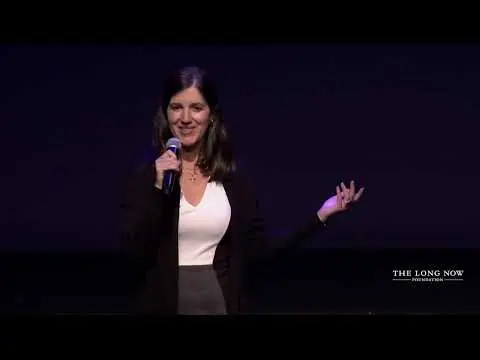
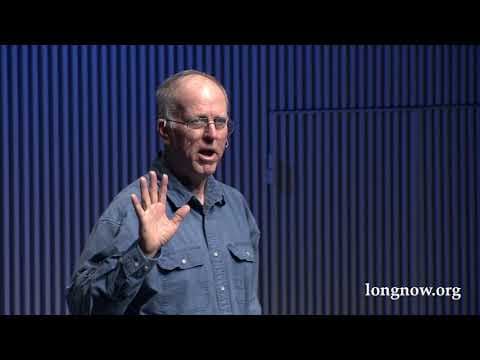
Long Conversation 9 of 19 | Melissa Alexander and Ken Wilson

TL;DR
Exploring the need to break free from disciplinary boundaries and adopt a more holistic approach that integrates art, science, and indigenous knowledge for solving global problems.
Transcript
I can hi welcome nice glasses why you're not wearing them well I I will put them on if it turns out I need to refer to my notes I I was very interested also in what you've been doing your projects and it seems to me that it's not just about art I noticed that you're investigating the natural world there in these places and and why why have that dua... Read More
Key Insights
- 🥰 The dualism between art and science and the tendency to discuss in binaries limit our understanding and hinder progress.
- 👨🔬 Indigenous knowledge holders possess valuable knowledge about their environment and should be acknowledged and integrated into scientific research.
- 🖕 Western science, while useful for certain dimensions, struggles with understanding complex processes on middle timeframes and spatial scales.
- 🎚️ Systemic change cannot be achieved by simply borrowing surface-level elements from other cultures; holistic dynamics must be considered.
- 🥰 The creative process in art and the scientific process share similarities in terms of discipline, learning, and creativity.
- ❓ Statistical correlations should not be blindly believed, as they may oversimplify complex phenomena.
Install to Summarize YouTube Videos and Get Transcripts
Explore YouTube Video Summarizer or Get YouTube Transcript Extractor
Questions & Answers
Q: How does the cartesian division impact the problems faced by the world today?
The cartesian division that separates biology, culture, and other domains contributes to the complex problems we face today. By integrating these aspects, we can better address global challenges.
Q: How do creative practitioners contribute to solving problems similar to artists?
Creative practitioners, such as farmers and forest managers, engage in forms of creativity similar to artists. They play with the aesthetic, biological, and physical components of their work, contributing valuable perspectives and solutions.
Q: How does society's entanglement in disciplinary boundaries hinder progress?
The structures and funding mechanisms of universities have fossilized our entanglement in disciplinary boundaries. This hampers our ability to develop a unified language and approach that could address complex problems effectively.
Q: Will citizen science and online debates lead to a more integrated, truth-seeking society?
While citizen science and online debates hold potential, they have yet to reach their full capacity for intelligent discussions and truth-seeking. However, the future may see increasing spaces on the web for unconstrained debates and higher interest in truth.
Summary & Key Takeaways
-
Investigating the natural world and the interconnections between biology, culture, and creativity can lead to a more unified understanding of the planet and help address fundamental global problems.
-
By viewing creative practitioners, such as farmers and forest managers, as whole individuals engaging in creativity to construct and change their world, we can appreciate their valuable contributions.
-
The existing disciplinary boundaries hinder progress in developing a unified language and approach that can effectively tackle complex, multi-dimensional realities.
Read in Other Languages (beta)
Share This Summary 📚
Summarize YouTube Videos and Get Video Transcripts with 1-Click
Try YouTube Summary with ChatGPT & Claude or YouTube Transcript Generator
Explore More Summaries from Long Now Seminars 📚
Summarize YouTube Videos and Get Video Transcripts with 1-Click
Try YouTube Summary with ChatGPT & Claude or YouTube Transcript Generator