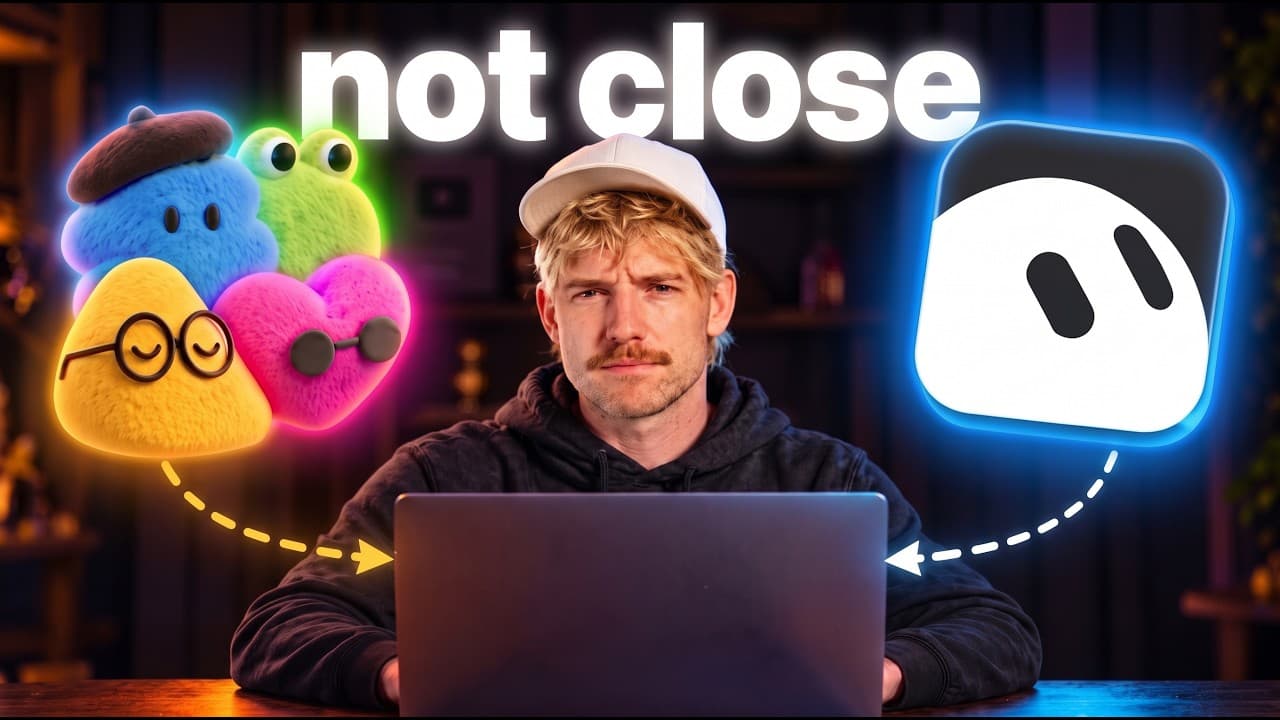
How to choose between Dots, Grok Bot, and Hermes Agent?
TL;DR
Dots, Grock Bot, and Hermes Agent each have distinct strengths. The video tests setup, pricing, and use cases like image and video creation, podcast editing, and tool integration, then ranks who should start with which. The verdict emphasizes autonomy, cost, and platform compatibility.
Transcript
Chad GPT's personal assistant dots has just dropped and I have been ruthlessly testing it. And in this video, I'm going to show you how this compares to Grobot, how it compares to Hermes Agent so you can make a very clearly informed decision and know exactly which model you should be using. I'm going to show you the pricing. I'm going to show you t... Read More
Key Insights
- Dots runs on OpenAI cloud and uses GPT6 Astra, enabling broad accessibility
- Grock Bot operates on a shared cloud computer with ongoing background execution
- Hermes Agent can run locally or on a VPS, offering flexible deployment
- Dots emphasizes high autonomy with minimal prompts to deliver results
- Grock Bot emphasizes status within a dedicated Grock interface and real-time outputs
- Hermes Agent supports cross-platform use and can be activated anywhere via an interface
- Image and video generation is enabled through Higgsfield integration for all three
- Pricing and plan options differ, with Dot, Grock Bot, and Hermes each presenting unique cost structures
Install to Summarize YouTube Videos and Get Transcripts
Explore YouTube Video Summarizer or Get YouTube Transcript Extractor
Questions & Answers
Q: How do you start using Dots, Grock Bot, and Hermes Agent?
To start using Dots, Grock Bot, and Hermes Agent you need a ChatGPT Pro subscription for Dots, a plan for Grock Bot, and a setup process for Hermes Agent which can include running on a computer or setting up a VPS. Each platform has its own onboarding steps and access points, such as the ChatGPT app for Dots, Grock Bot’s dedicated interface, and Hermes Agent’s cross-platform activation. The video walks through these initial steps to establish basic access and prepare for testing, including how to configure memory and prompts for initial tasks.
Q: What is the primary method of task execution across the three assistants?
The primary method involves sending a prompt or instruction to the chosen assistant and allowing it to autonomously complete the task with minimal input. Dots emphasizes complete autonomy with one-shot prompts, Grock Bot follows a Grock interface workflow, and Hermes Agent operates via an agentic OS approach that can be invoked anywhere. The experiment uses tasks like image and video creation, podcast extraction, and tool integration to compare how each assistant translates prompts into outputs.
Q: How does Higgsfield enable image and video generation in the test?
Higgsfield is integrated to generate images and videos for all three assistants. The test uses a Higgsfield API key to create media assets with one key powering multiple outputs. This setup demonstrates how each assistant can request media generation through a consistent backend, showing the quality and speed of results across different platforms. The video highlights how media generation fits into real-world workflows like branding or episode production.
Q: What are the observed differences in how each assistant handles podcast output?
Dots produced a podcast output that included the logo and basic formatting, which the presenter felt could be refined with minor prompts. Grock Bot delivered a more traditional layout but with some formatting omissions. Hermes Agent demonstrates flexible execution by pulling content from memory and integrating with other tools. Overall, the differences illustrate how each system handles media packaging and how prompts affect final results.
Q: Which platform is best for someone who wants local control and customization?
For someone seeking local control and customization Hermes Agent is the strongest candidate because it can run on a local machine or a VPS, offering flexible deployment and deeper control. The ability to operate outside a cloud-only environment appeals to users prioritizing privacy, latency, or offline capabilities. The video discusses the trade-offs in configuration effort and ongoing maintenance.
Q: What pricing considerations are highlighted in the video for choosing between these tools?
The video compares pricing structures across Dots, Grock Bot, and Hermes Agent, noting differences in entry costs and ongoing fees. Dots requires a ChatGPT Pro subscription, Grock Bot has its own plan options starting at accessible tiers, and Hermes Agent involves additional steps that can influence total cost. Viewers are encouraged to weigh upfront costs against capabilities and use-case alignment.
Q: How do these tools differ in terms of learning and model capability?
Dots uses GPT6 Astra, Grock Bot relies on the Grock model, and Hermes Agent can be driven by different models depending on configuration. Each system’s learning and response quality depend on the underlying model, access to tools, and how prompts are structured. The video highlights that while all can perform similar tasks, the output quality and ease-of-use vary by platform and model choice.
Q: Who should start with Grok Bot versus Dots or Hermes Agent according to the video?
The video suggests choosing Grok Bot for users who prefer a dedicated cloud-backed workflow and straightforward prompts, Dots for those seeking high autonomy and minimal prompting, and Hermes Agent for users who want local control and cross-platform reach. The recommendation emphasizes aligning the choice with deployment preference, control needs, and media generation capabilities.
Summary & Key Takeaways
-
Dots, Grock Bot, and Hermes Agent are three AI personal assistants tested for setup, pricing, and capabilities. The test includes image and video creation via Higgsfield, podcast extraction, and tool integration to compare performance. The video aims to help viewers decide which model to adopt based on use case and cost.
-
The reviewer demonstrates how each assistant handles real tasks, including prompts, memory, and how they operate on different platforms. It highlights differences in cloud versus local operation, model types, and the ease of setup for end users.
-
The conclusion provides a practical starter recommendation: choose based on desired accessibility, autonomy, and whether cloud or local hosting is preferred, along with cost considerations and feature expectations.
Read in Other Languages (beta)
Share This Summary 📚
Summarize YouTube Videos and Get Video Transcripts with 1-Click
Try YouTube Summary with ChatGPT & Claude or YouTube Transcript Generator
Explore More Summaries from Jack Roberts 📚
Summarize YouTube Videos and Get Video Transcripts with 1-Click
Try YouTube Summary with ChatGPT & Claude or YouTube Transcript Generator