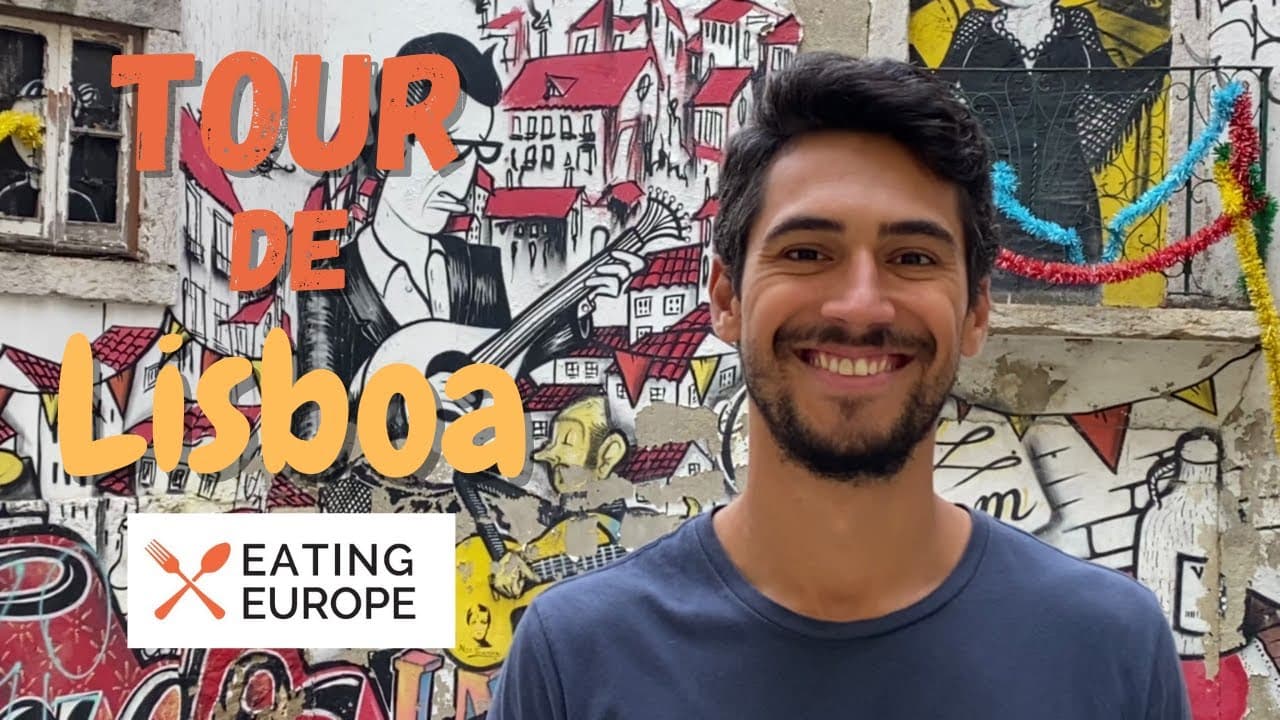
Tour de Lisboa com a Eating Europe
TL;DR
Explore Lisbon's history and cuisine with a virtual tour guide.
Transcript
Hello and welcome back to Portuguese With Leo! Before we start today's episode, I want to announce that this week we reached a new goal: we reached 3000 subscribers on Youtube, which makes me very happy! I want to thank all of you guys who watch my videos, like and comment them and are subscribed to the channel. Finally, as usual, I also want to... Read More
Key Insights
- The video celebrates reaching 3000 subscribers and acknowledges supporters who have donated to the channel.
- The presenter, also a tour guide, partners with Eating Europe to offer a virtual tour of Lisbon, combining history and gastronomy.
- The tour begins at Restauradores Square, commemorating Portugal's Restoration of Independence in 1640 after 60 years under Spanish rule.
- Casa do Alentejo showcases the Moorish influence in Portugal, with North African-style decor reflecting the historical presence of Moors in the region.
- São Domingos Church, believed to be cursed, has a tragic history involving a massacre of Jews and multiple destructions by natural disasters.
- The tour highlights Portuguese Fado music with a mural by Nuno Saraiva, celebrating the genre's roots in Lisbon's Alfama and Mouraria neighborhoods.
- Traditional Portuguese dishes like Bacalhau à Brás and roast veal are featured, with the chef explaining their preparation.
- The tour concludes with tasting pastel de nata and homemade ginjinha in Alfama, emphasizing the neighborhood's historical significance and charm.
Install to Summarize YouTube Videos and Get Transcripts
Explore YouTube Video Summarizer or Get YouTube Transcript Extractor
Questions & Answers
Q: What milestone did the channel recently achieve?
The channel recently reached a significant milestone of 3000 subscribers on YouTube. This achievement brings great joy to the presenter, who expresses gratitude to all viewers, likers, commenters, and subscribers. Additionally, the presenter thanks those who have made donations to support the channel, highlighting the community's support and engagement.
Q: What is the significance of Restauradores Square?
Restauradores Square is significant as it commemorates Portugal's Restoration of Independence, which occurred on December 1, 1640. This event marked the end of a 60-year period during which Portugal was under Spanish rule. The square symbolizes the country's regained sovereignty and independence, making it a historically important site in Lisbon.
Q: What historical influence is showcased at Casa do Alentejo?
Casa do Alentejo showcases the Moorish influence in Portugal, particularly in its North African-style decor. The Moors, originally from North Africa, lived in Portugal from the 8th to the 13th century, leaving a lasting impact on the country's culture and architecture. The decor at Casa do Alentejo reflects this historical presence and influence.
Q: Why is São Domingos Church considered cursed?
São Domingos Church is considered cursed due to its tragic history and repeated destruction. In 1506, it was the site of a massacre of over 2000 Jews, an event that left a lasting mark on its reputation. The church has also been destroyed multiple times by earthquakes and a fire, reinforcing the belief in its cursed nature.
Q: What is the significance of the Fado mural?
The Fado mural, created by illustrator Nuno Saraiva in 2013, is significant as it pays tribute to Portuguese Fado music, the country's most important music genre. Fado originated in Lisbon's Alfama and Mouraria neighborhoods, and the mural celebrates this cultural heritage, highlighting the genre's deep roots and influence in Portuguese culture.
Q: What traditional dishes are featured in the tour?
The tour features traditional Portuguese dishes such as Bacalhau à Brás and roast veal with mashed potatoes. Bacalhau à Brás is a popular codfish dish, while roast veal is a typical recipe from Northern Portugal. Both dishes are prepared with care and served as part of the Eating Europe tour, offering a taste of authentic Portuguese cuisine.
Q: What is the history of pastel de nata?
Pastel de nata is a traditional Portuguese dessert known for its delicious custard filling and flaky pastry. The video mentions Pastelaria Santo António, which won the prize for the best pastel de nata in Portugal in 2019. The dessert has a rich history and is a staple in Portuguese culinary culture, often enjoyed with a cup of coffee.
Q: What is ginjinha and its significance?
Ginjinha is a traditional Portuguese liqueur made from the ginja berry, a type of sour cherry. It originated in the 17th century in Óbidos, near Lisbon, and has become a popular drink in Portugal. The video highlights homemade ginjinha sold in Alfama, emphasizing its cultural significance and the tradition of making and enjoying this liqueur in Lisbon.
Summary & Key Takeaways
-
The video celebrates a milestone of 3000 subscribers and acknowledges supporters. It introduces a virtual tour of Lisbon, combining history and gastronomy, in partnership with Eating Europe.
-
The tour begins at Restauradores Square, highlighting Portugal's Restoration of Independence. It explores Casa do Alentejo, showcasing Moorish influence in Portugal, and São Domingos Church, with its tragic history.
-
The tour features Portuguese Fado music, traditional dishes like Bacalhau à Brás, and concludes with tasting pastel de nata and ginjinha in Alfama, emphasizing the neighborhood's historical significance.
Read in Other Languages (beta)
Share This Summary 📚
Summarize YouTube Videos and Get Video Transcripts with 1-Click
Try YouTube Summary with ChatGPT & Claude or YouTube Transcript Generator
Explore More Summaries from Portuguese With Leo 📚



Summarize YouTube Videos and Get Video Transcripts with 1-Click
Try YouTube Summary with ChatGPT & Claude or YouTube Transcript Generator