How Can You Turn Your Job Skills Into a $10K/Month Online Business While Working a 9-5?
TL;DR
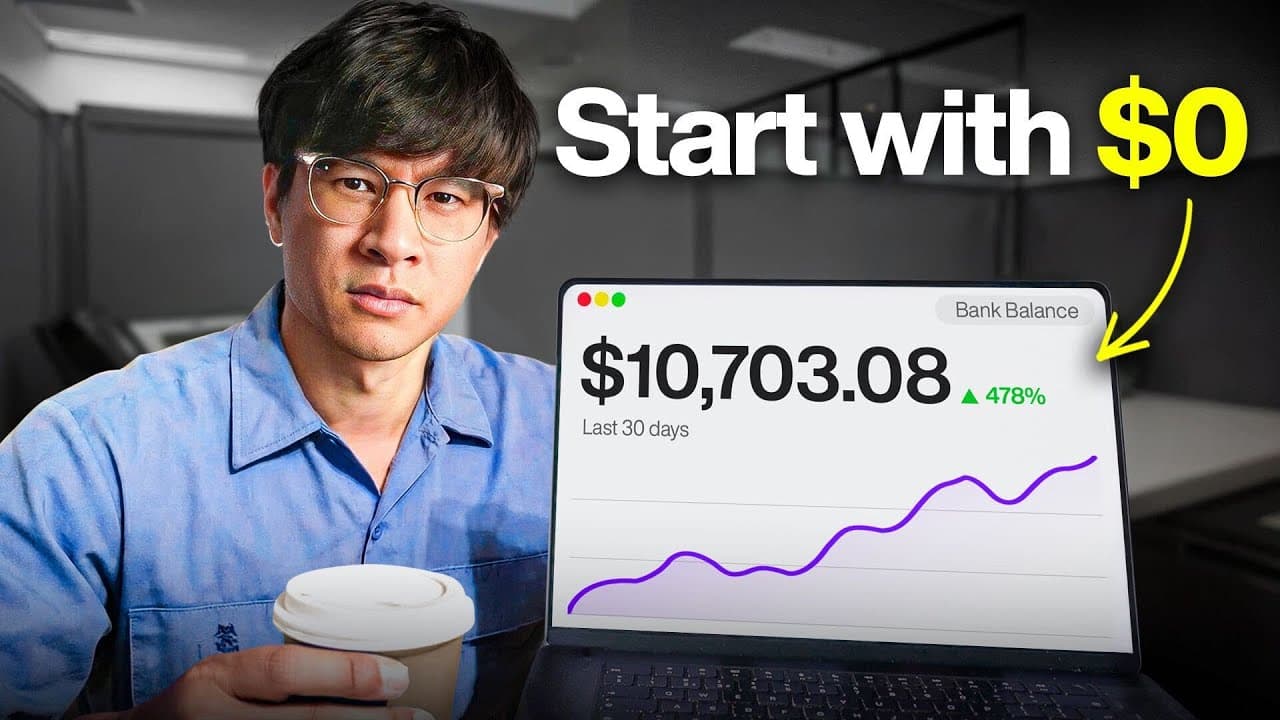
Turn a specialized skill from your current job into an online service by defining the customer, problem, desired result, and your process. The creator presents a six-step model designed to run alongside a 9-to-5 and cites a construction-company VP who made $10K in his first 30 days by helping companies generate leads through organic LinkedIn content. Read on for the offer, branding, and sales framework.
Transcript
There's a business model out there hidden in plain sight that I guarantee after watching this video, not only will you feel a bit silly, but you will have everything you need to build a $10,000 per month business, even if you work a 9 to-5. And actually, it works even better if you have one. And no, you don't need to be a wizard in AI like everyone... Read More
Key Insights
- Professional experience is the foundation of the proposed business model because employers already pay workers to apply valuable skills. Instead of learning an unrelated model from the beginning, an employee can package existing expertise into a service that addresses a market problem.
- Specialization is useful for delivering excellent work, but it can leave employees without the broader abilities needed to run a business. A skilled professional may still need to learn offer creation, personal branding, prospecting, meeting generation, and sales before independently attracting clients.
- A marketable offer is defined by a transformation from a specific problem to a desired result. The suggested positioning formula identifies the customer, their current difficulty, the outcome they want, and the distinct process used to help them achieve it.
- Offer clarity is the starting point of the skill-to-brand system because content and sales depend on knowing exactly what is being sold. The creator recommends identifying a specific problem that the professional skill can solve for a clearly defined person or company.
- A personal brand is a credibility and lead-generation system built through relevant content on platforms such as LinkedIn, YouTube, X, or Instagram. Prospects may examine that content after receiving outreach, so a credible public presence can influence whether they accept a meeting.
- Content is most useful when it is created around an existing offer and intended customer. Building an audience before deciding what to sell can attract people who do not need the eventual service, making the personal brand less effective as a client acquisition channel.
- Direct sales calls are presented as the easiest starting point for selling high-ticket services because they allow a prospect and provider to connect as people. The creator recommends Google Meet or Zoom conversations before relying on landing pages or direct messages to close clients.
- Keeping a regular job can support the transition because the employee retains income while testing and developing the business alongside a career. The model does not require quitting immediately, and it can be used either to build dual income or prepare for eventual independence.
Install to Summarize YouTube Videos and Get Transcripts
Explore YouTube Video Summarizer or Get YouTube Transcript Extractor
Questions & Answers
Q: How can I turn my job skills into an online business?
Identify a specialized skill that your employer already pays you to use, then connect it to a specific problem faced by a defined customer. Package it as a service, consulting engagement, coaching offer, or online course that delivers a clear before-and-after transformation. Build relevant content to establish credibility and use direct sales conversations to win clients.
Q: What is the skill-to-brand business model?
The skill-to-brand model packages existing professional expertise into a clear offer, builds a personal brand around that offer, and adds a sales system. The offer guides the content, the content attracts or reassures prospects, and direct conversations help convert suitable prospects into high-ticket clients.
Q: Can I build this online business while keeping my 9-to-5 job?
Yes. The model is specifically presented as a business that can run alongside a career, with the creator claiming it can be pursued in 10 hours a week. Keeping the job also preserves regular income while the offer and client-acquisition system are tested.
Q: How do I create an offer from my professional experience?
Define the specific person or company you help, the problem they currently face, the result they want, and the special process you use. The suggested formula is: “I help this specific kind of person go from this problem to this result using my special process.” This frames your expertise as a measurable transformation rather than a general skill.
Q: What is an example of turning job experience into a profitable service?
Brandon, a former VP at a construction company, created an offer for construction businesses. His positioning was to help them go from being invisible online to booking consistent, high-quality leads through organic LinkedIn content systems. According to the transcript, he made $10K in the first 30 days of working with the creator.
Q: Why use existing job skills instead of starting with dropshipping, Amazon FBA, or AI tools?
The creator argues that unfamiliar models require more time, skill, and money because beginners must learn many capabilities from scratch. By contrast, employees may already have 2, 3, 5, or 10 years of experience in areas such as marketing, operations, HR, or email marketing. That existing expertise provides a more developed starting point for an offer.
Q: Why can a highly skilled employee still struggle to start a business?
Employment often encourages deep specialization in one function while the company supplies the surrounding systems. A professional may be excellent at email marketing, for example, but still lack skills in offer creation, personal branding, prospecting, meeting generation, and sales. Those missing capabilities must be developed to attract and serve clients independently.
Q: Should I define my offer before creating content?
Yes. The offer should identify the intended customer and the problem being solved so the content can attract relevant prospects and demonstrate the right expertise. Creating content before deciding what to sell can build an audience that does not need the eventual service.
Summary & Key Takeaways
-
The proposed business model starts with skills already developed through employment rather than an unfamiliar opportunity such as dropshipping or Amazon FBA. Professional experience can become a service, consulting practice, coaching offer, or course when it solves a specific problem and produces a clear result for an identifiable customer.
-
A strong offer describes the customer, the problem, the desired result, and the process used to create that transformation. The construction example packages experience in sales, marketing, and content into a service that helps construction companies improve their online visibility and generate consistent, high-quality leads through organic LinkedIn content.
-
The skill-to-brand system combines offer clarity, a personal brand engine, and a sales system. The offer determines whom the content should attract, while content builds credibility for inbound and cold prospects. Direct video calls then provide beginners with a practical setting for connecting with prospects and selling high-ticket services.
Read in Other Languages (beta)
Share This Summary 📚
Summarize YouTube Videos and Get Video Transcripts with 1-Click
Try YouTube Summary with ChatGPT & Claude or YouTube Transcript Generator
Explore More Summaries from Patrick Dang 📚


Summarize YouTube Videos and Get Video Transcripts with 1-Click
Try YouTube Summary with ChatGPT & Claude or YouTube Transcript Generator