How Does Animal Communication Inform SETI Research?

TL;DR
Lawrence Doyle applies information theory to animal communication to enhance the search for extraterrestrial intelligence. By exploring signals from species like humpback whales and dolphins, he aims to establish methodologies for deciphering potential extraterrestrial messages. This research exemplifies the complexity of intelligence across species and its implications for understanding cosmic signals.
Transcript
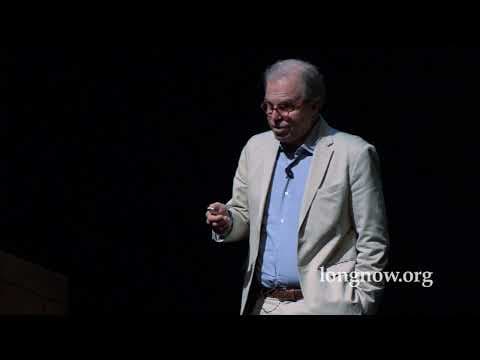
welcome everyone I'm Alexander Rose I'm the executive director here at the long now foundation and you are at the second of our shelter-in-place seminars about long-term thinking from our normal series tonight we have a special guest from SETI Lawrence Doyle and he's gonna be speaking about a kind of a technology that is one of our oldest technolog... Read More
Key Insights
- 💃 Animal communication, such as bee dances and humpback whale songs, can provide insights into potential extraterrestrial signals.
- 👮 Zipf's law and Shannon entropy can be used to analyze communication systems and determine intelligence in signals.
- ℹ️ To understand the meaning of communication, researchers can quantify the minimum information required for specific purposes, such as finding food sources.
- 💁 Animal intelligence is multi-dimensional, and different species may exhibit varying forms of intelligence.
Install to Summarize YouTube Videos and Get Transcripts
Explore YouTube Video Summarizer or Get YouTube Transcript Extractor
Questions & Answers
Q: How does the application of information theory help in differentiating between astrophysics and intelligent extraterrestrial signals?
By analyzing communication systems using information theory, researchers can quantify the complexity of signals and determine whether they exhibit intelligence. This helps differentiate between natural astrophysical phenomena and potential extraterrestrial signals.
Q: Do all animal communication systems follow Zipf's law?
No, not all animal communication systems follow Zipf's law. While some, like bottlenose dolphins and humpback whales, exhibit a -1 slope characteristic of human languages, others, like bees and plants, have different patterns of communication.
Q: Can information theory be applied to understand the meaning behind animal communication?
Yes, information theory can be used to quantify the minimum amount of information required for communication systems to achieve their purpose. By analyzing known purposes of communication, such as finding food sources, researchers can start to understand the meaning behind animal communication.
Q: How can information theory be applied to study internet intelligence?
While not explored extensively, information theory can potentially be applied to analyze internet communication. Linguistic units like searches could be treated as signaling units, allowing researchers to quantify the information and complexity of internet communication.
Summary & Key Takeaways
-
Lawrence Doyle discusses the application of information theory to study animal communication, emphasizing the importance of understanding communication systems before seeking extraterrestrial signals.
-
He highlights the similarities between animal communication, such as bee dances and humpback whale songs, and potential extraterrestrial signals.
-
Doyle explains the use of Zipf's law and Shannon entropy to analyze communication systems and determine intelligence in signals.
-
The research aims to broaden the detection parameters for intelligent signals and explore different dimensions of intelligence.
Read in Other Languages (beta)
Share This Summary 📚
Summarize YouTube Videos and Get Video Transcripts with 1-Click
Try YouTube Summary with ChatGPT & Claude or YouTube Transcript Generator
Explore More Summaries from Long Now Seminars 📚





Summarize YouTube Videos and Get Video Transcripts with 1-Click
Try YouTube Summary with ChatGPT & Claude or YouTube Transcript Generator