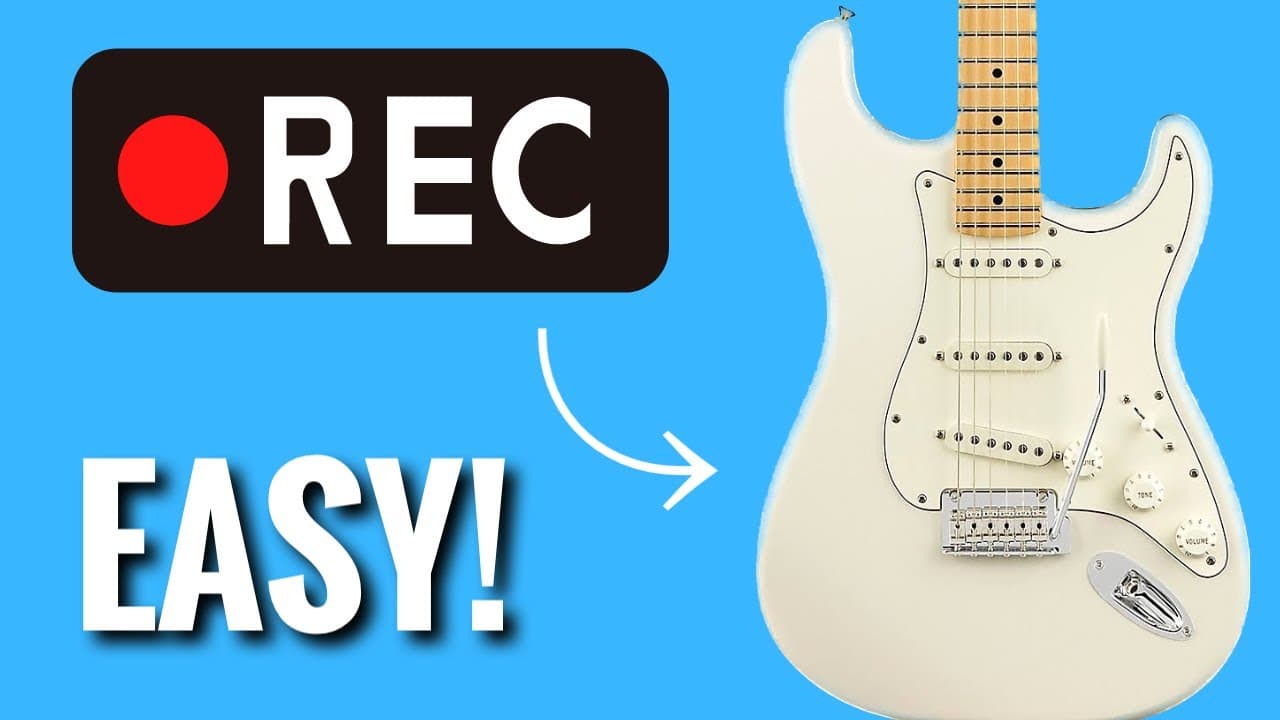
How To Record Electric Guitar In 4 Easy Steps
TL;DR
Learn to record electric guitar using plugins without an amp or mic.
Transcript
in this video i'll be showing you how to record electric guitar in four easy steps coming up welcome to the home studio academy everybody my name is nolan freitas and my goal is to help you build your own home studio and teach you how to create professional sounding recordings from home so today i'm going to be showing you how to record electric gu... Read More
Key Insights
- 👪 Recording electric guitar can be accomplished effectively at home without traditional amplifiers or microphones using modern technology.
- 😫 Setting up your audio interface is the first step to ensure proper signal flow from the guitar into the recording software.
- 👻 Using an audio interface allows for real-time processing, which is essential for keeping latency low.
- 🥺 Gain settings are crucial in achieving clear recordings, and exceeding the threshold can lead to audio clipping.
- 👻 DAWs typically feature various plugins that simulate amplifiers and effects, allowing for versatile tone shaping.
- 🥳 It's beneficial to focus on the most dynamic parts of your song when adjusting gain to determine the best recording levels.
- 🫵 Engaging with viewers by encouraging them to share their equipment choices fosters a community around the recording process.
Install to Summarize YouTube Videos and Get Transcripts
Explore YouTube Video Summarizer or Get YouTube Transcript Extractor
Questions & Answers
Q: What equipment do you need to record electric guitar at home?
To record electric guitar at home, you'll need a computer with a digital audio workstation (DAW), an audio interface, and an instrument cable. The DAW allows you to create and manipulate your recordings, while the audio interface connects your guitar to the computer, enabling the recording process.
Q: How do you ensure low latency while recording?
Low latency is critical for real-time recording and can be achieved by enabling low latency monitoring in your DAW's audio settings. Alternatively, you can adjust the buffer size lower to minimize delay, but be cautious as this increases the load on your computer, which could cause performance issues if set too low.
Q: What is the ideal gain level when recording?
The ideal gain level should be set to fall within the green to yellow range on your audio interface. Hitting the red section indicates clipping and distortion, which can ruin your recording. It’s important to monitor levels while playing back the most intense parts of your song to ensure the audio remains clear and clean.
Q: How do you choose the right guitar tone for recording?
To pick the right guitar tone, utilize the amplifier and pedalboard simulator plugins in your DAW. Experiment with different amp models to find the sound that complements your music. While adjusting the tone, keep an eye on the audio meter to ensure you don’t exceed a level that would cause audio distortion.
Summary & Key Takeaways
-
The video demonstrates how to record electric guitar at home using an audio interface and plugins, eliminating the need for physical amplifiers or microphones.
-
It outlines four essential steps: connecting your guitar, setting up your digital audio workstation (DAW), adjusting gain levels, and selecting a guitar tone with simulator plugins.
-
The presenter emphasizes the importance of monitoring levels to avoid distortion while providing tips for system settings and gear recommendations.
Read in Other Languages (beta)
Share This Summary 📚
Summarize YouTube Videos and Get Video Transcripts with 1-Click
Try YouTube Summary with ChatGPT & Claude or YouTube Transcript Generator
Explore More Summaries from Home Studio Academy 📚
Summarize YouTube Videos and Get Video Transcripts with 1-Click
Try YouTube Summary with ChatGPT & Claude or YouTube Transcript Generator